All-electric subsea qualification in Brazil signals a technology inflection
A joint industry project completed in Brazil has qualified fully electric subsea production technologies — a development with direct implications for deepwater field architecture.
THE NEWS
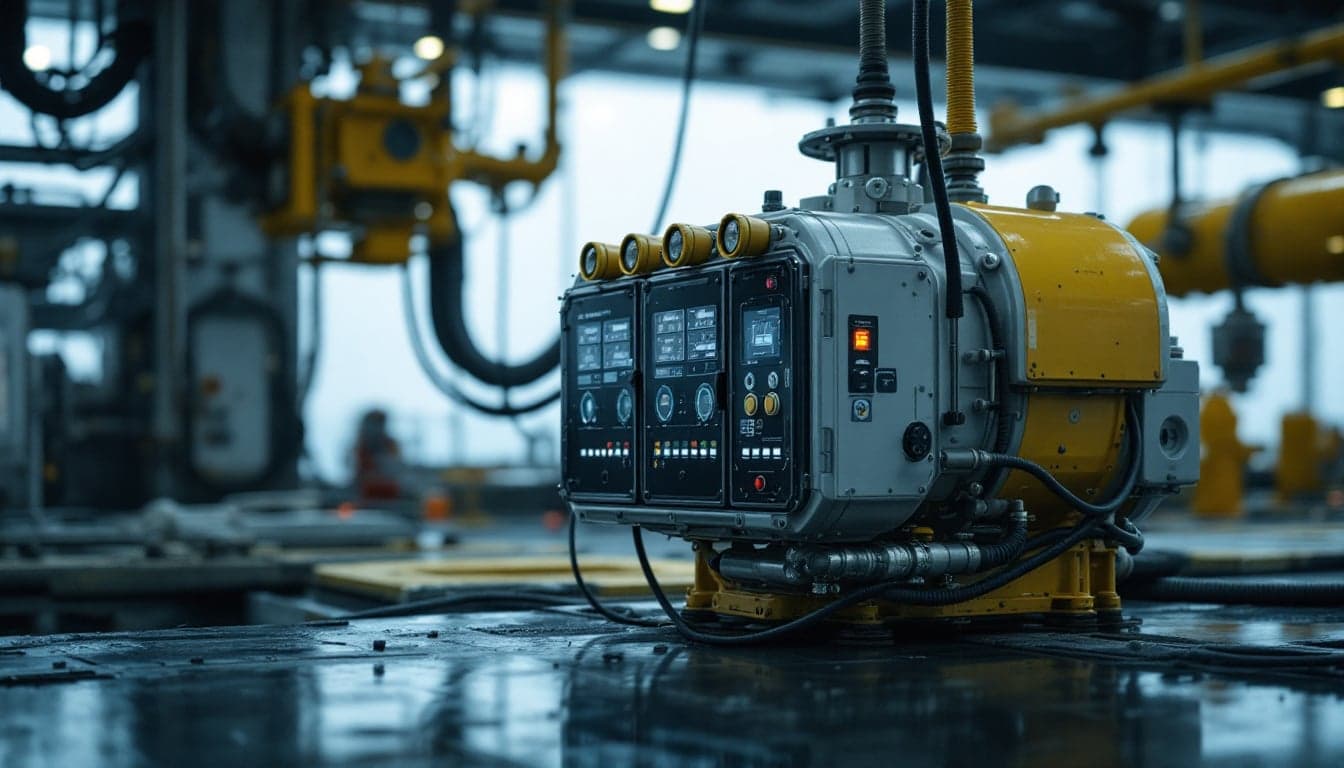
According to Offshore Engineer, OneSubsea has completed a joint industry project (JIP) in Brazil alongside TotalEnergies, Equinor, BP, and Chevron, with the objective of developing and qualifying fully electric subsea production technologies. The project represents a formal qualification milestone for this class of technology, moving it from development into a state where it can be considered for field deployment.
The JIP model — in which a technology provider and multiple operators pool resources to develop and validate a shared capability — reflects the scale of investment and technical risk involved in qualifying a new subsea architecture. Fully electric subsea systems replace hydraulic control lines with electric power and signal transmission, eliminating the need for hydraulic fluid infrastructure between the surface facility and the seabed.
The completion of the project in Brazil positions the country as the geography where this qualification work was carried out, a detail that carries operational and strategic weight given the concentration of deepwater pre-salt activity in the country.
WHY IT MATTERS
The qualification of fully electric subsea production technology is a meaningful step for the offshore industry, and the fact that this work was completed in Brazil is not incidental. Brazil hosts one of the densest concentrations of deepwater subsea infrastructure in the world, with pre-salt fields operating at water depths and tie-back distances that push the limits of conventional hydraulic control systems. The structural case for all-electric architecture in this environment is well-established among subsea engineers: longer step-out distances, reduced umbilical complexity, lower hydraulic fluid inventory, and the potential for more granular, faster control response at the wellhead.
For Brazilian operators and their consortium partners, the completion of this JIP means that fully electric technology has cleared a formal qualification threshold. Qualification is a necessary — though not sufficient — condition for field adoption. The next gate is commercial deployment, which will depend on each operator's capital allocation cycle, field development planning timelines, and risk appetite for first-of-a-kind installations. The distinction matters: a qualified technology is available; a deployed technology is proven at scale. The industry is now at the former stage.
Petrobras, as the dominant operator in Brazilian deepwater, will be a central actor in determining the pace at which all-electric subsea architecture moves from qualified to deployed in the pre-salt. While Petrobras is not listed among the JIP participants in the source, its strategic equipment standardization programs and its role as the primary lessee of pre-salt blocks mean that any technology seeking broad adoption in Brazilian waters will eventually need to align with Petrobras's procurement and engineering frameworks. Operators who participated in this JIP — and who hold equity in pre-salt consortia alongside Petrobras — are now positioned to advocate for all-electric architectures in joint development discussions.
For the Brazilian subsea supply chain, the implications are worth examining carefully. Conventional subsea production systems rely on hydraulic power units, umbilicals carrying hydraulic lines, and chemical injection infrastructure — all of which have established local manufacturing and service ecosystems in Brazil. A structural shift toward all-electric architecture would over time redirect demand toward different component categories: electric actuators, high-voltage subsea connectors, power electronics rated for deepwater pressure, and the associated qualification and maintenance services. Brazilian suppliers with positioning in hydraulic subsea components would benefit from tracking this technology trajectory and assessing where their capabilities can be adapted or extended. This is not an immediate transition, but qualification milestones are the leading indicators that inform medium-term investment decisions.
The JIP structure itself is analytically interesting. By bringing together four major international operators — TotalEnergies, Equinor, BP, and Chevron — OneSubsea assembled a coalition whose combined deepwater exposure spans multiple basins globally, not only Brazil. This means the qualification work, while conducted in Brazil, is intended to support deployment across a broader portfolio of assets. The commercial logic for OneSubsea is clear: a technology qualified against the requirements of multiple major operators simultaneously is far more deployable than one validated by a single client. For Brazil, the implication is that the country served as the proving ground for a technology that will compete globally — a role that reinforces the country's position as a reference environment for deepwater subsea development.
From a regulatory standpoint, ANP and IBAMA will eventually need to engage with fully electric subsea architectures as they move toward deployment. The elimination of hydraulic fluid from the subsea control system has environmental dimensions — reduced risk of hydraulic fluid release at the seabed — that regulators may view favorably. At the same time, the qualification of new technology classes typically requires engagement with regulatory bodies to ensure that certification frameworks keep pace with technical evolution.
CONTEXT
The push toward all-electric subsea systems has been building across the industry for over a decade, with multiple technology providers and operators running parallel development programs. JIP structures have been the preferred mechanism for sharing qualification costs across operators who share a common interest in the technology but compete in the market. The completion of this particular project marks a progression in that longer arc — from concept and prototype toward a technology that operators can formally consider for inclusion in field development plans.
Brazil's role as the host geography for this qualification work is consistent with a broader pattern in which the country's deepwater complexity — long tie-backs, high-pressure high-temperature reservoirs, ultra-deepwater water depths — makes it a natural environment for advancing subsea technology frontiers.
Source: OFFSHORE ENGINEER