Angola's fast-track model tests the limits of infrastructure-led exploration
TotalEnergies moves Acacia-5 from discovery to first oil in three months — a timeline that raises questions about what Brazilian offshore could replicate.
THE NEWS
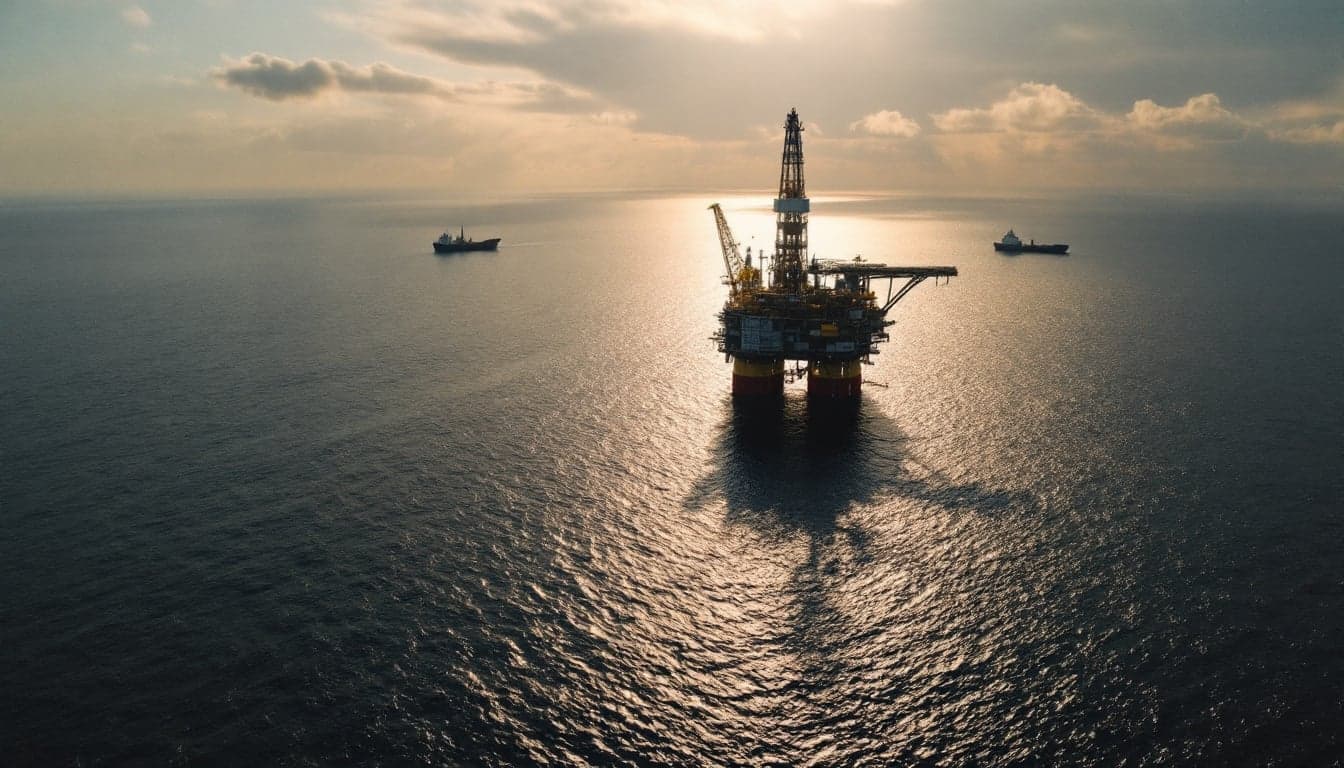
According to OilPrice.com, TotalEnergies announced a new oil discovery offshore Angola — the Acacia-5 well in Block 17 — and indicated it expects to achieve first oil just three months after the discovery was made in June 2026. The accelerated development timeline is enabled by routing production through spare capacity on the nearby Pazflor FPSO, which is already operational in the area.
The company also acquired operated interests in two additional exploration blocks in Angola, both positioned close to existing operating hubs. The strategic rationale, as reported, is to leverage infrastructure already in place rather than committing to standalone greenfield development cycles.
The broader context described in the report is one of renewed interest from international majors in Angolan offshore acreage, with proximity to producing infrastructure cited as a key factor driving exploration decisions in the basin.
WHY IT MATTERS
The three-month discovery-to-production interval at Acacia-5 is not a product of geological luck alone — it is a direct function of infrastructure density. The Pazflor FPSO had available processing capacity, the reservoir was close enough to tie in rapidly, and TotalEnergies had the operational familiarity with Block 17 to compress the development cycle. Each of those conditions had to be met simultaneously. That combination is rarer than the headline suggests.
For Brazilian offshore professionals, the comparison is instructive rather than directly transferable. The pre-salt cluster in the Santos Basin is, in some respects, already operating on a similar logic: Petrobras has designed its replicant FPSO program partly to reduce the interval between sanction and first oil by standardizing hull and topsides configurations. But the Brazilian pre-salt context involves much greater water depths, longer subsea tiebacks, and reservoir pressures that complicate fast-track execution in ways that Angolan deepwater does not uniformly face. The structural conditions differ enough that a three-month cycle remains outside the realistic envelope for most Brazilian deepwater discoveries.
Where the Angola case does carry direct relevance for Brazil is in the question of block licensing strategy. ANP's recent licensing rounds have increasingly emphasized proximity to existing infrastructure as a value criterion — both for the regulator in assessing development commitments and for operators in calculating marginal development costs. The Acacia-5 model reinforces that infrastructure proximity is not merely a convenience but a potential determinant of whether a marginal discovery reaches production at all. Smaller accumulations that would be uneconomic as standalone developments become viable when an FPSO with spare capacity sits nearby.
This has implications for how Brazilian independent operators and smaller consortium participants think about portfolio construction. Blocks adjacent to producing FPSOs — even mature ones with declining throughput — carry an optionality value that pure resource estimates do not capture. A discovery that can be tied back to an existing hull avoids not only the capital expenditure of a new FPSO but also the multi-year regulatory, engineering, and procurement cycle that accompanies it. In a capital environment where project IRR hurdles remain elevated, that optionality is material.
For the Brazilian supply chain, the Angola development also illustrates a tension that domestic service providers are familiar with: fast-track developments compress the window for local content compliance. When a project moves from discovery to production in ninety days, the procurement decisions are necessarily made on availability and existing frame agreements rather than on competitive tendering that might favor local suppliers. Brazil's local content regime under ANP rules is calibrated to longer development timelines. If fast-track infrastructure-led models become more common — whether in Brazil or in competing basins attracting the same capital — the local content framework may warrant review to ensure it remains fit for purpose without inadvertently disadvantaging rapid-cycle projects.
Finally, the renewed major-company interest in Angola described in the report is worth noting from a capital competition standpoint. Brazil and Angola are not direct substitutes for exploration capital — their fiscal regimes, infrastructure profiles, and geological risk profiles differ substantially — but both compete for the same pool of deepwater-capable operators and rigs. When Angola offers a regulatory and infrastructure environment that supports three-month development cycles, it signals an attractive risk-adjusted return profile that Brazilian regulators and Petrobras's partnership strategy will be aware of as they calibrate the terms of future licensing rounds.
CONTEXT
The Pazflor FPSO, operated by TotalEnergies in Block 17, has been producing since the early 2010s and represents one of the more complex subsea production systems deployed in West African deepwater, handling multiple reservoir types simultaneously. The use of its spare capacity for Acacia-5 is consistent with a broader industry pattern of sweating existing assets to extend plateau production and improve unit economics on mature infrastructure.
In the Brazilian context, Petrobras has pursued analogous logic through its interconnected well programs in the pre-salt, tying new wells into producing FPSOs to sustain output without requiring new hull commitments. The difference in development speed reflects differences in subsea architecture complexity and water depth rather than any fundamental divergence in strategic intent.