Autonomous navigation software clears DNV benchmark testing
Robosys's VOYAGER AI completes validation against recognized collision-avoidance standards — a procedural step that matters as autonomy inches toward offshore support roles.
THE NEWS
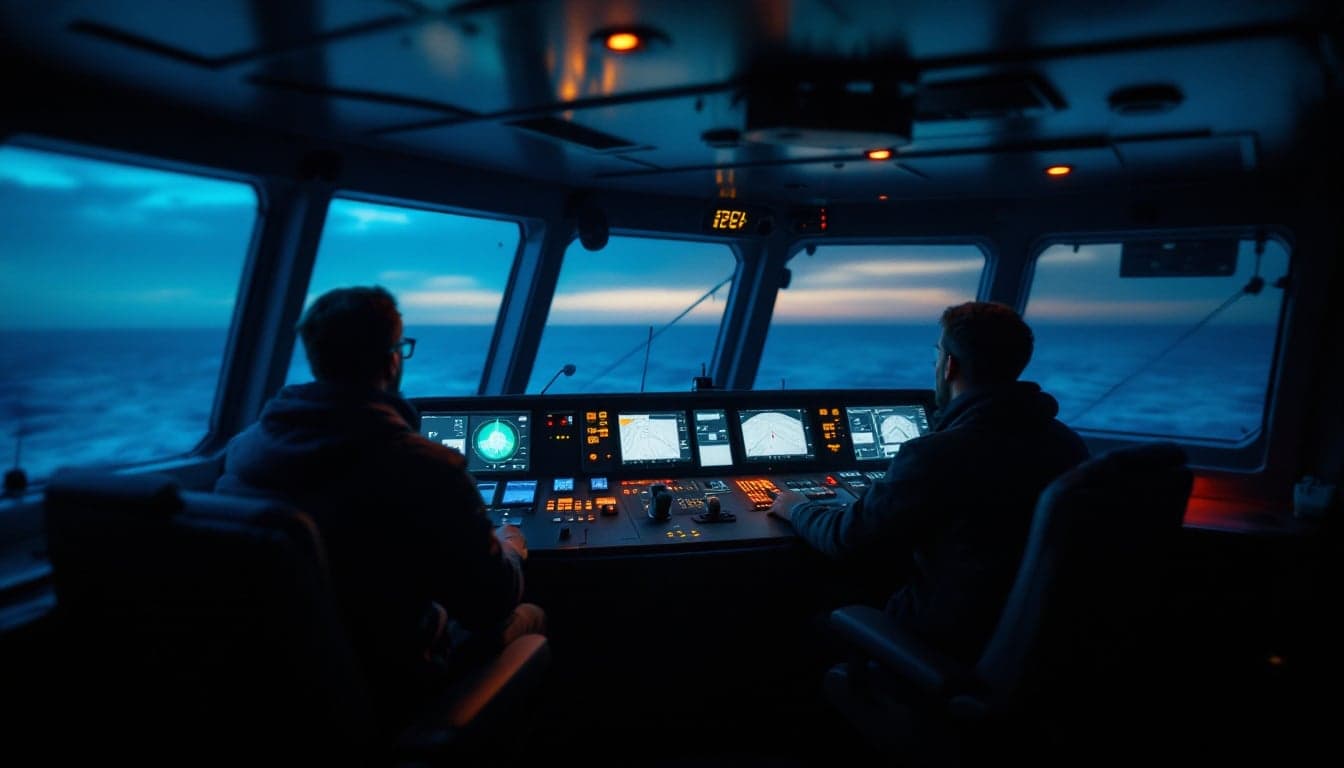
According to Marine Technology News, Robosys Automation — a developer of intelligent marine autonomy systems — conducted a test campaign for its VOYAGER AI Autonomous Navigation System (ANS) software at MARIN, the Maritime Research Institute Netherlands. The tests were run against the 55 recognized DNV scenarios used to evaluate autonomous and collision-avoidance navigation performance. The exercise positions VOYAGER AI within a formal third-party validation framework rather than relying solely on proprietary or in-house benchmarking.
The significance of MARIN as a venue is procedural but not trivial. The institute operates model basins and simulation environments that classification societies and flag states recognize as credible testing grounds. Running software against DNV's defined scenario set means the results carry a degree of portability — they can be referenced in conversations with regulators, operators, and insurers who need a common technical language for evaluating autonomous systems.
The source article does not detail the outcome metrics or specify which vessel classes or operational profiles the testing addressed beyond the scope of the DNV scenario library.
WHY IT MATTERS
For the Brazilian offshore market, the direct operational impact of this specific test campaign is limited in the near term. Brazil's offshore supply chain operates predominantly through crewed OSVs, anchor-handling vessels, and platform supply runs governed by NORMAM regulations and Petrobras's own operational standards. Full autonomy on those vessel types remains a regulatory and contractual horizon, not an imminent deployment question.
That said, the procedural architecture being built around systems like VOYAGER AI is worth tracking. Classification society scenario libraries — such as the DNV set used here — are becoming the de facto gatekeeping layer for autonomous maritime technology. When Brazilian regulators, the Marinha do Brasil, or ANP eventually engage formally with autonomous vessel standards, they will almost certainly reference frameworks developed by DNV, Lloyd's Register, and Bureau Veritas rather than constructing independent benchmarks from scratch. Companies that have already logged validation hours against those frameworks will have a structural advantage in early conversations.
The offshore support vessel segment is where autonomy is most likely to find its first practical foothold in Brazil's offshore ecosystem — not on FPSOs or MODUs, where crew presence is embedded in operational logic and regulatory requirements, but on repetitive, low-complexity supply runs between shore bases and fixed installations. Even there, the path involves not just technical validation but bilateral agreements between flag state, classification society, and operator — a process that typically unfolds over years.
For Brazilian OSV operators and their technology procurement teams, the relevant question is not whether VOYAGER AI specifically will appear in Brazilian waters, but whether the validation methodology being standardized internationally will eventually shape what Petrobras or independent operators require from vessel management systems. Procurement specifications tend to lag technology cycles by several years; the standards being stress-tested today in Dutch model basins are likely to appear in Brazilian tender documents later in the decade.
There is also a workforce dimension that Brazilian operators and unions will need to engage with deliberately. Autonomous navigation software, even at the decision-support level rather than full autonomy, redistributes cognitive load on the bridge. That has implications for officer certification, watch-keeping requirements, and the skill profiles that maritime training institutions in Brazil — several of which supply crew to the offshore sector — will need to develop. The industry has time to manage this transition thoughtfully, but that window is not indefinite.
From a technology supplier perspective, Brazilian maritime engineering firms and integrators that work on vessel management and DP systems should monitor how DNV's scenario library evolves. If autonomous navigation validation becomes a standard checkbox in vessel certification — analogous to how DP class certification functions today — then familiarity with those test protocols becomes commercially relevant for any firm involved in vessel outfitting or system integration.
CONTEXT
The broader pattern here reflects an industry-wide effort to move maritime autonomy from demonstration projects toward repeatable, auditable validation. Several classification societies have published their own guidelines and scenario frameworks over the past few years, and MARIN has become a recurring venue for third-party testing precisely because it offers controlled conditions that real-sea trials cannot guarantee. The convergence on shared scenario libraries — rather than bespoke operator-defined tests — mirrors the path that aviation autonomy certification took, albeit on a much longer timeline and with considerably more regulatory complexity given the multi-jurisdictional nature of maritime operations.
For Brazil specifically, the offshore sector's regulatory posture on autonomy will likely be shaped as much by IMO's ongoing work on Maritime Autonomous Surface Ships (MASS) as by any domestic initiative. Brazil participates in IMO working groups, and the positions developed there will inform how the Marinha do Brasil and ANTAQ eventually frame domestic rules — making international validation milestones like this one indirectly relevant to the Brazilian regulatory calendar.