BW Energy confirms commercial volumes at Dussafu appraisal wells off Gabon
Two appraisal wells add 8–9 million barrels to Dussafu's resource base, a modest but meaningful data point for frontier West Africa exploration.
THE NEWS
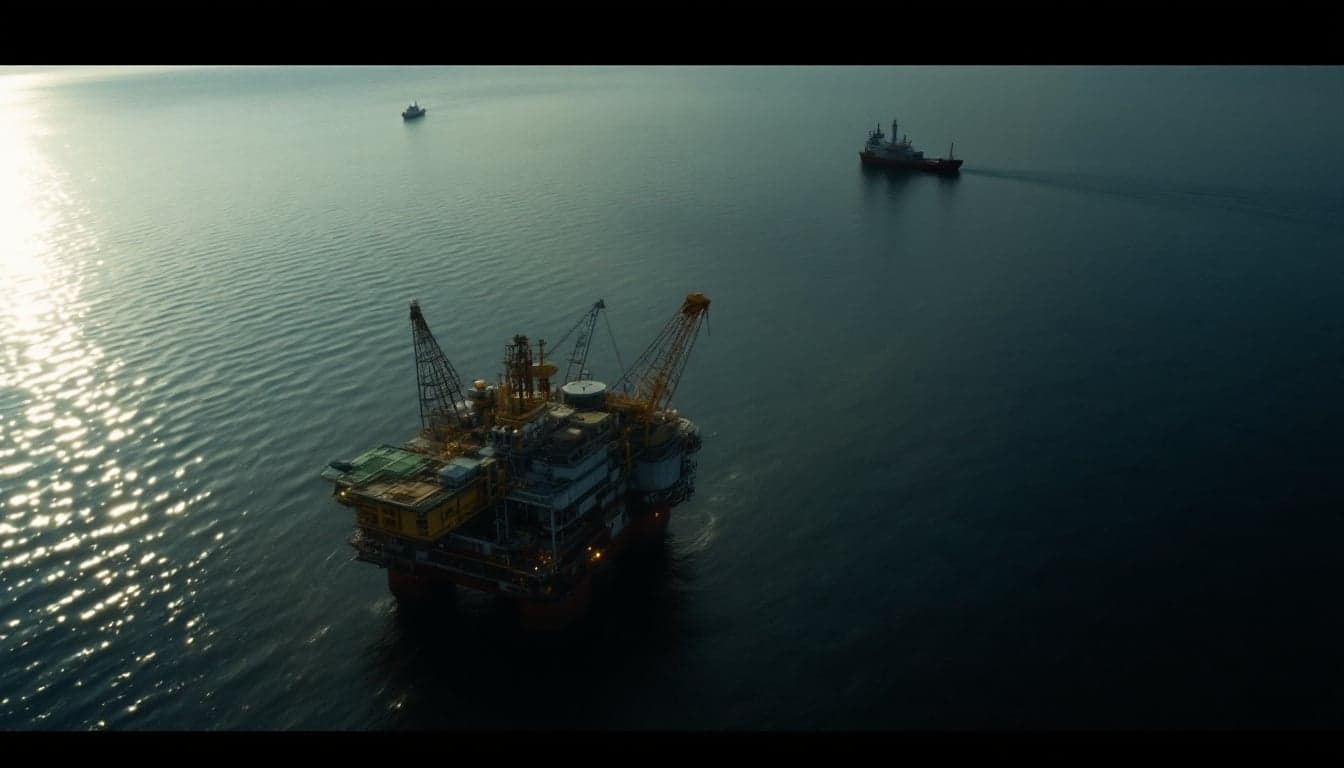
According to Offshore Engineer, BW Energy has confirmed commercial oil volumes in two appraisal wells at the Dussafu field, located offshore Gabon. The wells identified approximately 8 million to 9 million barrels of oil, reinforcing the field's development case.
The confirmation follows the company's ongoing appraisal program at Dussafu, a block where BW Energy has been the primary development operator. The results establish commercial viability across the appraised intervals, providing the technical foundation needed to advance further development planning.
No additional technical details regarding well depth, reservoir characteristics, or planned production timelines were disclosed in the source reporting.
WHY IT MATTERS
For Brazilian offshore professionals, the Dussafu result carries limited direct operational consequence — but it is worth reading as a signal about the current state of frontier appraisal economics in West Africa, a region that competes with Brazil for international capital allocation.
An 8–9 million barrel confirmation across two wells is a commercially viable result for a smaller independent operator, but it sits well below the threshold that typically attracts supermajor attention in deepwater contexts. BW Energy operates with a capital model built around monetizing mid-scale discoveries efficiently, and a result in this range is consistent with that strategy. The comparison with Brazil's pre-salt appraisal history is instructive: Petrobras and its consortium partners routinely work with resource estimates an order of magnitude larger per structure, which shapes very different investment and infrastructure decisions.
The more relevant question for the Brazilian market is what this type of result says about the competitive landscape for exploration capital. International E&P independents — the category into which BW Energy falls — are increasingly selective about where they deploy appraisal budgets. West Africa and Brazil both compete for that capital, and each confirmation of commercial volumes in West Africa, however modest, contributes to the attractiveness of the region as an investment destination. Brazilian regulators and operators have an ongoing interest in ensuring that Brazil's licensing terms, fiscal regime, and operational environment remain competitive against comparable frontier jurisdictions.
For Brazilian service and equipment suppliers, the Gabon result is a reminder that West Africa remains an active market for the kinds of subsea and floating production services in which Brazilian companies have developed significant capability. Operators working smaller-scale West African fields frequently source FPSO solutions, subsea equipment, and offshore services from the same global supply chains that serve Brazil. A confirmed commercial discovery, even at the 8–9 million barrel scale, eventually translates into procurement activity.
From a technical standpoint, the appraisal well confirmation at Dussafu also reflects a broader industry pattern: operators are returning to existing licensed blocks to systematically appraise previously identified but undeveloped intervals. This is distinct from greenfield exploration and carries lower geological risk. Brazil has seen analogous dynamics in mature blocks where secondary and tertiary appraisal programs have unlocked incremental volumes that were not economic under earlier fiscal or technology conditions. The discipline of systematic appraisal — rather than chasing new acreage — has become a more common strategic posture across the industry as capital costs remain elevated.
Finally, for Brazilian professionals tracking the independent operator segment globally, BW Energy's continued activity at Dussafu illustrates how smaller E&P companies sustain development momentum through incremental appraisal rather than large-scale exploration campaigns. This model has relevance to discussions in Brazil about how to structure licensing rounds that attract a broader range of operators beyond the supermajors and Petrobras — a policy question that ANP has engaged with through successive round designs.
CONTEXT
Gabon's offshore sector has attracted sustained interest from independent operators over the past decade, in part because the country's established regulatory framework and existing infrastructure lower the threshold for commercial development. BW Energy has been among the more active independents in the region, and the Dussafu block has been a central asset in that strategy.
The result arrives at a moment when exploration budgets globally are being allocated with greater selectivity. Confirmations of commercial volumes — even at moderate scale — carry more weight in the current environment than they might have during periods of more abundant capital. For Brazil, the parallel dynamic is the continued deepening of pre-salt appraisal programs, where the scale of resource confirmation operates in a different register but the underlying logic of systematic appraisal is the same.