CNOOC's floating wind-to-oilfield integration signals a maturing technology path
A 16 MW floating wind platform now feeds power to an active oilfield grid in the South China Sea — a configuration Brazilian operators are watching from a distance.
The News
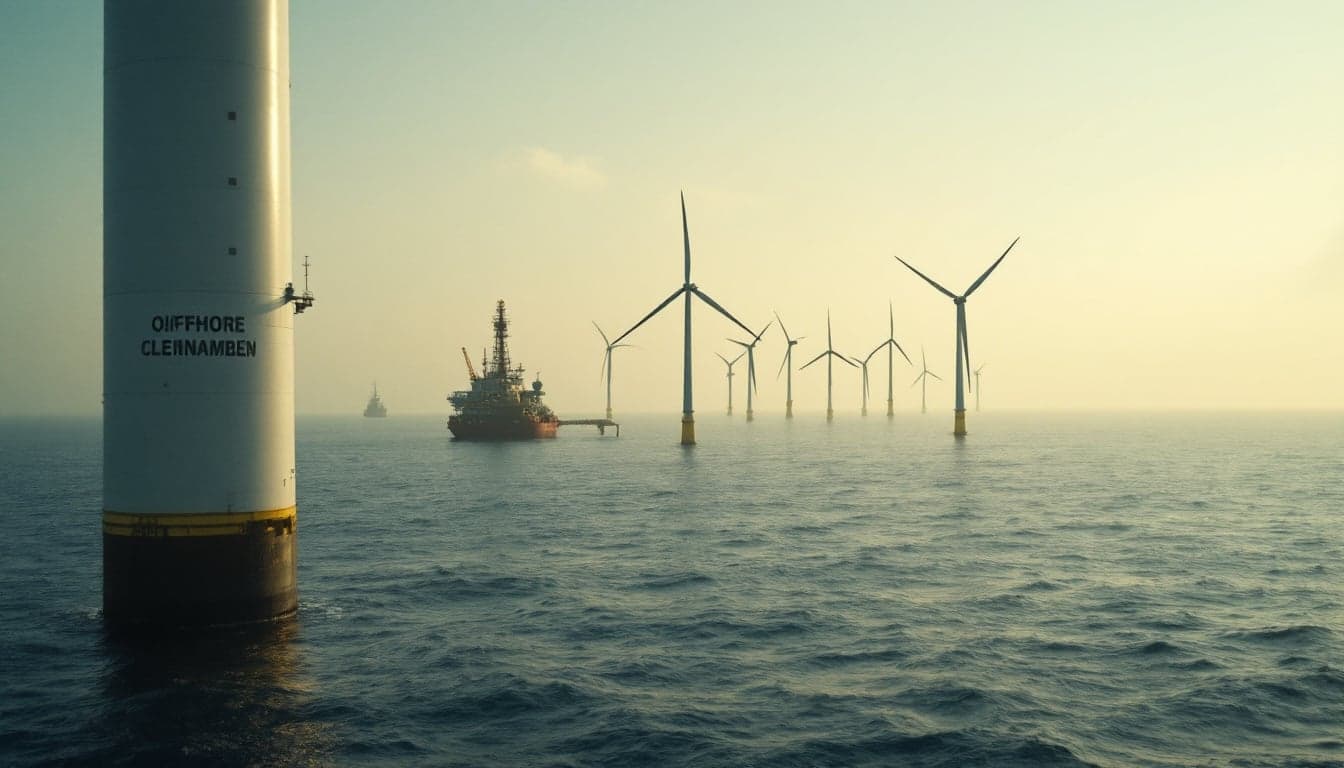
According to Offshore Energy, China National Offshore Oil Corporation (CNOOC) has begun operating a 16 MW floating wind platform in the South China Sea. The unit is now supplying electricity directly to the grid serving the Lufeng oilfield, according to Chinese media reports cited by the publication.
The development marks a transition from demonstration-phase floating wind projects toward operational integration with producing oilfield infrastructure. No further technical specifications regarding the platform's hull concept, mooring configuration, or grid connection architecture were included in the available reporting.
Why It Matters
The significance of this development is less about the turbine rating itself and more about the use case: a floating wind asset delivering power to an active oilfield grid. That is a meaningfully different proposition from a standalone floating wind demonstration. It implies that the unit has met the reliability and availability thresholds that oilfield power consumers require — a threshold that has historically been the central technical objection to integrating variable renewable generation into offshore production systems.
For the Brazilian offshore sector, the immediate operational relevance is limited. Petrobras's deepwater pre-sal production infrastructure relies on large FPSOs with onboard gas-fired generation, and the capital and regulatory architecture around those assets is mature and deeply embedded. Swapping or supplementing that generation model with floating wind involves questions that go well beyond turbine availability — including grid stability on isolated offshore microgrids, the economics of stranded gas that would otherwise fuel topsides generation, and the contractual structures governing FPSO power systems.
That said, the Brazilian offshore market does have a structural characteristic that makes floating wind-to-oilfield integration worth monitoring over a longer horizon: the pre-sal fields are located in water depths and at distances from shore where fixed-bottom offshore wind is not viable. If floating wind matures to the point where it can reliably and economically supplement or displace topsides gas generation on FPSOs, the pre-sal cluster becomes a potential application environment. The timeline for that scenario remains long, but CNOOC's Lufeng integration is the kind of operational data point that shortens the distance between concept and credibility.
There is also a supply chain and industrial policy dimension worth noting. Brazil's offshore wind regulatory framework — still developing under ANP and ANEEL jurisdictions — has focused primarily on fixed-bottom projects in shallower northeastern waters. Floating wind has received attention in policy discussions, but without an operational reference base, it has remained a future-tense conversation. As projects like Lufeng accumulate operating hours, the evidentiary basis for Brazilian regulatory and commercial decisions around floating wind strengthens, even if the technology transfer pathway from China to Brazil involves its own complexities.
For Brazilian engineering and subsea service companies, the Lufeng configuration also raises a practical question about what an oilfield-integrated floating wind system requires in terms of ongoing support: dynamic cable inspection, mooring integrity management, turbine maintenance in offshore conditions. These are service categories where Brazilian companies with deepwater experience — in ROV operations, mooring engineering, and offshore logistics — could plausibly find adjacency to a future floating wind-to-oilfield market, should one develop domestically.
The broader structural read is this: each time a floating wind unit transitions from a pilot designation to an oilfield utility asset, the technology moves one step closer to the kind of bankability that project finance requires. That progression matters for Brazil not because Lufeng is directly replicable here, but because the global floating wind industry's maturation curve sets the conditions under which Brazilian operators and regulators will eventually have to make real decisions about the role of the technology in the country's offshore energy mix.
Context
CNOOC has been among the more active national oil companies in testing floating wind integration with offshore production assets, consistent with China's broader push to develop domestic floating wind supply chains and operational experience. The Lufeng oilfield has served as a testbed for this configuration. Whether the operational data from this project will be made available in a form that international operators and regulators can directly reference remains to be seen, but the existence of an operating reference project changes the nature of the conversation in markets like Brazil where floating wind-to-oilfield integration is still largely theoretical.
Source: OFFSHORE ENERGY