ExxonMobil expands exploration footprint in Stabroek with 35-well campaign
A large-scale environmental authorization request in Guyana signals sustained operator commitment to the Stabroek block — with indirect implications for the regional deepwater supply chain.
THE NEWS
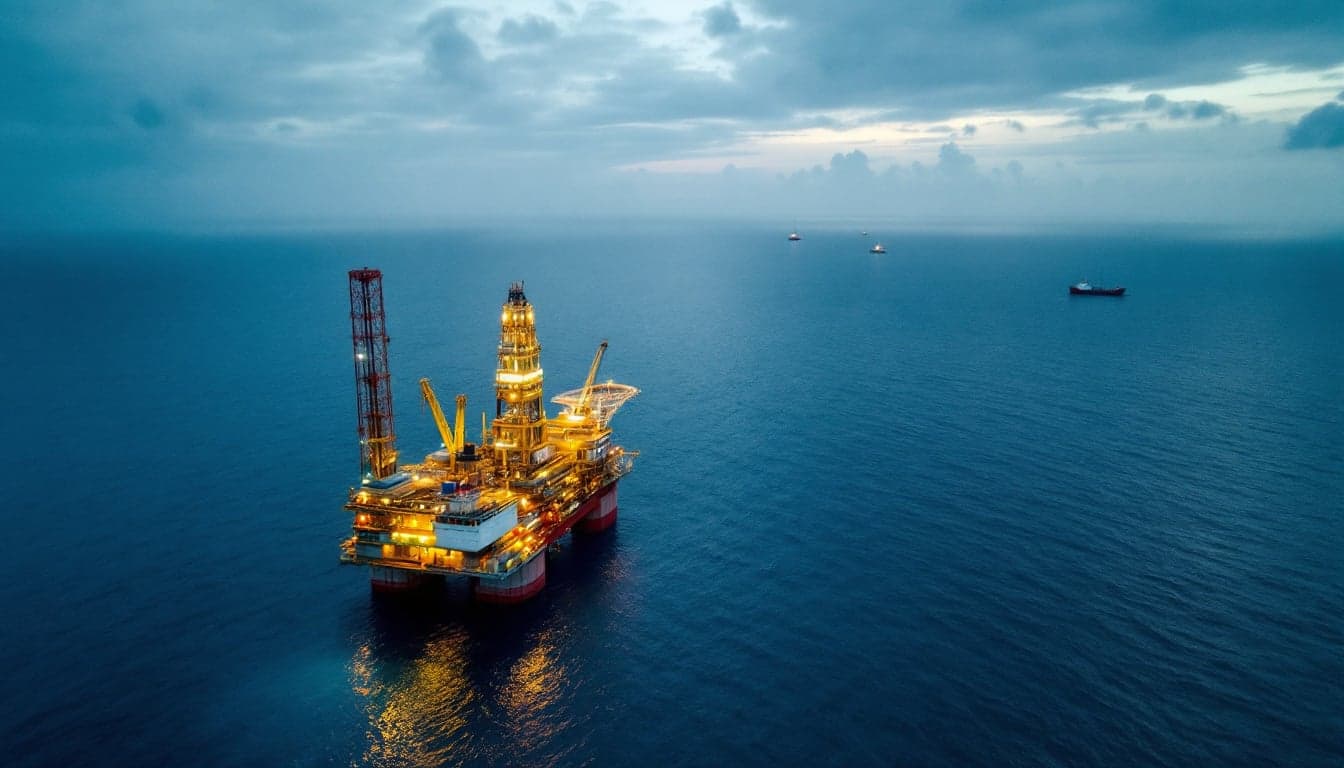
According to Offshore Engineer, ExxonMobil has submitted an application for environmental authorization covering a 35-well exploration campaign in the Stabroek block, located approximately 120 miles (193 km) off Guyana's Atlantic coastline. The application marks a formal step in the regulatory process required before drilling operations can proceed at scale in the block.
The scope of the campaign — 35 wells — reflects a sustained exploration commitment to Stabroek, which has been the site of significant hydrocarbon discoveries in recent years. No timeline for regulatory approval or operational start has been disclosed in the available reporting.
The authorization request is directed at Guyana's environmental regulatory framework, a process analogous in structure, if not in specific requirements, to the licensing and environmental permitting steps that operators must navigate in Brazil through ANP and IBAMA.
WHY IT MATTERS
For Brazilian offshore professionals, the direct operational impact of this development is limited. Stabroek is a Guyanese block, governed by Guyanese law, and the wells in question will be drilled under a regulatory regime that has no formal connection to Brazil's pre-sal framework. On that narrow read, this is a competitor-market story.
The more relevant analytical lens is the regional supply chain. Deepwater exploration campaigns of this magnitude — 35 wells represents a substantial drilling program by any standard — generate sustained demand for drilling rigs, subsea equipment, ROV services, marine logistics, and specialized personnel. The question for Brazilian-based suppliers and contractors is whether any of that demand flows through regional hubs, and whether Brazilian-flagged or Brazilian-operated assets are positioned to compete for work in Guyana's expanding offshore sector.
Brazil has developed one of the most technically capable deepwater supply chains in the world, built around the pre-sal program. That capability is, in principle, exportable. However, the regulatory environment for vessel and equipment deployment in Guyana operates under different cabotage and content rules than Brazil's own Lei do Petróleo framework. Brazilian suppliers looking at Guyana as an adjacent market need to account for those structural differences rather than assuming that pre-sal credentials translate directly into Guyanese contract eligibility.
There is also a rig market dimension worth tracking. A 35-well campaign in Stabroek, if authorized and executed over a multi-year horizon, will absorb drillship and semi-submersible capacity in the Atlantic basin. Brazil's own deepwater drilling program — anchored by Petrobras's long-cycle FPSO development schedule — competes for the same pool of sixth- and seventh-generation drillships. Any sustained increase in rig demand from Guyana tightens the market that Brazilian operators also draw from, with potential rate implications for future contract negotiations.
For Petrobras specifically, the Stabroek program reinforces a pattern that has been visible for several years: the Guyana-Suriname basin has attracted major operator capital at a pace that places it among the most active deepwater frontiers in the Atlantic. Petrobras operates with a different asset base, capital structure, and production profile than ExxonMobil's Guyana venture, but the competitive context for Atlantic deepwater investment is one that Brazilian operators and their partners monitor closely. The pace of Stabroek's development — and now its continued exploration expansion — informs how international capital allocates across Atlantic basin opportunities.
From a regulatory comparison standpoint, the environmental authorization process that ExxonMobil is navigating in Guyana is worth watching for Brazilian regulators and industry associations. Guyana has moved to build out its upstream regulatory capacity relatively quickly, and how it handles a multi-well environmental authorization of this scale will provide a data point on regulatory throughput in a competing jurisdiction. IBAMA and ANP have their own established processes; understanding how peer jurisdictions manage similar authorizations is part of the comparative regulatory intelligence that informs policy discussions in Brazil.
CONTEXT
The Stabroek block has been central to Guyana's emergence as a significant Atlantic deepwater producer. ExxonMobil operates the block alongside consortium partners. The current authorization request for exploration wells suggests that, even as development drilling and production infrastructure have advanced in the block, the operator continues to view the exploration upside as material enough to warrant a large-scale appraisal and delineation program.
For the broader Atlantic deepwater market, this trajectory reinforces a structural shift that has been underway for several years: the center of gravity for new deepwater exploration activity has expanded beyond the traditional anchors of Brazil and West Africa to include the Guyana-Suriname basin as a sustained, multi-cycle opportunity. Brazilian operators and suppliers that have built their competitive positioning around pre-sal are well placed to engage with that broader market — but doing so requires deliberate commercial and regulatory strategy, not simply an extension of domestic operating models.
Source: OFFSHORE ENGINEER