France's 11-project offshore wind tender signals European scale ambitions
Paris moves toward a consolidated, large-scale wind tender. For Brazil's offshore sector, the European pace sets a reference point worth tracking.
THE NEWS
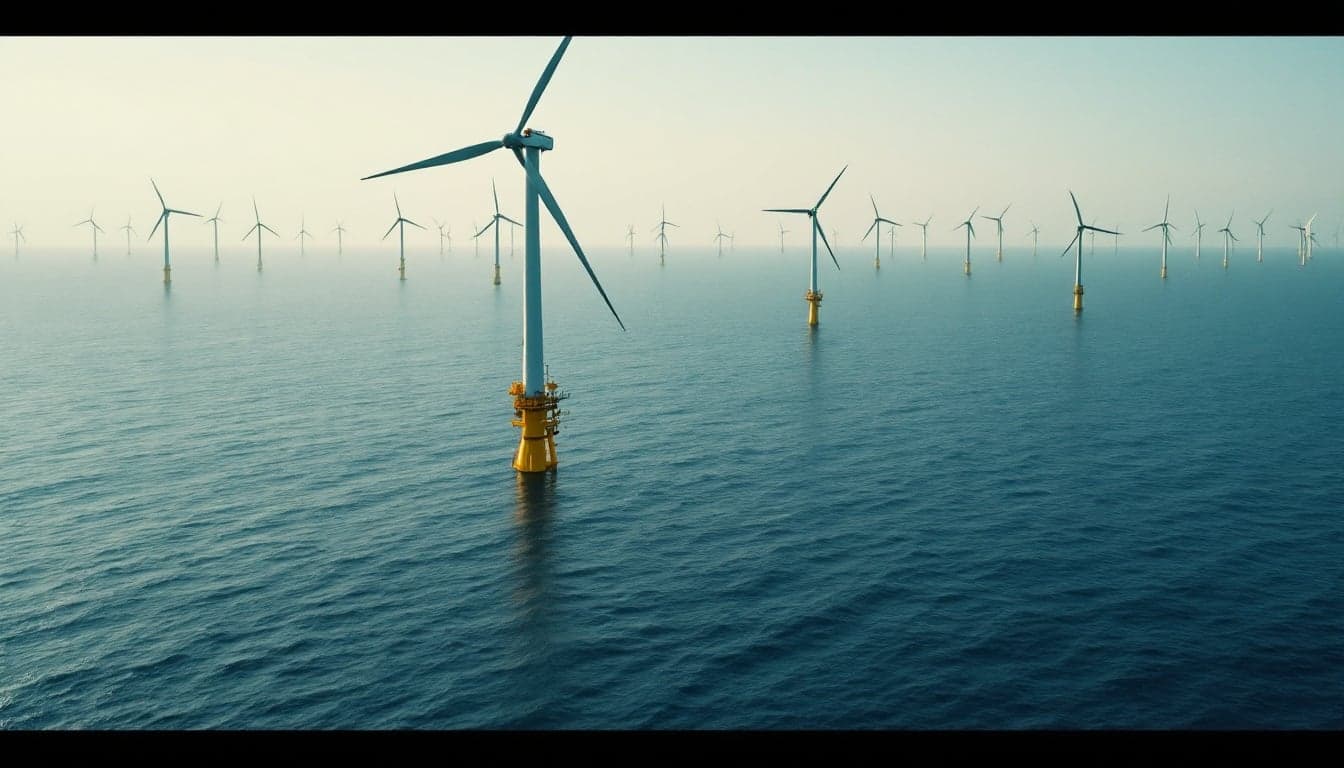
According to The Maritime Executive, the French government is preparing to release specifications for its next offshore wind tender, which covers 11 separate projects distributed across France's coastal zones. The tender represents one of the more expansive procurement exercises undertaken by a European government in the offshore wind segment, consolidating multiple project sites into a single competitive process.
The article indicates that the tender spans each of France's maritime regions, suggesting a deliberate effort to distribute development across the country's Atlantic, Channel, and Mediterranean-adjacent coastlines. No financial figures, capacity targets, or award timelines are specified in the available source material.
The French government's approach — bundling multiple project sites under one tender framework — reflects a procurement model that several European administrations have been refining over the past several years, aiming to attract developers capable of managing portfolio-scale commitments rather than single-site bids.
WHY IT MATTERS
For readers of BrazilOffshore, a French offshore wind tender may appear peripheral. Brazilian relevance is, by any honest assessment, low in the near term. However, the structural logic of what France is attempting carries lessons that translate directly to the Brazilian offshore regulatory environment — particularly as the country's own nascent offshore wind licensing framework continues to take shape under IBAMA and the MME.
The bundled-tender model France is deploying is worth examining analytically. Rather than issuing individual block-style licenses for discrete areas — the model familiar to anyone who has followed ANP oil and gas rounds — France is presenting developers with a portfolio of sites under unified specifications. This creates a different risk profile for prospective developers: higher entry complexity, but also greater certainty of scale if awarded. For a capital-intensive asset class like offshore wind, where installation vessels, grid connection infrastructure, and supply chain mobilization all carry significant fixed costs, scale certainty has real economic value.
Brazil's offshore wind regulatory framework is still being structured. The country's coastline — particularly the northeastern region, where wind resources and shallow bathymetry align favorably — has attracted expressions of interest from several international developers. The question Brazilian regulators and planners face is not whether offshore wind will arrive, but what procurement architecture will govern it. The French example, alongside comparable exercises in the UK, Germany, and the Netherlands, offers a live dataset of what consolidated versus fragmented tendering produces in terms of developer participation, bid pricing, and project delivery timelines.
For Brazilian offshore oil and gas professionals specifically, the relevance runs through a different channel: vessel and infrastructure demand. Offshore wind installation requires specialized heavy-lift and cable-lay vessels, some of which currently operate in or transit through the South Atlantic. As European tender pipelines expand and absorb more of this specialized fleet, Brazilian operators — including those managing pre-sal development schedules — may find vessel availability and day-rate dynamics increasingly influenced by European wind procurement cycles. This is not a near-term operational concern, but it is a medium-horizon planning variable that asset managers and procurement teams benefit from monitoring.
There is also a supply chain dimension. Brazilian industrial policy has long sought to develop local content in offshore operations, and the offshore wind sector — should it develop at scale in Brazil — will face similar local content pressures. Observing how France structures its local content or national industrial participation requirements within this tender will provide a useful comparative reference for Brazilian policymakers and industry associations as they engage with the MME's ongoing consultations on offshore wind regulation.
Finally, the sheer scale of the French exercise — 11 projects, multiple maritime regions — is a signal about where European energy policy is allocating capital and regulatory bandwidth. For Brazilian companies or investors with exposure to European energy markets, understanding the competitive landscape that this tender will shape is relevant to portfolio positioning, even if the direct operational overlap with Brazilian offshore oil and gas is limited.
CONTEXT
France has historically moved more cautiously than the UK or Germany in deploying offshore wind at scale, in part due to a grid and energy mix dominated by nuclear generation. A tender of this scope represents a meaningful acceleration of that trajectory, and positions France as a more active participant in the European offshore wind supply chain competition.
For Brazil, the more immediate regulatory analogs remain the country's own oil and gas licensing rounds and the developing framework for offshore wind concessions. How the ANP and MME eventually structure competitive processes for offshore wind areas will draw on international precedents — and France's current exercise will likely be among the cases referenced in those discussions.