Ghana's carbonate reservoir find adds a new geological variable to West Africa exploration
A hydrocarbon discovery in a carbonate reservoir off Ghana opens a geological discussion that, while distant, carries indirect echoes for Brazilian frontier exploration.
THE NEWS
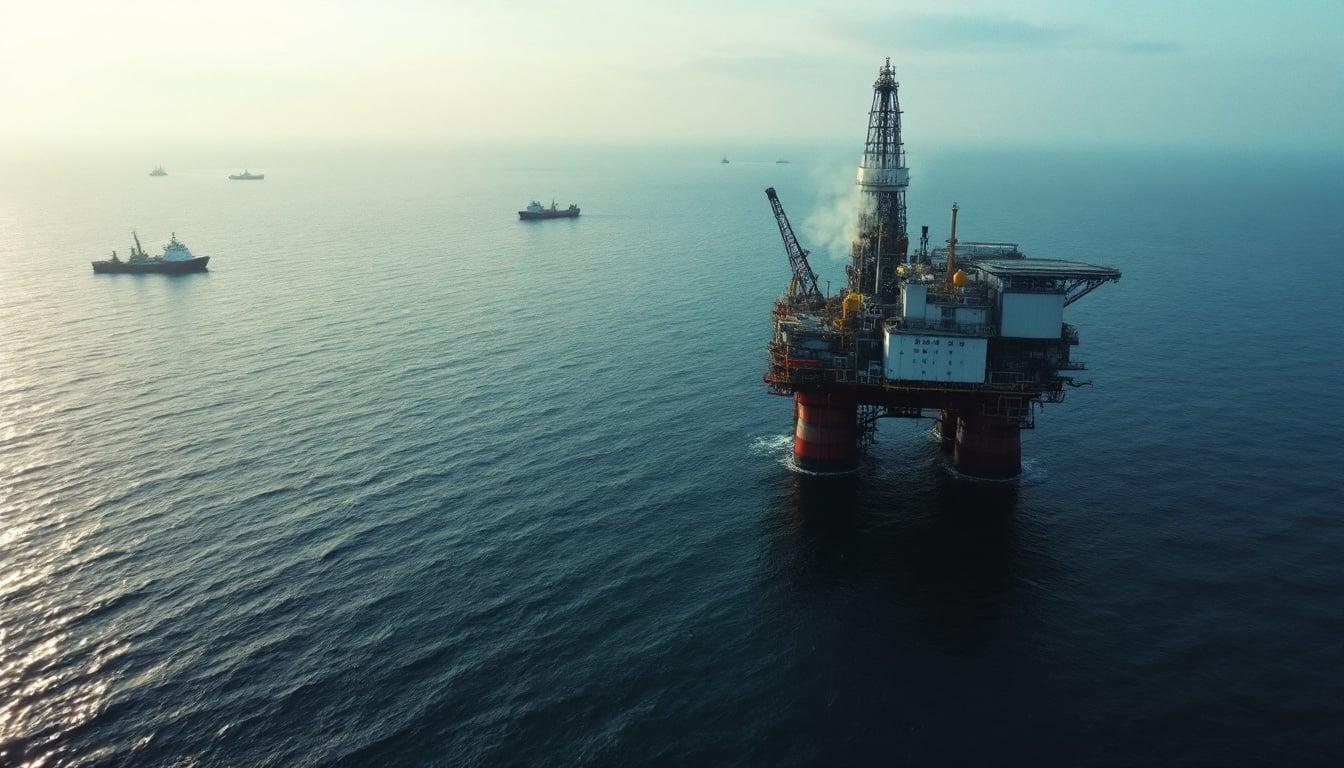
According to Offshore Energy, drilling operations off Ghana's coast have yielded hydrocarbons and identified what is described as the country's first carbonate reservoir. The discovery is being positioned as an expansion of Ghana's upstream potential, adding a reservoir type that had not previously been confirmed in the country's offshore acreage.
The find introduces carbonate geology into a West African basin that has historically been characterized by clastic reservoirs — the rock type associated with Ghana's established producing fields. The source describes the result as "unlocking new potential" for the country's upstream sector, suggesting that operators active in the region may need to revisit their geological models for acreage previously assessed under clastic assumptions.
No operator names, well locations, water depths, or resource estimates were disclosed in the available source material.
WHY IT MATTERS
For Brazilian readers, the direct operational impact of a discovery off Ghana is limited. Brazil and Ghana operate in distinct basins, under different regulatory frameworks, and with largely separate contractor ecosystems. The Brazilian relevance here is geological and strategic rather than commercial.
The significance of a carbonate reservoir confirmation in West Africa lies in what it signals about the diversity of geological settings that remain underexplored in Atlantic-margin basins. Brazil's own pre-salt province is, of course, built on carbonate reservoirs — the microbialite carbonates of the Santos and Campos basins are the geological foundation of the country's most productive deepwater fields. That context makes Brazilian geoscientists and exploration teams well-positioned to follow this West African development with professional interest, even if no direct operational overlap exists.
What the Ghana find does illustrate is a broader pattern in global exploration: carbonate reservoirs, long associated in the Atlantic context almost exclusively with Brazil's pre-salt, are being identified in basins where they were not previously the primary exploration target. This gradual broadening of carbonate exploration across the South Atlantic and West African margins is a geological trend worth tracking. It does not alter Brazil's competitive position in the near term, but it does suggest that the geological playbook for Atlantic-margin exploration is still being written.
For Brazilian service and technology companies with international ambitions, a new carbonate play in West Africa is a data point worth noting. Carbonate reservoir characterization, completion design for carbonate formations, and the subsea and drilling technologies refined in Brazil's pre-salt over the past fifteen years represent a body of expertise that is not uniformly distributed across the global industry. If Ghana's carbonate play matures into a development-stage asset, the technical demands of that development will differ from what operators in the region have typically managed.
From a regulatory and licensing perspective, the ANP and Brazilian operators are unlikely to adjust their near-term strategies on the basis of this single result. Brazil's exploration agenda is driven by its own acreage cycles, the ongoing development of pre-salt blocks, and the maturation of post-salt and marginal field opportunities. However, exploration teams at companies active in both Brazil and West Africa may find the Ghana result useful context as they assess analogous geological settings.
CONTEXT
Ghana's offshore sector has been anchored by clastic deepwater fields since the Jubilee discovery in 2007 reshaped the country's upstream profile. The identification of a carbonate reservoir — regardless of its ultimate commercial scale — represents a geological diversification that exploration geologists will want to model against the broader West African passive margin. The Atlantic margins of South America and West Africa share a common Mesozoic rift history, which is precisely why carbonate analogies between the two coasts carry more than superficial interest.
The result also arrives at a moment when global exploration budgets remain selective and frontier geological plays require strong technical justification to attract capital. A confirmed carbonate presence in Ghana does not automatically translate into development activity, but it does expand the geological hypothesis space for operators reviewing their West African portfolios.