Gulf of Oman interdictions signal a new phase in Hormuz disruption
With 91 commercial vessels redirected and four disabled, the US blockade on Iranian shipping is reshaping freight, insurance, and crude routing — with consequences that reach Brazil.
THE NEWS
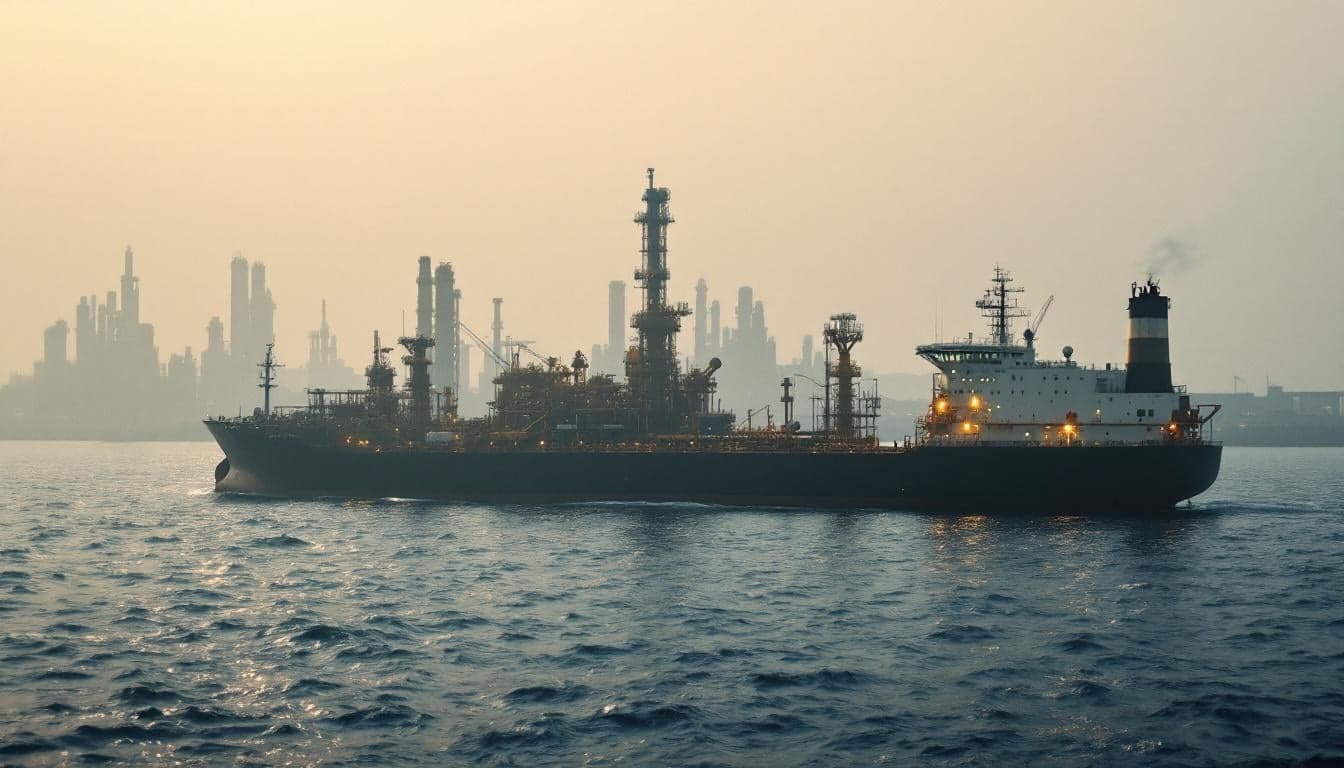
According to Marine Insight, US Marines from the 31st Marine Expeditionary Unit boarded and searched an Iranian-flagged oil tanker, identified as the M/T Celestial Sea, in the Gulf of Oman. The vessel was intercepted after US Central Command determined it was suspected of attempting to transit toward an Iranian port in violation of a US-led maritime blockade imposed during the ongoing conflict with Tehran. After the search, US forces released the vessel and directed its crew to alter course.
US Central Command reported that its forces have now redirected 91 commercial ships as part of blockade enforcement, with four additional vessels disabled during operations. The boarding of the M/T Celestial Sea marks at least the fifth commercial vessel boarded since the Trump administration imposed the blockade in mid-April. US interdiction operations have extended beyond the Gulf of Oman into the Indian Ocean and waters between Sri Lanka and Indonesia.
Diplomatic activity continues in parallel with the naval operations. US President Donald Trump stated the US was in the "final stages" of talks with Iran, while Iranian foreign ministry spokesperson Esmaeil Baghaei confirmed Tehran was reviewing a US proposal delivered through Pakistani mediation and that Iran was working with Oman and other coastal states on measures for safe shipping traffic through the Strait of Hormuz. Separately, the US military reported that approximately 1,550 vessels from 87 countries remain stranded in Gulf waters due to the ongoing disruption.
WHY IT MATTERS
The Strait of Hormuz handles a large share of global crude exports. Any sustained disruption to vessel movements through that chokepoint — whether through blockade enforcement, insurance withdrawal, or flag-state risk aversion — propagates rapidly into freight rates, cargo routing decisions, and ultimately crude benchmarks. The current situation is no longer a hypothetical stress scenario; it is an active operational reality with documented vessel counts and naval engagement.
For Brazilian operators and traders, the first-order effect runs through benchmark pricing. Brazil's pre-sal production is largely priced against Brent. Sustained Hormuz-linked supply anxiety tends to support Brent premiums, which in the near term benefits Brazilian export revenues. Petrobras and independent operators with active export programs are exposed to this dynamic in a favorable direction, at least while disruption persists and demand holds.
The second-order effect is more complex. Brazilian refiners — including Petrobras's own refining system — source a portion of their crude diet from Middle Eastern grades. If Middle Eastern crude becomes harder to route, more expensive to insure, or subject to flag-state complications, the landed cost of those imports rises. Refiners would need to either absorb the margin compression, adjust their crude slate toward domestic or Atlantic Basin alternatives, or pass costs downstream. None of these adjustments is cost-free, and the speed at which they can be executed depends on refinery configuration and term contract flexibility.
Marine insurance is a less-discussed but operationally significant channel. The Lloyd's and international P&I markets have already adjusted war-risk premiums for Gulf and adjacent waters. Brazilian-flagged or Brazilian-chartered vessels operating in or near the affected region face higher insurance costs regardless of cargo. For offshore support vessels, shuttle tankers, or LNG carriers with routes that touch the Indian Ocean corridor, this is a real cost increase, not a theoretical one. Brazilian shipping companies and charterers should be reviewing their war-risk exposure and policy triggers with their brokers.
The geographic spread of interdiction operations — now documented across the Indian Ocean and waters near Sri Lanka and Indonesia — is analytically significant. It suggests the enforcement perimeter is not confined to the immediate Gulf region, which has implications for vessel routing decisions globally. Ships attempting to avoid the Strait of Hormuz by using longer alternative routes may still encounter enforcement activity, raising the operational and commercial calculus for any vessel with Iranian cargo or port-of-call exposure.
For Brazil's regulatory and naval community, the episode is also a reminder of the legal and operational frameworks governing maritime interdiction. The Brazilian Navy maintains its own doctrine on freedom of navigation and has institutional interest in how major naval powers conduct and justify boarding operations in international waters. ANP and the Ministry of Mines and Energy will be monitoring the energy market implications, but the maritime security dimension is one that the Navy's strategic planning community will be tracking independently.
CONTEXT
The current Hormuz disruption follows a pattern seen in prior Gulf crises — the 2019 tanker attacks, the 2023-2024 Red Sea Houthi campaign — where a regional security event translates into durable freight and insurance repricing well beyond the immediate theater. In the Red Sea episode, Brazilian exporters and importers adjusted routing and absorbed higher freight costs for an extended period before normalization. The current situation involves a state-level naval blockade rather than non-state actor interdiction, which introduces different legal and diplomatic resolution timelines.
The diplomatic track — US-Iran talks mediated through Pakistan, Iranian engagement with Oman on shipping safety — suggests both sides retain an interest in a negotiated path. The outcome of those talks will determine whether the current disruption is a weeks-long episode or a structural feature of global crude routing for the medium term. Brazilian market participants with exposure to Middle Eastern crude flows or Atlantic Basin freight rates would benefit from monitoring the diplomatic calendar alongside the naval operational picture.
Source: MARINE INSIGHT