Hormuz incident count reaches six: what the escalation means for Brazilian crude flows
A cluster of vessel strikes in the Strait of Hormuz in quick succession raises freight, insurance, and routing questions with direct relevance to Brazil's export and import positions.
THE NEWS
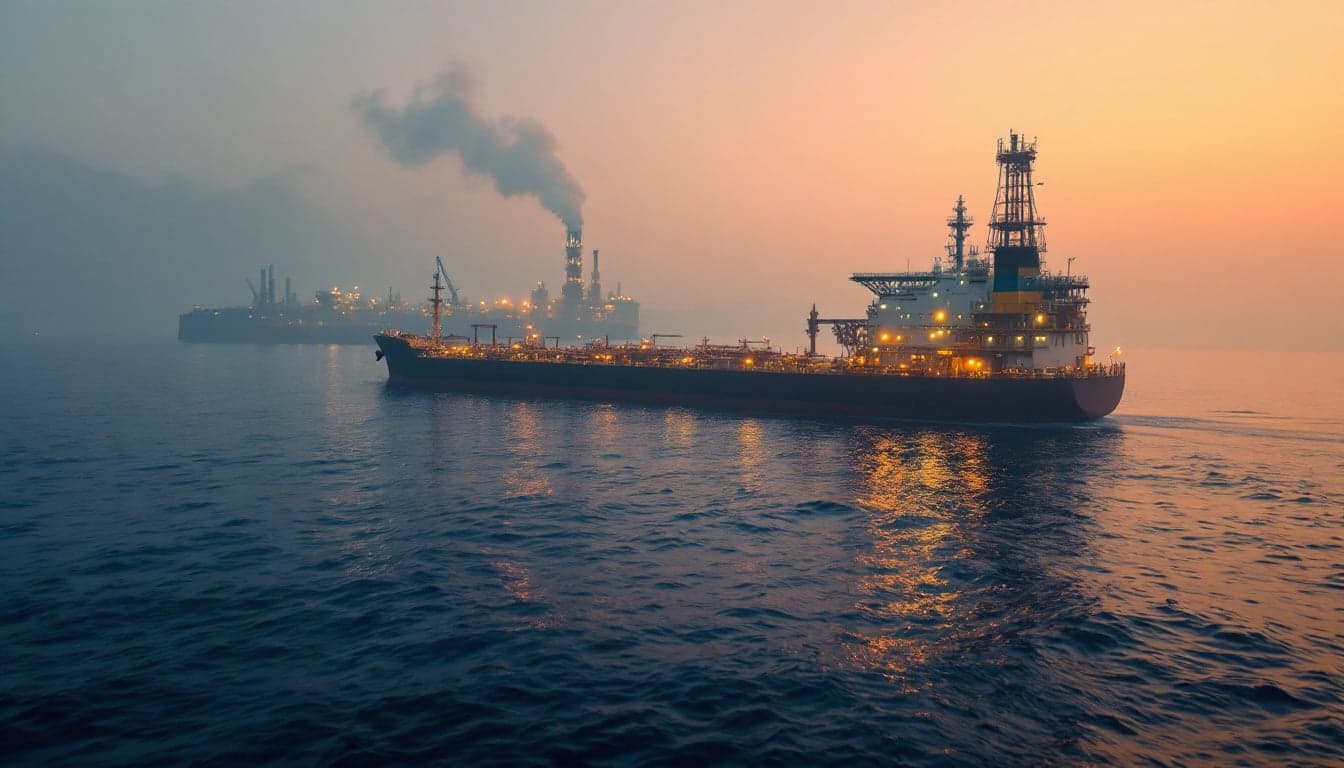
According to gCaptain, another tanker was struck in the Strait of Hormuz, bringing the total number of vessels reported hit in the strategic waterway since Sunday to at least six. UK Maritime Trade Operations flagged the incidents as part of a pattern of activity in the strait that has drawn attention from shipping authorities monitoring the region.
The source article indicates the incidents occurred within a compressed timeframe, with multiple vessels affected across what is one of the world's most transited maritime chokepoints. Details on vessel flags, cargo types, or responsible parties were not fully disclosed in the available reporting.
The pace of incidents — six vessels in a matter of days — represents a notable concentration of events in a passage that handles a substantial share of global seaborne crude and LNG movements.
WHY IT MATTERS
For Brazilian offshore professionals, the Strait of Hormuz is not an abstraction. Brazil's crude export model has historically been oriented toward Asia — particularly China — and a meaningful portion of that trade moves through or near Gulf corridors. Simultaneously, Brazil imports refined products and, to a lesser extent, crude from Middle Eastern producers. Any sustained disruption to Hormuz transit affects both sides of that equation.
The most immediate effect of a cluster of vessel strikes is on war-risk insurance premiums. Underwriters at Lloyd's and the broader marine insurance market respond quickly to geopolitical incidents in designated high-risk zones. When premiums spike, the cost is absorbed somewhere in the supply chain — by charterers, traders, or ultimately refiners. Brazilian operators and traders sourcing Middle Eastern crude or routing cargoes through the region will be watching their voyage economics closely.
Freight rate volatility is the second-order effect. If tonnage operators begin avoiding the strait or demanding risk premiums to transit it, effective freight rates on routes touching the Persian Gulf rise. This can redirect VLCC and Suezmax capacity away from Gulf loading ports, tightening vessel availability on Atlantic Basin routes — which are central to Brazilian export logistics. A tighter tanker market on Atlantic routes is not uniformly negative for Brazilian producers, since it can support freight rates on their own export voyages, but it introduces planning complexity for operators managing multi-cargo schedules.
From a supply-side perspective, any reduction in Gulf crude availability — whether from reduced liftings, re-routing delays, or cargo losses — can shift buyer attention toward Atlantic Basin alternatives. Brazil's pre-sal grades have established a strong position with Asian refiners precisely because they offer a non-Middle Eastern supply option with competitive netbacks. A period of Hormuz uncertainty historically tends to prompt at least short-term inquiry toward alternative origin crudes, and Brazilian grades are well-positioned to receive that inquiry. This is not a structural windfall, but it is a market dynamic worth tracking.
For Petrobras and other Brazilian operators managing their own shipping and chartering programs, the operational question is one of exposure mapping. Vessels under time charter or voyage charter that are currently in or near the Gulf region require route risk assessment. Brazilian offshore companies with international operations — or with service vessels transiting the region — should be reviewing their maritime security protocols in line with guidance from UK Maritime Trade Operations and equivalent bodies.
The regulatory dimension is also relevant. The Brazilian Maritime Authority (Marinha do Brasil) and the National Petroleum Agency (ANP) do not directly regulate international shipping lanes, but Brazilian-flagged vessels and Brazilian-owned tonnage operating internationally are subject to IMO guidance frameworks that are likely to be updated as this situation develops. Companies with Brazilian-flagged tankers in international trade should monitor IMO circulars and flag state advisories.
Finally, there is a longer-horizon consideration for Brazil's energy positioning. One of the structural arguments for expanding Brazilian offshore production — and for the pre-sal program specifically — has been supply security for importing nations seeking diversification away from Middle Eastern concentration. Every episode of Hormuz instability reinforces that argument at the geopolitical level. Whether that translates into accelerated offtake agreements or long-term supply contracts is a commercial question, but the strategic backdrop becomes incrementally more favorable for Atlantic Basin producers each time Gulf transit risk rises.
CONTEXT
The Strait of Hormuz has periodically experienced elevated incident activity over the past several years, with prior episodes triggering temporary insurance zone designations, naval escort arrangements, and shifts in tanker routing. The current cluster of six incidents within a short window is consistent with prior escalation patterns in the strait, though the specific context and attribution of the current incidents remain to be fully established by maritime authorities.
Brazil's exposure to Hormuz dynamics has grown in proportion to its deepening trade relationship with Asian buyers. As Brazilian crude export volumes have expanded, so has the relevance of any factor that affects the economics or reliability of the Asia-Pacific supply corridor — of which Hormuz is a critical node.
Source: GCAPTAIN