Hormuz under renewed pressure as U.S.-Iran exchanges escalate
A ceasefire dispute, drone incidents, and a contested tolling regime are converging on the world's most consequential oil chokepoint.
THE NEWS
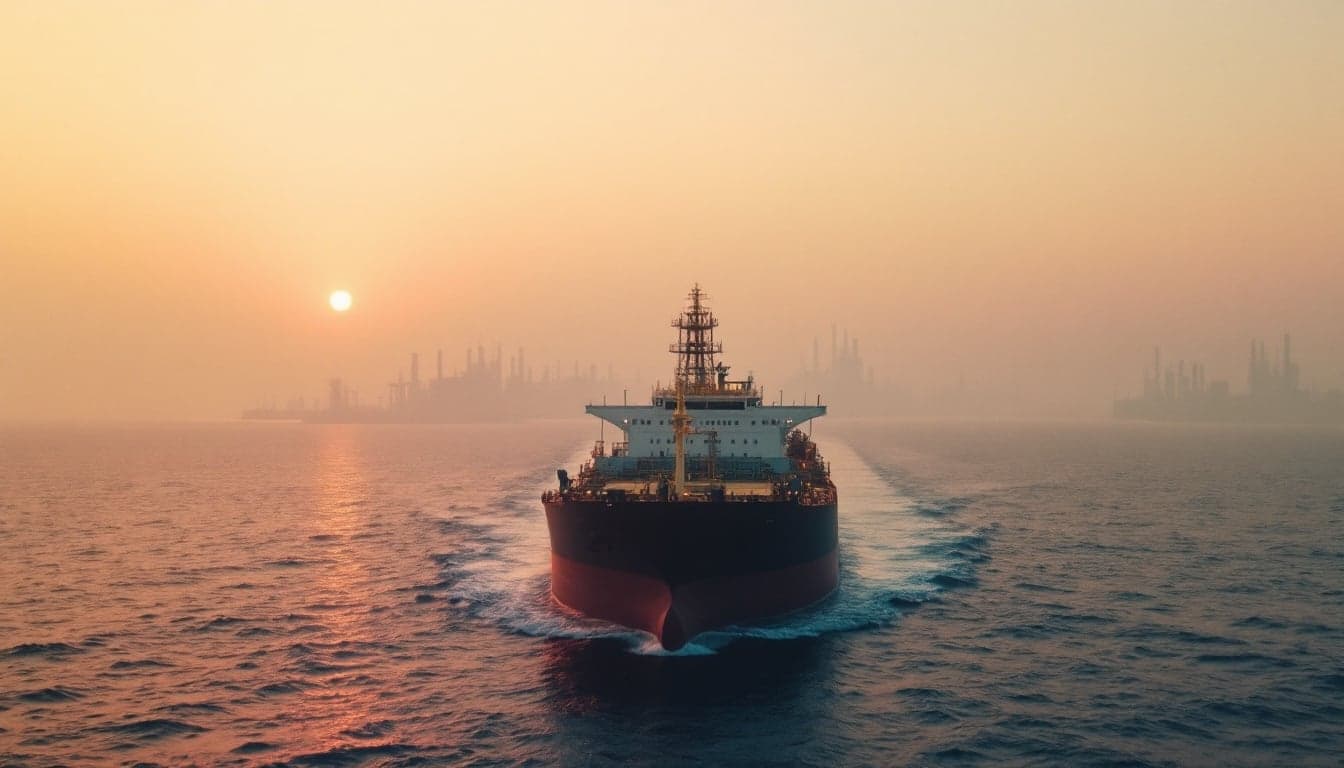
According to Marine Insight, Iran attacked a U.S. air base in Kuwait following American strikes on the southern part of Iran overnight. The U.S. had previously shot down Iranian drones over the Strait of Hormuz and struck a military site in the port city of Bandar Abbas. U.S. Central Command described the Kuwait attack as an "egregious ceasefire violation" that occurred hours after Iranian forces launched five one-way attack drones posing a threat in and near the Strait.
The exchange marks the second U.S. military action against Iran within three days, with Washington characterizing its operations as self-defence measures. Iranian Foreign Ministry spokesman Esmail Baqai condemned U.S. actions as a violation of the ceasefire agreement, while Tehran stated it would continue collecting fees for navigational services and managing traffic through the waterway.
In parallel, the U.S. imposed sanctions on the Persian Gulf Strait Authority — a newly formed Iranian body designated to collect transit payments from vessels passing through the Strait of Hormuz — and the U.S. Treasury warned that any party paying the transit fee would also face sanctions. Iranian state TV reported a draft agreement that included details about reopening Hormuz and a possible U.S. forces withdrawal from the Gulf; the White House called that reporting "complete fabrication."
WHY IT MATTERS
For Brazilian offshore professionals, the Strait of Hormuz is not a distant geopolitical abstraction. It is the passage through which a substantial share of global crude supply moves, and any sustained disruption to that flow carries direct consequences for oil price benchmarks that set the reference for Petrobras's export revenues, for the economics of pre-sal development decisions, and for the cost of imported refined products that Brazil still relies on.
The immediate market signal is one of elevated uncertainty rather than confirmed disruption. The strait has not been formally closed, and traffic continues — but the combination of active drone incidents in and near the waterway, contested jurisdiction over transit fees, and a breakdown in ceasefire communications introduces a risk premium that traders and operators cannot ignore. For Brazilian operators with long-cycle deepwater projects, this kind of sustained geopolitical volatility is more consequential than a single-day price spike: it complicates the price assumptions embedded in project sanction models and reserve monetization timelines.
The sanctions dimension adds a layer of operational complexity that is directly relevant to Brazilian shipping and trading counterparts. The U.S. Treasury's warning that any party paying the Iranian transit fee will face sanctions places vessel operators, charterers, and cargo insurers in a difficult position. Brazilian companies — whether state-linked or independent — that route crude or product cargoes through Hormuz will need to assess their exposure carefully. The practical effect is that the new Iranian tolling regime, regardless of its legal standing under international maritime law, becomes operationally toxic for any entity with U.S. dollar clearing exposure, which covers virtually every significant player in the Brazilian offshore supply chain.
The contested nature of the ceasefire itself is analytically significant. Both Washington and Tehran are publicly asserting that the other side violated an agreement, while simultaneously signalling some residual interest in a negotiated outcome. This pattern — escalatory military action combined with continued diplomatic signalling — is consistent with a coercive bargaining dynamic rather than a trajectory toward open conflict. That reading offers a degree of reassurance, but it also means the situation is likely to remain volatile and headline-driven for an extended period, with periodic spikes in freight risk premiums and tanker insurance rates.
For Petrobras and independent Brazilian operators, the more structural question is how a prolonged period of Hormuz instability reshapes Atlantic Basin crude flows. If Middle Eastern producers face sustained constraints or route diversions, the relative attractiveness of pre-sal barrels — which move through the South Atlantic without passing through any contested chokepoint — may increase for certain buyer profiles, particularly in Asia. This is not a guaranteed outcome, and the relationship between Hormuz risk and pre-sal demand is mediated by many variables, but it is a dynamic worth monitoring at the commercial level.
CONTEXT
The Strait of Hormuz has been the subject of periodic closure threats for decades, and the offshore industry has developed contingency frameworks accordingly. What distinguishes the current episode is the layering of a sanctions regime on top of a military standoff — the Persian Gulf Strait Authority's tolling mechanism introduces a legal and financial dimension that pure military posturing does not. The last comparable episode involving both kinetic action and financial instruments targeting Hormuz transit was during the tanker war period of the 1980s, though the institutional and sanctions architecture of today is considerably more complex.
Brazil's ANP and the broader regulatory community have not publicly commented on the situation, which is appropriate given its early stage. However, Brazilian operators and their risk management teams will be well-served by tracking not only the military dimension but the sanctions compliance dimension closely, as the latter has a longer operational tail regardless of how the immediate military situation resolves.