Ichthys LNG strike continues as Fair Work hearing is delayed
Industrial action at Inpex's Australian LNG facility persists after a tribunal postponement — a case worth watching for Brazilian labor relations in offshore.
THE NEWS
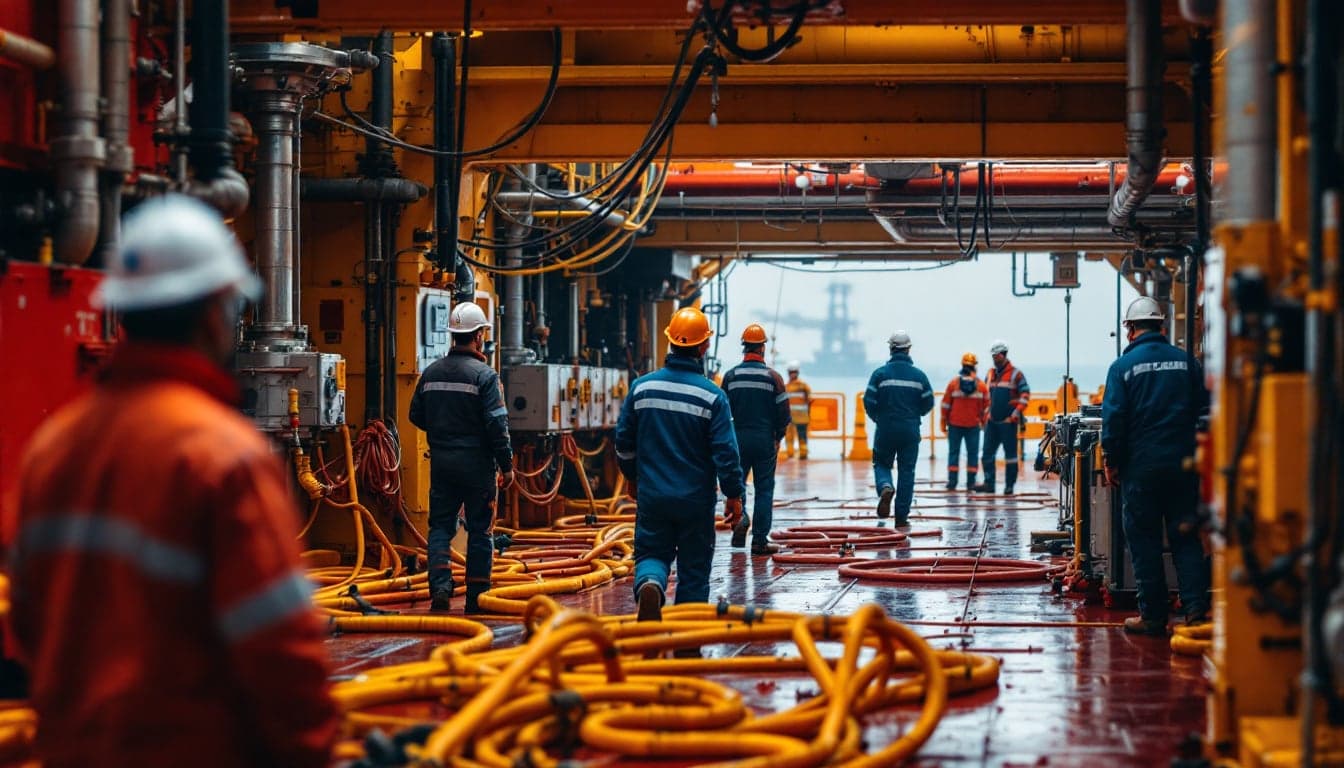
According to Offshore Engineer, industrial action at Inpex's Ichthys liquefied natural gas facilities continued after a hearing on the company's application to halt the strikes was postponed. The Fair Work hearing, which Inpex had sought to use as a mechanism to suspend the industrial action, was rescheduled from Friday to Saturday, extending the period of operational disruption at the facility.
Inpex, the Japanese energy company operating Ichthys LNG, had filed the application in an attempt to bring the strikes to a halt through the Australian industrial relations tribunal system. The postponement of the hearing meant the industrial action remained in effect at least through the weekend, with no immediate resolution reported.
The source article does not detail the specific workforce demands driving the action, the number of workers involved, or the operational impact in quantified terms. The situation remained active and unresolved at the time of publication.
WHY IT MATTERS
For Brazilian offshore professionals, the Ichthys situation is a useful reference point precisely because it illustrates the structural tension that exists in large, capital-intensive LNG and offshore operations between workforce bargaining power and operator continuity requirements — a tension that is not unique to Australia.
Brazil's offshore sector operates under a distinct labor framework, governed primarily by the Consolidação das Leis do Trabalho (CLT) and sector-specific collective bargaining agreements negotiated between operators, contractors, and unions such as the FUP (Federação Única dos Petroleiros). The mechanisms available to Brazilian operators and workers differ from Australia's Fair Work system, but the underlying dynamic — workers in critical infrastructure leveraging operational disruption as a negotiating tool — is structurally comparable.
What makes the Ichthys case analytically interesting is the role of the tribunal as a third-party arbiter. In Australia, operators can apply to the Fair Work Commission to suspend or terminate industrial action on grounds of significant economic harm or safety risk. Brazil's labor court system (Justiça do Trabalho) offers analogous mechanisms, including the possibility of declaring a strike abusive in essential services. The pace and outcome of such interventions shape how both sides calibrate their strategies in future negotiations — a dynamic Brazilian operators and union representatives are well acquainted with from their own history of offshore stoppages.
For Petrobras and the broader ecosystem of operators active in Brazil — including international companies with assets in multiple jurisdictions — cases like Ichthys serve as data points in workforce strategy planning. The ability of a relatively small group of specialized workers to sustain operational pressure on a major LNG export facility underscores the leverage that comes with technical scarcity. Offshore and LNG operations require certified, experienced personnel who cannot be replaced quickly; this structural reality shapes the bargaining dynamic regardless of jurisdiction.
The postponement of the hearing itself carries a secondary signal: tribunal processes in complex industrial disputes rarely resolve quickly, and the gap between filing an application and obtaining a binding outcome can be long enough to alter the economics of the standoff. Operators weighing the cost of continued disruption against the cost of accelerated settlement face a calculus that is familiar to anyone who has managed a Brazilian offshore labor negotiation. The Ichthys case is a reminder that institutional mechanisms intended to manage industrial action have their own timelines — and those timelines are not always aligned with operational urgency.
For Brazilian suppliers and contractors operating in the LNG and offshore space, the case is also a reminder of workforce continuity risk as a project variable. As Brazil's pre-sal production continues to scale and discussions around potential LNG infrastructure investments evolve, the workforce relations model adopted at each facility will be a material factor in long-term operational stability.
CONTEXT
Industrial action at LNG export facilities has occurred at multiple points across the global industry, with notable cases in Australia drawing particular attention given that country's position as a major LNG exporter. The Fair Work Commission has been invoked in previous Australian LNG disputes, establishing a pattern in which tribunal processes run in parallel with continued operational disruption until a resolution — negotiated or imposed — is reached.
Brazil has its own history of offshore industrial action, including stoppages that have affected platform operations and supply chains. The structural lesson from cases like Ichthys is that the combination of specialized labor, remote operations, and high fixed costs creates conditions in which workforce disputes tend to be resolved through negotiation rather than attrition — a pattern consistent with outcomes observed in the Brazilian context as well.