Jamaica weighs offshore exploration amid Caribbean energy shift
With $1.5–2 billion a year spent on fuel imports, Jamaica is assessing whether domestic exploration can alter its energy equation — and what that means for the wider Caribbean model.
THE NEWS
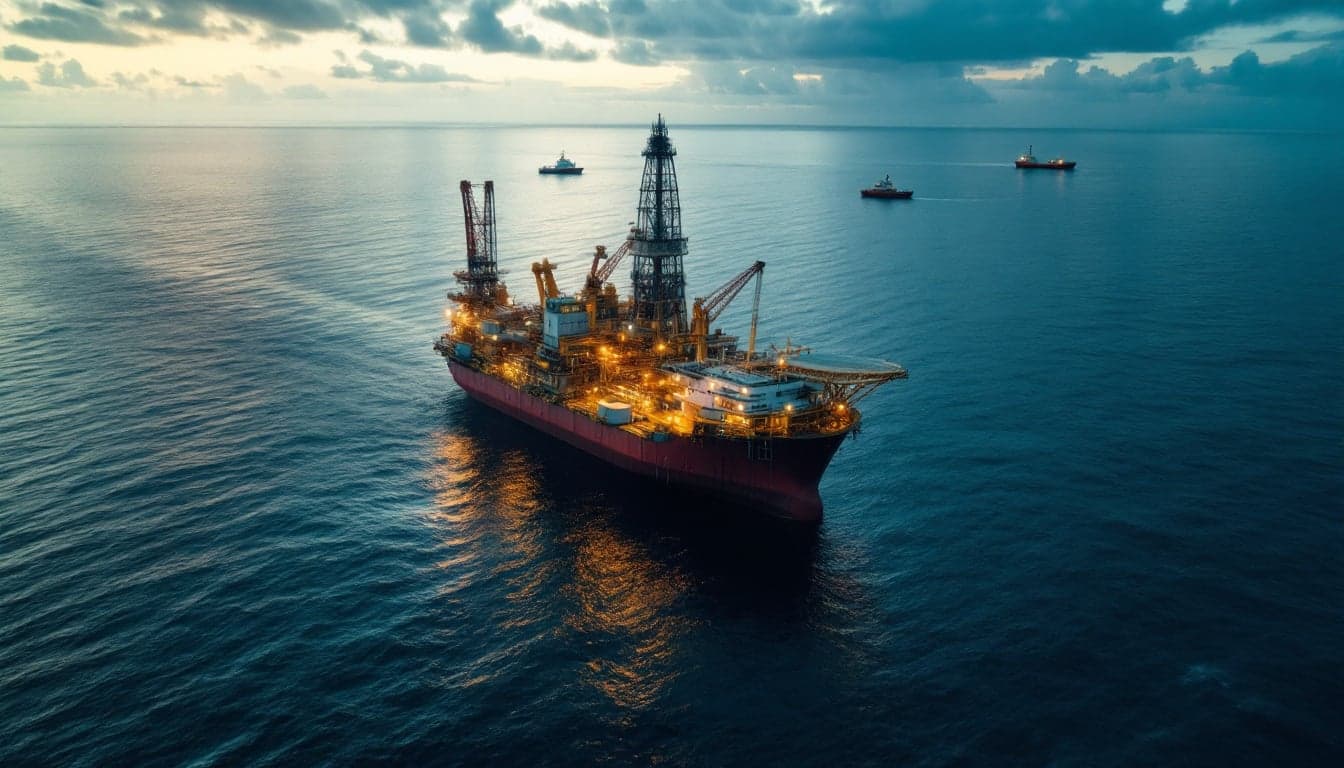
According to OilPrice.com, Jamaica is evaluating plans to drill for oil, positioning itself alongside Caribbean neighbours that have pursued offshore exploration in recent years. The article notes that Caribbean exploration activity has expanded following successful drilling in Guyana and Suriname, and that Jamaica is considering whether to follow a comparable path.
The context is significant: Jamaica currently imports all of its fuel, at a reported cost of between $1.5 billion and $2 billion annually. That import dependency frames the domestic debate over whether offshore exploration represents a viable route to energy security, or whether the country's acknowledged vulnerability to climate change complicates any such ambition.
The piece also situates Jamaica's deliberations against the International Energy Agency's public position calling for an end to new hydrocarbon exploration — a tension that reflects a broader policy fault line visible across developing economies weighing energy access against decarbonisation commitments.
WHY IT MATTERS
For Brazilian offshore professionals, Jamaica's exploration posture is worth tracking — not because it represents an immediate commercial opportunity, but because it illustrates a regional dynamic that shapes how Brazil's own pre-salt model is perceived and referenced internationally.
Guyana and Suriname have become the reference cases for frontier basin development in the Atlantic Americas. Both are cited, including in this article, as the template Jamaica might follow. Brazil's deepwater infrastructure, regulatory architecture, and service sector have all contributed — directly or indirectly — to how the region thinks about what successful offshore development looks like at scale. When smaller Caribbean states evaluate exploration, they are partly benchmarking against the pre-salt trajectory, even when that connection is implicit rather than stated.
For Brazilian service and equipment companies with regional exposure, the question is whether Jamaica's exploration programme, if it advances, would create procurement or partnership opportunities. At this stage, the source material is too early-stage to support that inference with confidence. What can be said is that any Caribbean frontier programme typically draws on established deepwater supply chains, and Brazil's offshore sector — through equipment manufacturers, subsea contractors, and training institutions — has built regional presence in prior cycles.
The IEA framing in the article deserves separate attention. The tension between the agency's call to end new exploration and the energy-import reality facing economies like Jamaica is not a new debate, but it is one that Brazil navigates in its own way. Petrobras continues to sanction new pre-salt developments under a national energy security rationale, and Brazilian regulators have maintained licensing rounds despite international pressure. Jamaica's situation — full import dependency, limited domestic alternatives at scale, and significant climate exposure — makes the trade-off more acute, but the structural logic is recognisable from the Brazilian policy conversation.
For ANP and Brazilian policymakers, the Caribbean exploration wave is also a data point on how frontier licensing frameworks attract capital. Guyana's rapid transition from discovery to production under a specific fiscal and contractual model has been studied closely in the region. If Jamaica moves toward licensing, the design of its fiscal terms and local content requirements will likely draw on regional precedents — including Brazil's own evolving local content framework, which has been adjusted repeatedly to balance investment attraction against domestic industry development.
One structural observation worth noting: Jamaica's reported fuel import bill of $1.5–2 billion annually is the economic driver behind the exploration rationale. For a small island economy, that is a substantial recurring outflow. The political economy of exploration — even exploratory drilling with uncertain outcomes — becomes more defensible when set against that baseline. This is a different calculus than the one facing a mature producer, and it is a reminder that the global energy transition does not proceed uniformly across economies at different stages of energy development.
CONTEXT
Caribbean offshore exploration has attracted renewed attention since Guyana's Stabroek block development demonstrated that frontier Atlantic basins could support world-scale production. Suriname's subsequent offshore programme reinforced that reading. Jamaica's geology is distinct, and the source material does not characterise any specific prospectivity findings, so direct comparisons with those programmes should be treated cautiously.
Brazil's own experience — moving from frontier exploration to the world's largest deepwater production base over several decades — is the long-arc reference point for the region. The institutional and technical lessons from that trajectory, including the role of a national operator in de-risking frontier basins, remain relevant context for any Caribbean state now at the earliest stages of an exploration conversation.