JAPEX gas find offshore Hokkaido faces long road to commercialization
A discovery in Japan's Hidaka area highlights how exploration success and commercial viability remain distinct milestones — a distinction familiar to Brazilian operators.
THE NEWS
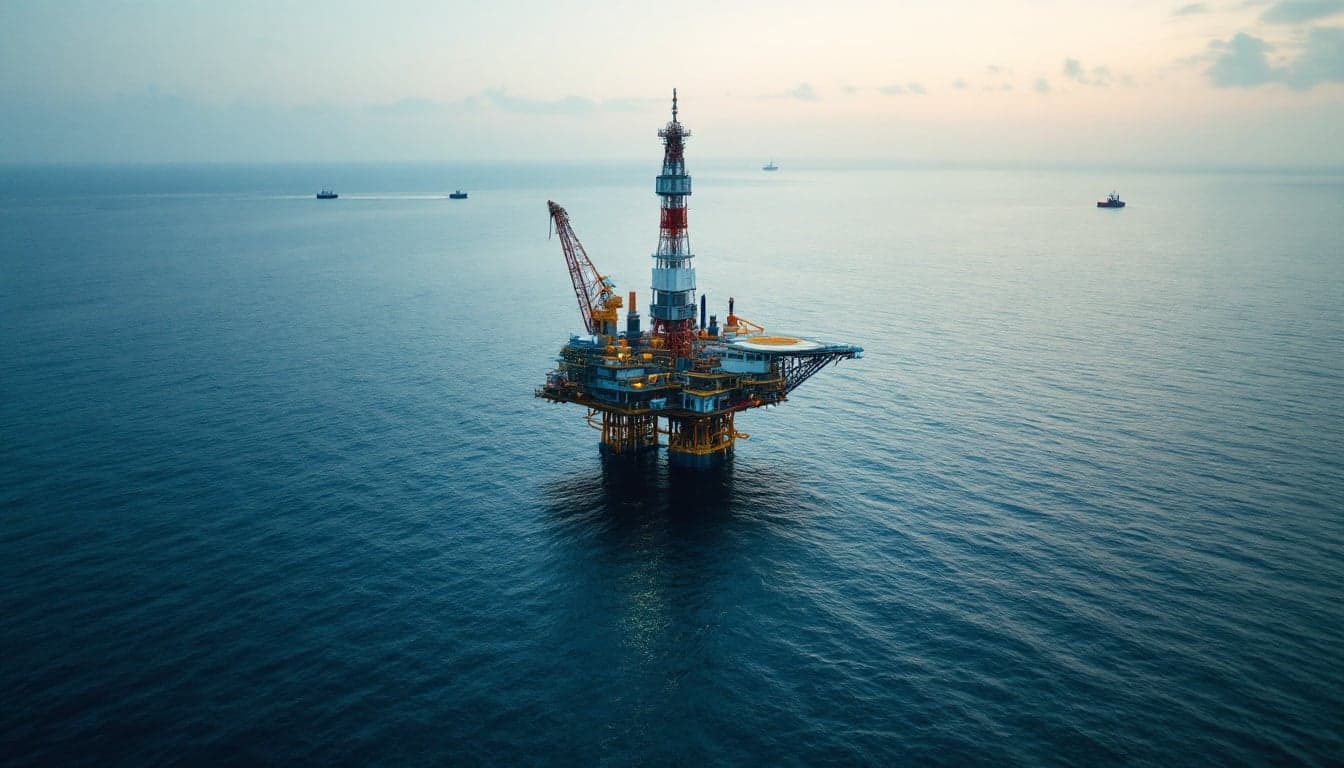
According to Offshore Energy, Japan Petroleum Exploration Co., Ltd. (JAPEX) has provided an update on its exploratory drilling activities in the offshore Hidaka area of Hokkaido, Japan. The company indicated that no immediate path to commercialization is foreseen for the gas discovery made there.
The disclosure underscores that while the exploratory campaign yielded a gas find, the gap between confirming hydrocarbons and establishing a commercially viable development remains substantial. JAPEX has not indicated a timeline for further appraisal or development decisions.
WHY IT MATTERS
For Brazilian offshore professionals, the JAPEX announcement carries a structural lesson that resonates well beyond Japan's continental shelf. The distinction between an exploration success — confirming the presence of hydrocarbons — and a commercial discovery is one of the most consequential filters in the upstream cycle. Not every well that encounters gas becomes a development project, and the Hidaka case is a clear illustration of that discipline.
Brazil's own pre-sal history offers useful contrast. The scale and reservoir quality of the Santos Basin carbonate plays compressed the appraisal-to-FID timeline considerably for the major cluster developments, supported by high flow rates and proximity to existing infrastructure. But that trajectory is not universal, and even within Brazil's offshore portfolio, frontier blocks and smaller accumulations face the same commercialization threshold that JAPEX is now navigating. Operators holding exploratory licenses in Brazil's equatorial margin or in more distant frontier areas — where infrastructure is sparse and reservoir characterization is still early — will recognize the dynamic.
The commercialization gap matters for at least three reasons that are directly relevant to the Brazilian context. First, it affects how national regulators and operators frame exploration results to the public and to investors. ANP-managed bidding rounds are premised on exploration risk, and a discovery announcement that is immediately qualified by commercialization uncertainty is, in fact, the technically honest framing. The Brazilian regulatory environment has progressively encouraged more precise disclosure around this distinction, and the JAPEX case reinforces why that precision matters.
Second, the gap has capital allocation implications. When an operator signals that a discovery does not have an immediate commercialization path, it is effectively communicating that appraisal investment — additional wells, seismic reprocessing, reservoir modeling — is required before a development commitment can be made. For companies managing diversified portfolios, this means the asset competes for capital against projects that are further along the maturity curve. Brazilian independent operators and Petrobras alike manage this kind of portfolio prioritization continuously, and the language JAPEX used is the standard vocabulary of that process.
Third, for the broader offshore supply chain — including Brazilian service companies and equipment suppliers with international exposure — the Hidaka situation is a reminder that exploration campaigns do not automatically generate development contracts. Drilling activity and development activity follow different commercial triggers, and supply chain planning that conflates the two tends to produce misaligned capacity.
The geographic and geological context of offshore Hokkaido is distinct from Brazil's offshore basins, but the commercial logic is transferable. Japan's domestic gas market has its own demand structure, infrastructure constraints, and regulatory framework, all of which shape whether a given accumulation is worth developing. Brazil faces analogous questions in its own frontier areas, where gas monetization pathways — whether through LNG, pipelines, or power generation tie-ins — are not always straightforward, and where the cost of subsea infrastructure can shift the economics of an otherwise technically promising find.
CONTEXT
JAPEX operates as one of Japan's principal upstream exploration companies, with a portfolio that extends beyond domestic acreage. The Hidaka offshore area in Hokkaido represents part of Japan's longer-term effort to evaluate domestic hydrocarbon potential in a country that imports the substantial majority of its energy needs. The strategic motivation for that exploration is clear; the commercial outcome, as this update illustrates, is a separate question.
For BrazilOffshore readers, the story is less about Japan's energy policy and more about a universal upstream dynamic: exploration results are necessary but not sufficient for development. That principle applies equally in the Campos Basin, the Santos Basin, and the equatorial margin — wherever the next frontier well is drilled.
Source: OFFSHORE ENERGY