Middle East conflict redirects upstream insurance capital toward other basins
War-risk premiums and project delays in the Middle East are prompting major insurers to seek upstream coverage opportunities elsewhere — a shift with quiet implications for Brazilian offshore.
THE NEWS
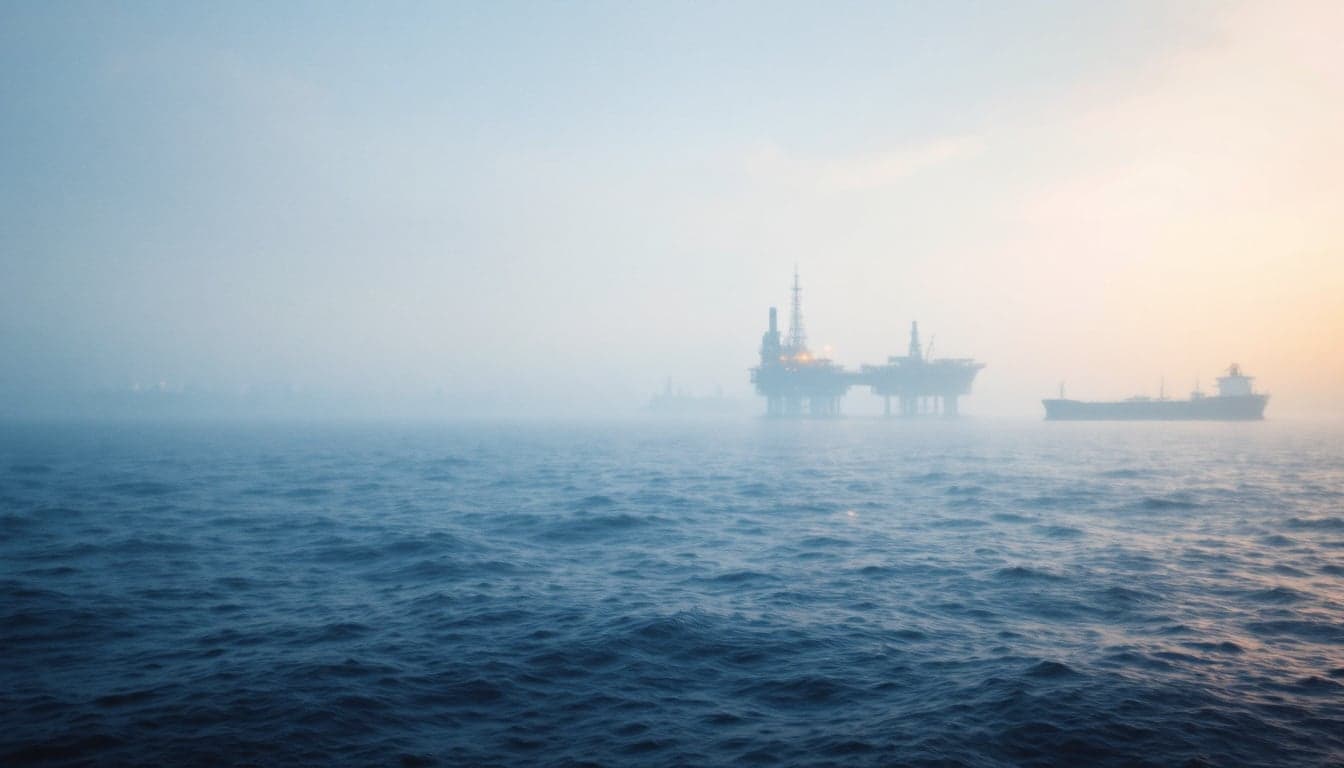
According to OilPrice.com, global insurers that had only recently moved past pressure to restrict fossil-fuel underwriting are now navigating a new disruption: the outbreak of conflict in the Middle East. The region — characterized by the source as the world's lowest-cost oil and gas producing area — became a war zone at the end of February, triggering elevated war-risk premiums and causing oil and gas drilling and construction projects there to face either delays or significant cost inflation.
Five months of sustained uncertainty around new upstream projects in the Middle East have been sufficient to prompt major insurance groups to redirect their underwriting appetite. Rather than absorbing higher-risk Middle East exposure, these insurers are reported to be turning toward drilling and project construction coverage in other regions.
The source does not specify which alternative basins are attracting the most attention, nor does it name the individual insurers involved. What it does establish is the directional shift: capital that might otherwise have supported Middle East upstream activity is now being channeled toward projects operating in lower geopolitical-risk environments.
WHY IT MATTERS
For the Brazilian offshore sector, this development is worth tracking even if its near-term effects are indirect. Brazil's deepwater and ultra-deepwater pre-salt operations represent precisely the kind of large, capital-intensive, politically stable upstream projects that insurers reallocating away from conflict zones tend to find attractive. The country's regulatory framework, its established operator base, and the long-duration nature of FPSO-anchored production contracts all reduce the underwriting complexity that war-risk environments introduce.
The practical consequence, if the trend described by OilPrice.com continues, is a potential improvement in coverage availability and — over time — pricing conditions for upstream projects in jurisdictions like Brazil. Insurance capacity is not unlimited, and when a major producing region becomes difficult to underwrite, that capacity does not simply sit idle. It seeks deployment elsewhere. Basins with strong project pipelines and manageable political risk profiles become more competitive destinations for that capital.
Brazil's current project pipeline reinforces this logic. The pre-salt development program involves a sustained cadence of FPSO deployments, subsea infrastructure installation, and well construction campaigns — each of which requires substantial marine and construction insurance coverage. If global insurers are actively seeking to expand their upstream books outside the Middle East, Brazilian operators and their EPC contractors may find themselves in a more favorable negotiating position with underwriters than they have been in recent years.
There is also a secondary effect worth considering at the supply chain level. Brazilian-based marine insurers, P&I correspondents, and specialist brokers with established relationships in the local market could see increased inbound interest from international underwriters looking to co-insure or reinsure Brazilian offshore risks. This would represent an incremental strengthening of the local insurance ecosystem — modest in isolation, but meaningful if the Middle East disruption proves prolonged.
The ESG dimension noted in the source adds a layer of context that Brazilian stakeholders should not overlook. Insurers had spent much of the early part of this decade under pressure to curtail fossil-fuel underwriting. That pressure has not disappeared; it has been partially displaced by the more immediate concern of geopolitical risk. The current window of insurer appetite for upstream projects outside the Middle East may therefore be time-bounded. Operators and project developers who can move projects to final investment decision within this window may benefit from more competitive insurance terms than those who cannot.
For ANP-regulated projects and Petrobras-led consortia in particular, the timing is relevant. Large-scale offshore construction — FPSO hull fabrication, mooring system installation, subsea pipeline laying — is exactly the category of activity the source identifies as now attracting insurer attention. Project teams managing these scopes should be engaging their insurance advisors now to understand whether current market conditions create an opportunity to lock in more favorable coverage structures ahead of construction milestones.
CONTEXT
The dynamic described here is not without precedent. Previous periods of elevated geopolitical risk in major producing regions — including earlier episodes of Persian Gulf tension — have historically produced similar portfolio rebalancing among marine and energy underwriters. What distinguishes the current moment is the convergence of two consecutive shocks to the insurance market: first the ESG-driven withdrawal of appetite, and now the geopolitical disruption. The net effect is a market that has been compressed and redirected in a relatively short period, which tends to produce more pronounced shifts in underwriter behavior than either factor would generate alone.
Brazil is not the only potential beneficiary of this redirection. Other deepwater jurisdictions with stable investment climates are likely receiving similar attention. The degree to which Brazil captures a disproportionate share of redirected insurance capital will depend in part on how effectively operators, brokers, and project developers communicate the risk profile of Brazilian offshore assets to underwriters who may be less familiar with the basin than they are with Gulf of Mexico or North Sea operations.
Source: OILPRICE.COM