Mitsui E&S moves ammonia dual-fuel engines to commercial status
The Japanese manufacturer's commercialization of ammonia propulsion and fuel supply systems marks a concrete step in an alternative-fuel pathway that Brazilian shipping and offshore operators will need to monitor.
THE NEWS
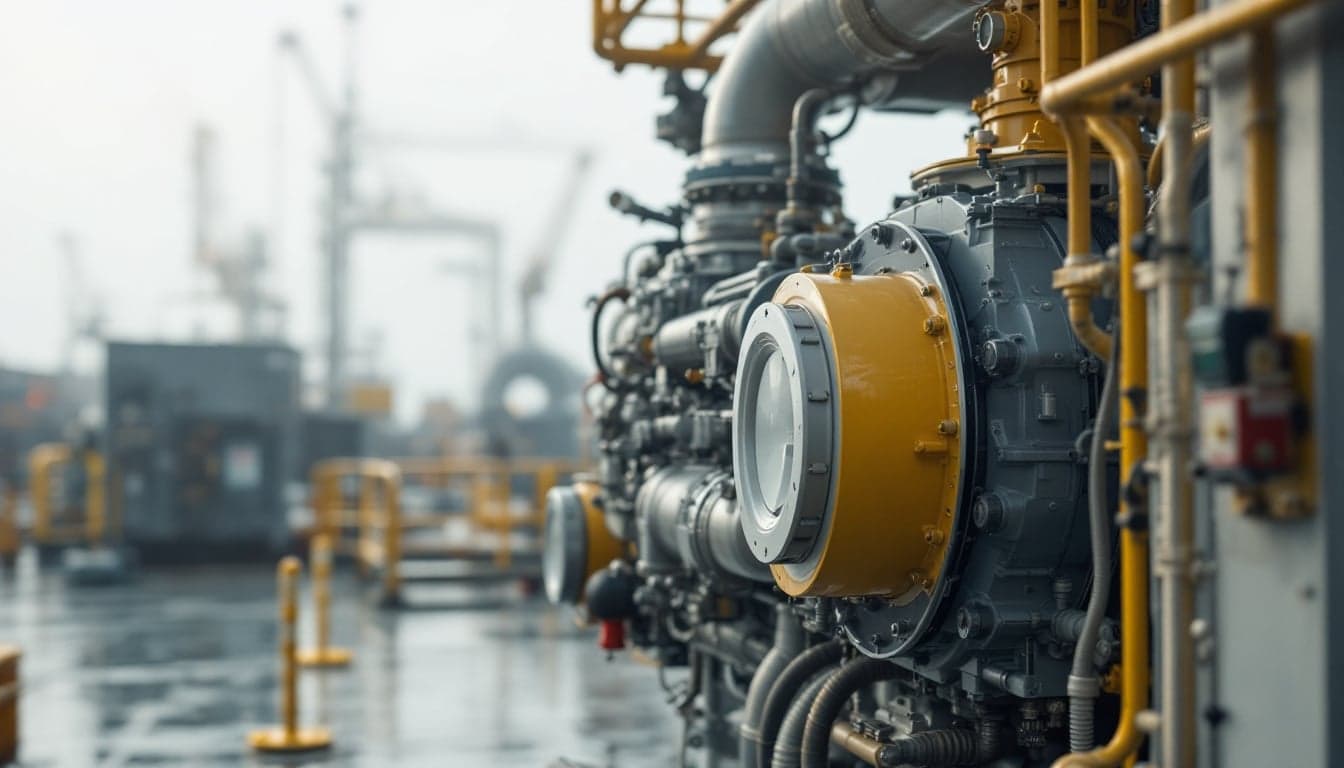
According to The Maritime Executive, Mitsui E&S Co., Ltd. has completed the commercialization of ammonia dual-fuel engines alongside an Ammonia Fuel Supply System (AFSS). The Tokyo-based manufacturer, led by President and CEO Takeyuki Takahashi, announced the development, signaling that the technology has moved beyond the prototype or demonstration phase and is now being offered as a commercial product.
The announcement positions Mitsui E&S among a small group of marine engine manufacturers that have brought ammonia-capable propulsion to market readiness. The dual-fuel configuration implies that vessels equipped with these engines can operate on conventional fuel as well as ammonia, providing operational flexibility during a period when ammonia bunkering infrastructure remains limited globally.
No further technical specifications, vessel classes, or contracted orders were detailed in the available source material.
WHY IT MATTERS
The commercialization of ammonia dual-fuel engines is a supply-side signal worth tracking, even if the demand side — bunkering networks, regulatory frameworks, crew training standards — remains underdeveloped in most markets, including Brazil. The significance is not that ammonia propulsion is now ubiquitous, but that at least one major manufacturer has cleared the internal threshold between development and commercial availability. That threshold matters for procurement timelines.
For Brazilian offshore operators, the immediate operational relevance is limited. The pre-salt support fleet — PSVs, AHTSs, and the FPSOs themselves — operates under contracts and capital plans that extend years into the future, and newbuild decisions at the scale required to adopt new propulsion technology are not made in response to a single manufacturer announcement. However, the longer-term procurement cycle is exactly where this kind of signal feeds in. Naval architects and marine engineers at operators and shipowners who are currently scoping vessels for delivery in the early 2030s will now have a commercial reference point for ammonia propulsion that did not formally exist before.
The Brazilian regulatory environment adds a layer of complexity. The IMO's revised GHG strategy, which Brazil as a flag state and major maritime nation is party to, sets trajectory targets that will eventually require operators to demonstrate emissions reduction across their fleets. ANP and ANTAQ have not yet published comprehensive alternative-fuel frameworks specific to offshore support or production vessels, but the international regulatory direction is clear enough that domestic frameworks are likely to follow. When they do, the availability of commercially certified ammonia dual-fuel engines from established manufacturers strengthens the technical case for including ammonia in any national alternative-fuel roadmap.
The AFSS component of the Mitsui E&S announcement is arguably as significant as the engine itself. Ammonia's properties — toxicity, corrosivity, and the specific handling requirements those characteristics impose — mean that the fuel supply system is not a minor engineering detail. A commercially available, integrated AFSS from a reputable manufacturer reduces one of the key risk arguments that shipowners and classification societies have used to slow ammonia propulsion adoption. For Brazilian shipyards, some of which have expressed interest in positioning for the next generation of offshore support vessel construction, understanding the integration requirements of systems like the AFSS is relevant to their own capability development.
It is worth noting that ammonia as a marine fuel still faces structural challenges that no single manufacturer announcement resolves. The carbon intensity of ammonia depends heavily on its production pathway — grey ammonia derived from natural gas carries a carbon footprint comparable to conventional fuels, while green ammonia produced via electrolysis from renewable energy is currently expensive and scarce. Brazil's position as a country with significant renewable energy resources and an emerging green hydrogen agenda gives it a structural interest in the green ammonia supply chain, but that supply chain is not yet mature. Operators evaluating ammonia dual-fuel vessels today would need to account for fuel availability and provenance as carefully as they account for the propulsion technology itself.
For the Brazilian offshore supply chain more broadly, the Mitsui E&S commercialization is a reference event rather than an action item. It confirms that the technology is available; it does not determine whether or when Brazilian operators will adopt it. That determination will depend on bunkering infrastructure development, classification society guidance, crew certification pathways, and ultimately the cost differential between ammonia and conventional fuels over the operational life of a vessel.
CONTEXT
Mitsui E&S has historically been one of the established names in marine diesel engine manufacturing, and its move into ammonia dual-fuel propulsion reflects a broader repositioning that several large Asian marine equipment manufacturers have been pursuing as the IMO's decarbonization agenda has hardened into binding targets. Other alternative-fuel pathways — LNG, methanol, and hydrogen — are at various stages of commercial maturity, and no single fuel has emerged as the clear long-term standard for offshore or deep-sea shipping.
Brazil's offshore sector has engaged with LNG as a transition fuel in some contexts, and the country's energy matrix gives it a different starting position than European or East Asian markets when evaluating alternative fuel options. How Brazilian operators weigh ammonia against other pathways will depend as much on domestic energy policy and infrastructure investment as on the technical availability of engines like those now offered by Mitsui E&S.
Source: THE MARITIME EXECUTIVE