OneSubsea lands umbilical contract for Eni's deepwater work off Indonesia
The award signals continued demand for steel tube umbilical systems in deepwater development — a segment where Brazilian suppliers and operators have direct exposure.
THE NEWS
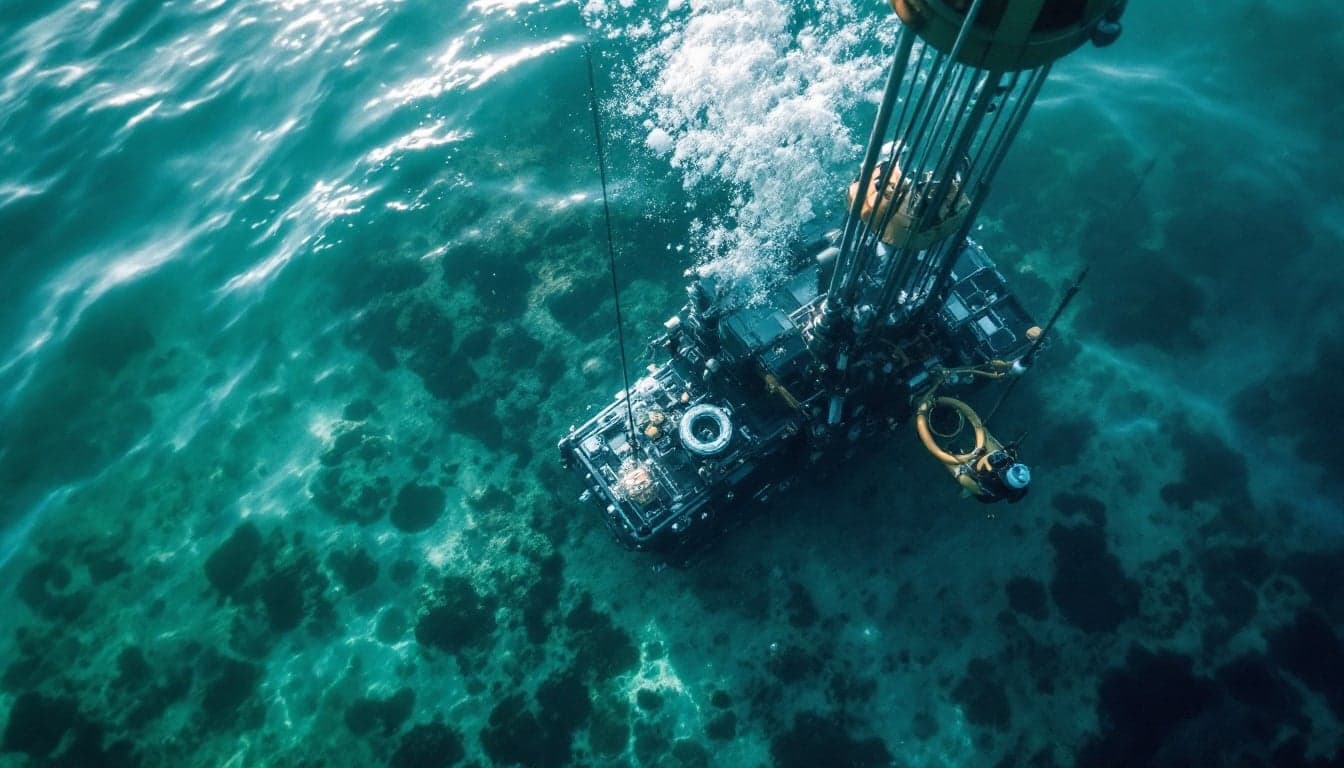
According to Offshore Engineer, OneSubsea — a joint venture backed by SLB, Aker Solutions, and Subsea7 — has secured a contract from Eni North Ganal to supply a steel tube umbilical system for a deepwater project off Indonesia. The scope covers delivery of the umbilical system for the development, though further engineering and installation details were not disclosed in the source report.
OneSubsea operates as an integrated subsea technology and services venture, combining the capabilities of its three parent organizations across equipment supply, engineering, and project execution.
The contract adds to OneSubsea's portfolio of deepwater umbilical deliveries in international markets. No contract value or delivery schedule was disclosed in the available reporting.
WHY IT MATTERS
For readers tracking the Brazilian offshore market, this contract is most relevant as a market signal rather than a direct event. Steel tube umbilical systems are a critical component in deepwater field architecture — they carry hydraulic fluid, electrical power, and chemical injection lines from surface infrastructure to subsea trees and manifolds. Demand for these systems is a reliable proxy for the pace of deepwater development globally, and the players competing for these contracts in Southeast Asia are largely the same ones active in the Santos and Campos basins.
OneSubsea's positioning in this award reflects the competitive logic that has been reshaping the subsea equipment market over the past several years. The joint venture structure — combining SLB's scale and digital infrastructure with Aker Solutions' engineering depth and Subsea7's installation and project management capabilities — allows the entity to pursue integrated scopes that individual equipment suppliers would struggle to address alone. Brazilian operators and their procurement teams are already familiar with this dynamic: integrated subsea awards have been a consistent feature of Petrobras's contracting strategy in the pre-sal, and the same vendors competing in Indonesia are active in Brazil.
For Brazilian umbilical manufacturers and local content suppliers, the broader trend is worth monitoring. The concentration of deepwater umbilical supply among a small number of capable international vendors — each backed by significant engineering and manufacturing infrastructure — creates a structural challenge for local content policy. Umbilical systems for pre-sal developments have historically required negotiation between operators, regulators, and suppliers over the degree of local fabrication feasible given technical specifications and lead times. As integrated JV structures like OneSubsea become more prevalent in international markets, the question of how Brazilian local content frameworks interact with these multi-partner supply arrangements becomes more complex.
From an operator perspective, the steel tube umbilical format chosen for Eni's Indonesian project is notable. Steel tube umbilicals generally offer advantages in chemical injection applications and in high-pressure, high-temperature environments — conditions that are not uncommon in deepwater pre-sal reservoirs. While no technical characterization of the Indonesian project's reservoir conditions appears in the source, the choice of system type is a data point for engineers benchmarking subsea architecture decisions in comparable environments.
The Eni North Ganal award also reinforces OneSubsea's international reach beyond the Atlantic basin. For Brazilian-based subsea professionals, this matters because it affects where the JV's manufacturing and engineering capacity is allocated at any given time. Lead times and slot availability at umbilical manufacturing facilities are a practical concern for project planning, and a vendor active across multiple deepwater jurisdictions simultaneously is managing a constrained production schedule across competing demands.
CONTEXT
OneSubsea was established as a joint venture with the explicit objective of addressing integrated subsea scopes — from equipment supply through to installation and lifecycle services. Its parent organizations each maintain separate commercial activities alongside the JV, which means the competitive landscape for individual contract components remains active even as integrated awards grow in frequency.
The Indonesian deepwater market has attracted sustained interest from international operators over recent years, and umbilical contracts of this type typically precede or accompany subsea tree and manifold awards as a development moves toward execution. The sequencing of subsea equipment awards is a useful indicator of project maturity for those tracking field development timelines across different basins.
Source: OFFSHORE ENGINEER