Russia weighs diesel export ban: what it signals for global fuel balances
A potential Russian prohibition on diesel exports adds another variable to an already fragmented global fuel market — with indirect consequences for Brazilian operators and refiners.
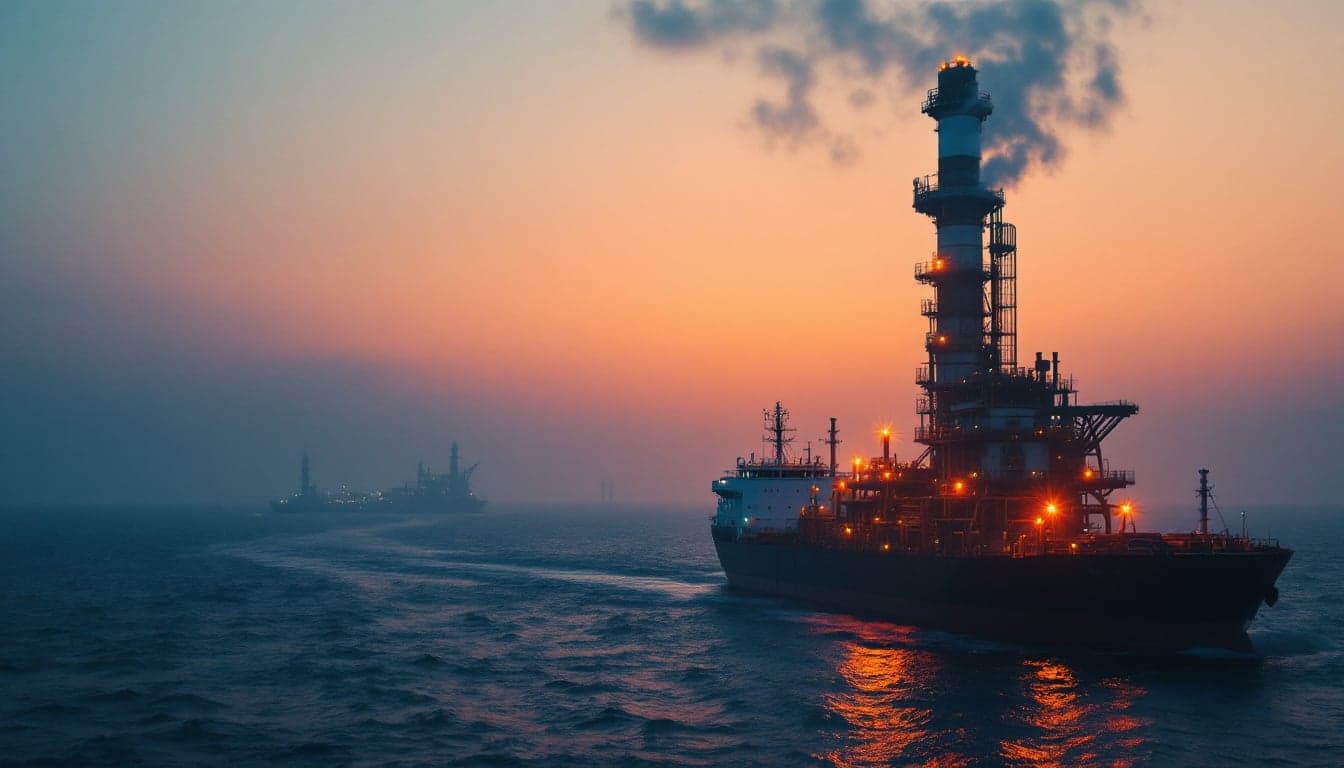
THE NEWS
According to OilPrice.com, Russia is weighing a complete ban on diesel exports as the government works to stabilize its domestic fuel market. Deputy Prime Minister Alexander Novak, speaking at a government meeting chaired by President Vladimir Putin, stated that authorities are considering a full prohibition on diesel exports alongside additional measures to support domestic fuel supplies. The context is one of refinery disruptions, rising domestic prices, and supply shortages that Novak linked to Ukrainian attacks on energy infrastructure.
The announcement signals that Russian fuel market pressures have reached a level requiring direct intervention at the highest levels of government. Novak acknowledged the strain on the domestic market, describing a situation that has prompted the government to evaluate a range of supply-side responses.
The source article does not specify a timeline for a decision, nor does it indicate which export volumes or trading partners would be most immediately affected by such a prohibition.
WHY IT MATTERS
For the Brazilian offshore sector, the direct operational impact of a Russian diesel export ban is limited — Brazil is not a significant importer of Russian refined products. However, the indirect effects on global diesel balances, freight markets, and refining margins are worth tracking carefully.
Diesel is the working fuel of the offshore industry. Platform supply vessels, anchor-handling tugs, crew boats, and a significant share of the power generation aboard FPSOs and semi-submersibles run on marine gasoil or distillate-equivalent fuels. When global diesel balances tighten — whether from demand spikes, refinery outages, or export restrictions — bunker costs and fuel procurement costs for offshore logistics operators tend to follow. Brazilian logistics contractors and vessel operators managing large fleets in the Santos and Campos basins would be among the first domestic actors to feel a sustained tightening in distillate markets.
The refining angle is equally relevant. Petrobras operates one of the largest refining systems in Latin America, and Brazil has historically oscillated between periods of diesel self-sufficiency and import dependency depending on domestic demand cycles and refinery throughput. A scenario in which Russian diesel is structurally removed from global export markets — even partially — would redirect demand toward Atlantic Basin suppliers, including potential Brazilian export volumes, but would also put upward pressure on import prices during periods when Brazil needs to supplement domestic production. The net effect depends heavily on the timing, duration, and scope of any Russian restriction, none of which are defined in the current announcement.
For Petrobras specifically, the development is worth monitoring through two lenses: as a refiner with export optionality, and as an operator with substantial diesel consumption across its upstream and logistics operations. A tighter global distillate market could improve the economics of Petrobras's refining throughput if it translates into stronger crack spreads, while simultaneously increasing the cost base of its offshore operations. These effects partially offset each other, but the balance depends on the relative magnitude of each.
More broadly, the announcement is a reminder that Russian energy infrastructure continues to operate under significant stress. Refinery disruptions attributed to the conflict in Ukraine are not a new development, but the fact that the Russian government is now publicly discussing a full export ban — rather than a partial or temporary restriction — suggests the domestic supply situation has become acute enough to require a more assertive policy response. For market participants tracking Russian supply, this represents an escalation in the policy signal, even if the measure has not yet been formally enacted.
The geopolitical dimension also intersects with Brazil's ongoing positioning in global energy diplomacy. Brazil has maintained commercial and diplomatic relationships with a wide range of energy producers, and Brazilian refiners and traders will be attentive to how a Russian diesel export ban reshapes arbitrage flows from the Middle East, the United States Gulf Coast, and Northwest Europe into Latin American markets. Any redistribution of Atlantic Basin diesel flows creates both procurement opportunities and pricing pressures for Brazilian buyers.
CONTEXT
Russia has previously imposed temporary restrictions on diesel and gasoline exports — most recently in 2023 — to address domestic supply shortages and price spikes. Those restrictions were eventually lifted as market conditions stabilized. The current discussion differs in that it is framed around a complete ban and is taking place against a backdrop of ongoing infrastructure damage rather than a purely seasonal or logistical supply imbalance.
Globally, diesel markets have been navigating a complex period since the energy disruptions of 2022, with refining capacity shifts, sanctions-driven trade flow realignments, and demand variability across key consuming regions all contributing to periodic tightness. A formal Russian export prohibition, if enacted, would represent one of the more significant supply-side developments in the distillate market in recent years — and would likely prompt a reassessment of diesel trade flows across multiple basins, including the Atlantic.