Russian refinery disruptions signal a tighter global diesel balance
Drone strikes on Russian refining capacity are reshaping diesel trade flows — and Brazil sits at an interesting intersection of exposure and opportunity.
THE NEWS
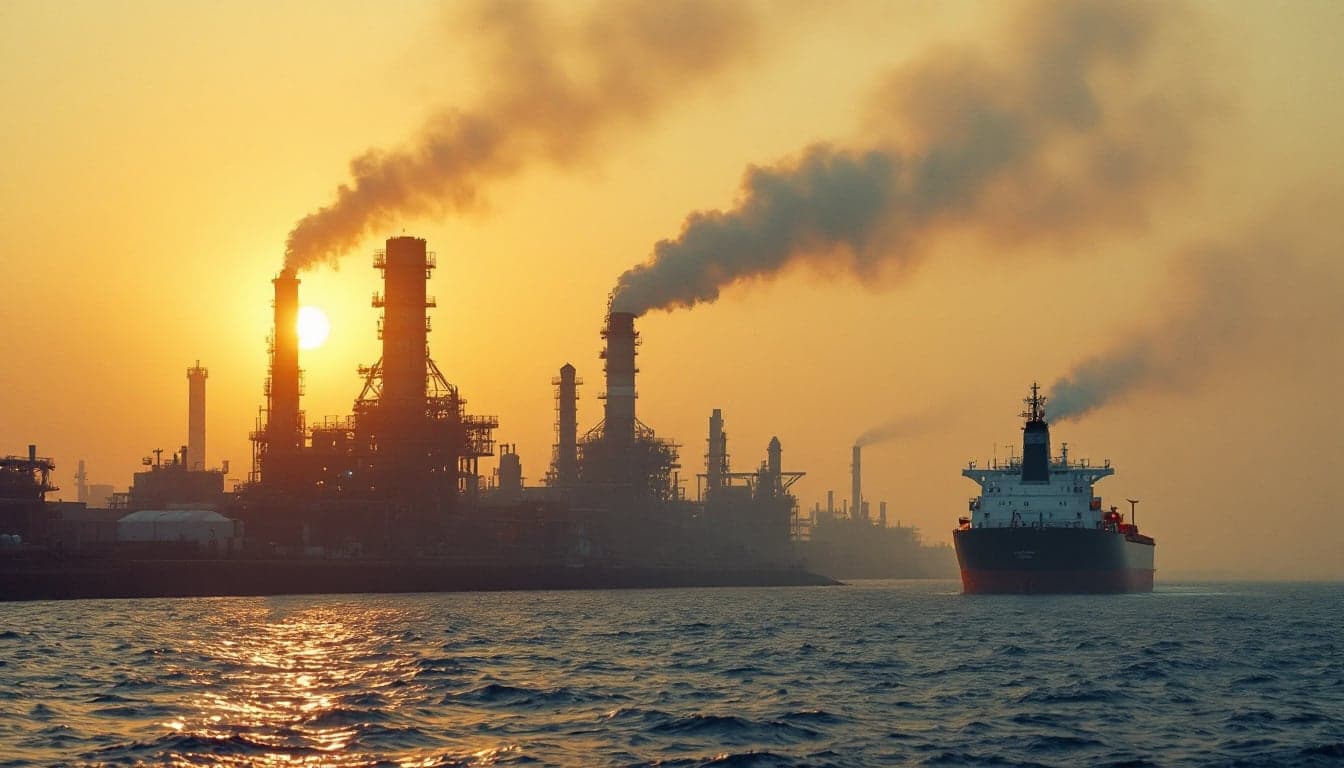
According to OilPrice.com, the Russian government has reached the final stages of implementing a ban on diesel and aviation fuel exports following a wave of Ukrainian long-range drone strikes that have knocked out a quarter of the country's total oil refining capacity. The affected infrastructure spans central Russia, with key facilities at Ryazan, Moscow, Kirishi, and NORSI (Nizhny Novgorod) among those hit in recent weeks.
The combined throughput of the damaged refineries is reported at roughly 238,000 tons per day — equivalent to approximately 83 million metric tons per year. The scale of the disruption has, according to the report, effectively paralyzed critical energy infrastructure across a significant corridor of Russia's refining network.
The export ban on diesel and kerosene, if implemented as described, would represent a significant withdrawal of Russian product from global markets at a time when those trade flows were already operating under the pressure of successive sanctions packages.
WHY IT MATTERS
For Brazilian offshore professionals, the immediate instinct may be to treat this as a European or Asian market story. That reading is understandable but incomplete. The global diesel market is integrated enough that a structural reduction in Russian export volumes — even a temporary one — transmits through freight rates, refinery margins, and product pricing in ways that reach South Atlantic trade routes.
Brazil's own refining configuration is relevant here. Petrobras operates a domestic refinery network that produces diesel, and the country also imports product to cover demand gaps, particularly in the inland agricultural and heavy-transport sectors. A tighter global diesel balance tends to widen the spread between crude and refined products, which can improve refinery margins for integrated operators — a dynamic that Petrobras, as both a crude producer and refiner, is positioned to monitor closely. The net effect on Brazil's import costs, however, depends on whether the country is a net buyer of diesel at the moment disruption occurs, and that calculation shifts seasonally.
On the crude side, the picture is more nuanced. Russia has historically redirected crude that cannot be refined domestically toward export markets, particularly to Asian buyers. If refinery runs fall sharply due to damaged throughput capacity, more Russian crude could enter export channels, placing modest downward pressure on global benchmark prices. For Brazilian pre-sal crude, which competes in some of the same Asian destination markets, this is a variable worth tracking — not an immediate threat, but a factor in the medium-term commercial environment.
The aviation fuel dimension carries its own implications. Kerosene supply tightness tends to affect airline operating costs, which feeds through to freight and logistics pricing. For Brazil's offshore supply chain — which depends heavily on helicopter operations for crew transfers and light cargo to platforms — any sustained elevation in jet fuel costs represents an upward pressure on operating expenditure. This is a second-order effect, but it is real and has appeared in previous episodes of regional jet fuel tightness.
From a geopolitical risk management perspective, the episode reinforces a structural lesson that Brazilian operators and their insurers have been absorbing since 2022: energy infrastructure is no longer a protected category in modern conflict, and supply chain resilience planning must account for scenarios where large refining centers become intermittently unavailable. Petrobras and independent operators active in Brazil — including those managing FPSO logistics and bunker supply chains — have reason to stress-test their product sourcing assumptions against a world where Russian refining output remains volatile for an extended period.
The export ban itself, if confirmed and sustained, would also affect global bunker markets. Marine fuel supply in key bunkering hubs draws on a complex mix of refinery streams, and Russian product has historically been a contributor to the very low sulphur fuel oil and MGO pools that offshore vessels consume. A reduction in that supply does not automatically translate into a shortage, but it does alter the arbitrage economics that determine where product flows and at what price.
CONTEXT
This is not the first time Russian refining disruptions have tested global product markets. Earlier episodes in 2022 and 2023 — driven initially by sanctions-related logistics constraints rather than physical damage — demonstrated that the market can absorb Russian supply reductions through rerouting, but not without friction and transient price spikes. The current situation involves physical infrastructure damage at a reported scale that goes beyond logistics adjustment, which may make the absorption process slower.
For Brazil specifically, the relevant comparison point is the 2022 diesel supply tightness that drove domestic price pressures and prompted policy responses. That episode originated from a different set of causes, but it illustrated how quickly global product market shifts translate into domestic economic pressure in a country with Brazil's logistics profile — vast territory, road-dependent freight, and an agricultural sector with high seasonal diesel demand.
Source: OILPRICE.COM