Shell's South Africa legal setback signals a wider litigation risk for frontier exploration
A five-year court battle over offshore seismic work raises questions about how environmental litigation is reshaping exploration risk globally — including in Brazil.
THE NEWS
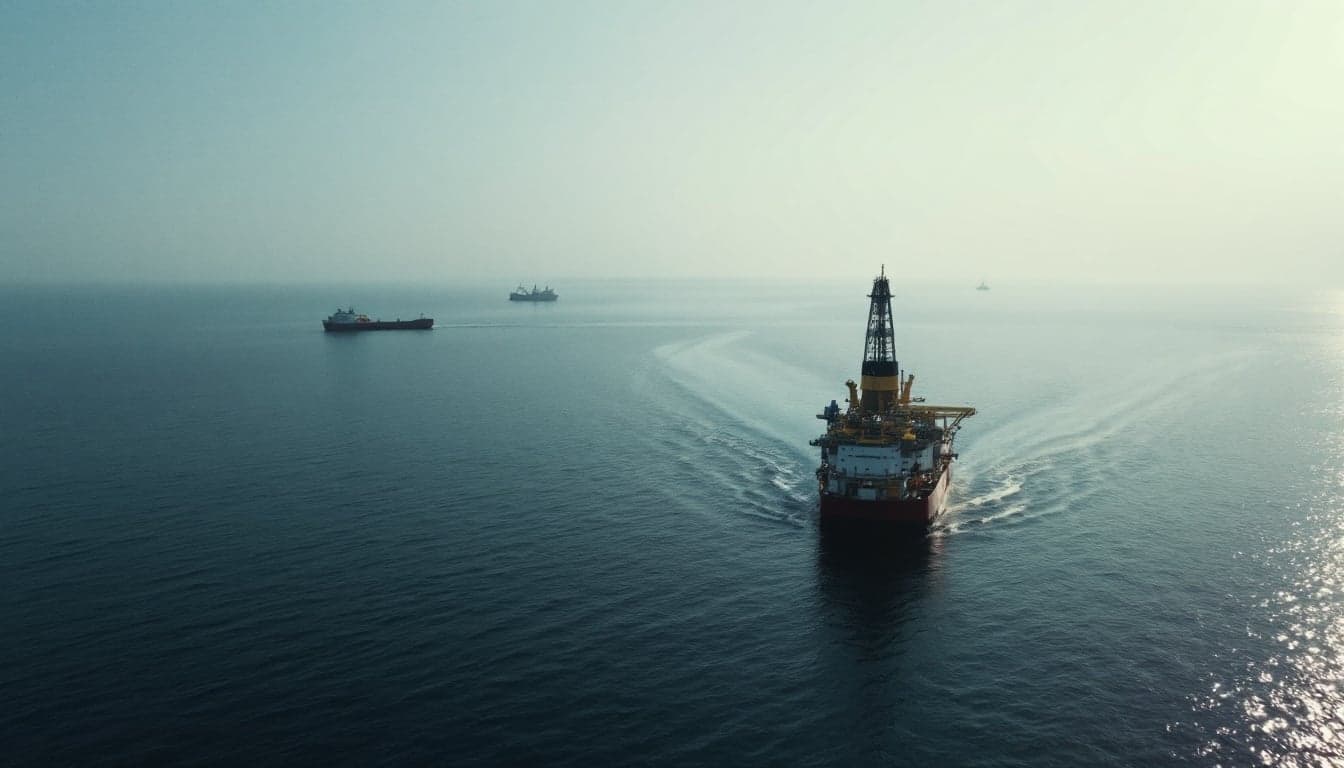
According to gCaptain, reporting from Bloomberg, Shell Plc has lost the latest round of a prolonged legal dispute with environmental activists in South Africa, stemming from an offshore oil exploration campaign. The case has now been running for five years, making it one of the more sustained pieces of environmental litigation targeting a major's frontier exploration program.
The source article is partial, but the core fact is clear: a court has ruled against Shell in this latest phase of proceedings. The dispute centres on the company's exploration activities off the South African coast and has been pursued by activist groups over an extended period.
The outcome represents a continued legal challenge for Shell in the jurisdiction, though the company's broader exploration portfolio and its position in other basins remain unaffected by this specific ruling.
WHY IT MATTERS
For senior professionals in the Brazilian offshore sector, the direct operational impact of this ruling is limited. Brazil and South Africa occupy different regulatory environments, different legal traditions, and different stages of offshore development maturity. The ANP's licensing framework and the constitutional provisions governing Brazil's pre-salt resources operate on a distinct legal footing from the South African context in which this case unfolded.
That said, the structural signal embedded in this case deserves attention. A five-year litigation timeline is itself a material variable in frontier exploration economics. When environmental legal challenges can extend across multiple years — spanning seismic campaigns, licensing cycles, and even changes in a company's own strategic direction — they begin to function as a form of de facto delay mechanism, regardless of the ultimate legal outcome. For any operator evaluating a frontier block, that timeline risk now sits alongside geological risk, commodity price risk, and capital allocation risk as a factor in investment committee discussions.
The Brazilian offshore market has not been immune to environmental litigation, though the dynamics here differ. Brazil's offshore exploration, particularly in the pre-salt polygon, operates under a well-established regulatory and environmental licensing structure administered by IBAMA and ANP. Major operators — including Petrobras and its consortium partners — have navigated environmental licensing processes for successive rounds of pre-salt development. The institutional architecture is more mature than in many frontier jurisdictions, which provides a degree of predictability that reduces, though does not eliminate, litigation exposure.
Where the Brazilian market should pay closer attention is in the equatorial margin. Petrobras and other operators are actively pursuing exploration in the Foz do Amazonas basin and adjacent equatorial blocks — a frontier context that shares more characteristics with the South African situation than the pre-salt does. These are areas where the environmental licensing debate is live, where civil society engagement is active, and where the regulatory pathway is still being defined. The South African case is a useful data point for how sustained activist litigation can reshape the commercial calculus of frontier exploration, even when the underlying legal arguments remain contested.
For Brazilian suppliers and service companies, the second-order read is subtler. If international majors begin pricing extended litigation timelines into frontier exploration decisions more explicitly, the effect is a gradual reweighting toward basins with more predictable licensing environments. That dynamic could, at the margin, reinforce Brazil's relative attractiveness for deepwater investment — provided that the equatorial margin licensing pathway is resolved with reasonable clarity. Conversely, prolonged uncertainty in that frontier area could place Brazil in a similar risk category to the jurisdictions majors are reassessing.
From a workforce and contracting perspective, the Shell case is also a reminder that exploration campaigns can be interrupted or curtailed not by technical failure but by legal process. Drilling contractors, seismic vessel operators, and ROV service providers working in frontier areas globally are exposed to this category of risk through their clients' exposure. Contract structures that account for force majeure and regulatory suspension events are increasingly relevant in this environment.
CONTEXT
The South Africa case is not an isolated event. Across multiple jurisdictions — from the United Kingdom's North Sea to West Africa to South Asia — environmental groups have pursued litigation strategies targeting offshore exploration authorisations. The legal theories vary by jurisdiction, but the tactical logic is consistent: challenge the environmental assessment process, the licensing decision, or the regulatory authority's mandate, and use the resulting uncertainty to extend the effective timeline for exploration to proceed.
For the Brazilian offshore sector, the more relevant precedent to monitor is the domestic trajectory of the Foz do Amazonas licensing debate, which has its own distinct legal and regulatory character. The South African outcome does not translate directly, but it reinforces the broader pattern that frontier exploration now carries a litigation risk dimension that operators, regulators, and their service partners are all navigating.
Source: GCAPTAIN