UK subsea autonomy trials site completes first major demonstration
A multi-platform robotic test in UK waters marks a step forward in marine autonomy infrastructure — with quiet implications for how Brazil may eventually certify similar systems.
THE NEWS
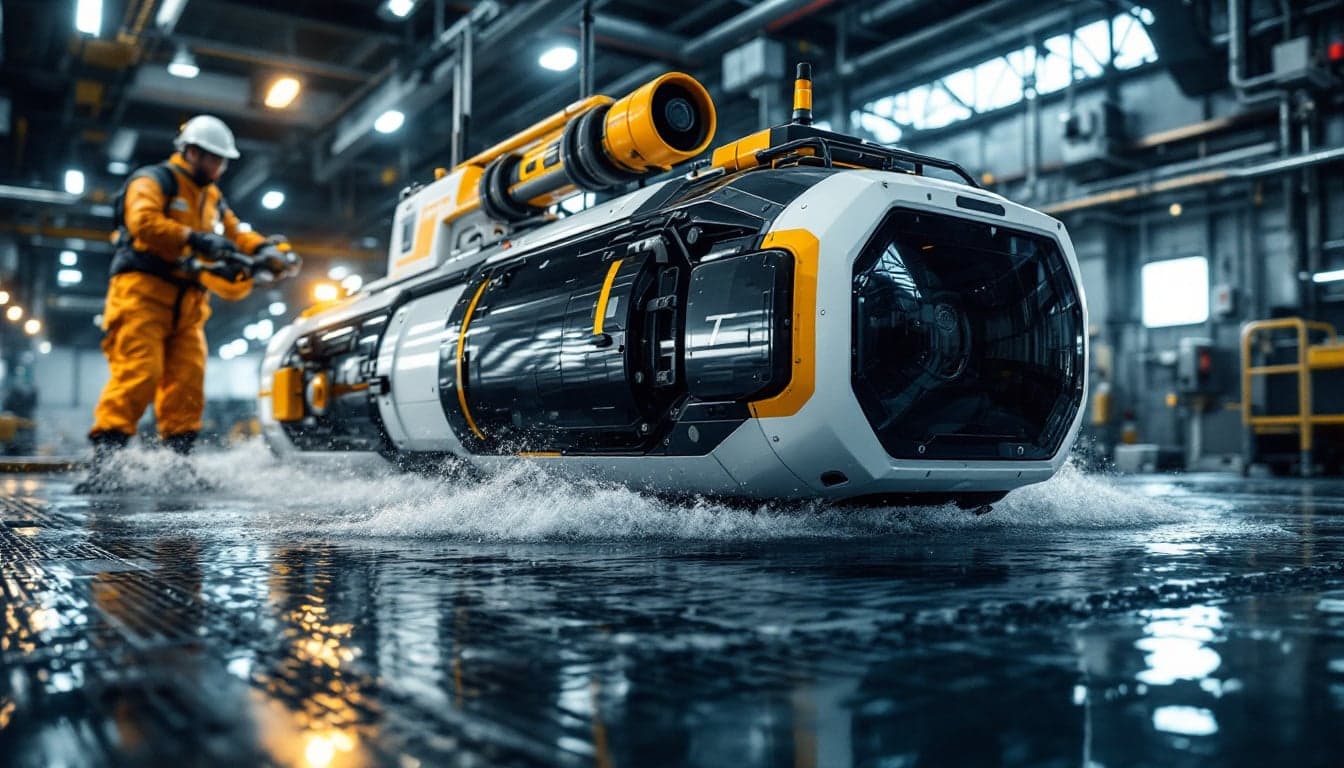
According to Marine Technology News, a new underwater trials site designed to accelerate marine autonomy and ocean sensing in the UK has completed its first major test. The Smart Sound Connect Subsurface (SSCS) project achieved the milestone through a live demonstration involving multiple marine surface and subsea robotic platforms operating simultaneously.
The SSCS project is specifically oriented toward advancing unmanned and autonomous systems in the marine environment, with a focus on both ocean sensing capabilities and subsurface operations. The multi-platform nature of the demonstration — combining surface and subsea robotic assets in a single coordinated exercise — reflects the operational complexity that real-world deployment of such systems requires.
The site is positioned as infrastructure for accelerating the development and validation of marine autonomy technologies, providing a dedicated environment where these systems can be tested under realistic conditions before commercial or operational deployment.
WHY IT MATTERS
For readers whose daily work centers on the Brazilian pre-salt, a UK coastal trials site may appear distant from immediate operational concerns. The Brazilian relevance here is genuinely low in the near term — but the structural dynamics at play are worth tracking, because the testing and certification infrastructure being built in the UK is the kind of asset Brazil has yet to develop at comparable scale.
The offshore industry's gradual shift toward autonomous and remotely operated systems is not a future scenario — it is already underway. ROVs are standard equipment on virtually every subsea intervention in the Santos and Campos basins. The question the SSCS project is helping to answer is what comes next: systems capable of extended autonomous operation, multi-vehicle coordination, and persistent ocean sensing without continuous human supervision. The gap between where ROV technology stands today and where full autonomy sits is precisely the gap that facilities like SSCS are designed to close.
For Brazilian operators and their supply chains, the practical implication is one of standards and certification timelines. When autonomous subsea systems reach sufficient maturity for commercial deployment — and the pace of development in this space suggests that window is narrowing — operators will face procurement decisions that require demonstrated performance data. The UK, alongside Norway and Australia, is building the institutional infrastructure to generate that data. Brazil, through ANP and IBAMA, will eventually need to define its own regulatory posture toward autonomous subsea systems, and the technical baselines established at sites like SSCS will likely inform those frameworks whether or not Brazil develops equivalent domestic facilities.
There is also a supply chain angle. Brazilian subsea services companies — including those supporting Petrobras's deepwater intervention programs — will increasingly encounter autonomous systems as either competitive alternatives or complementary tools to conventional ROV operations. Understanding how these systems are validated, what performance envelopes have been demonstrated, and which operational profiles they can realistically cover is commercially relevant for any company positioning itself in the subsea services market over a five-to-ten-year horizon.
The multi-platform demonstration aspect of the SSCS test is worth noting specifically. Coordinating surface and subsea autonomous assets simultaneously is operationally non-trivial: it involves communication architectures, collision avoidance logic, and mission management systems that function across the air-water interface. The fact that the first major test involved this level of complexity — rather than a single-vehicle proof of concept — suggests the project is oriented toward realistic operational scenarios rather than laboratory-scale validation. That framing matters when evaluating how quickly results from sites like this translate into deployable systems.
For Brazilian regulators and operators monitoring international technology trajectories, the SSCS milestone is a useful data point in a broader map. The UK's investment in dedicated marine autonomy infrastructure reflects a policy judgment that the sector requires purpose-built testing environments, not just open-water trials conducted on an ad hoc basis. Whether Brazil's offshore regulatory and innovation ecosystem moves in a similar direction — through initiatives at CENPES, through ANP's regulatory sandbox mechanisms, or through industry-led consortia — remains an open question, but the international precedent is accumulating.
CONTEXT
The SSCS project sits within a wider pattern of investment in marine autonomy test infrastructure across Northern European maritime nations. Similar dedicated facilities have been developed in Norway and elsewhere, reflecting a shared recognition that autonomous systems require structured validation environments before they can be responsibly integrated into commercial offshore operations.
Brazil's deepwater environment — characterized by ultra-deep water, long tiebacks, and high-complexity subsea infrastructure — presents both a compelling use case for autonomous inspection and intervention systems and a demanding technical environment that would require rigorous local validation. The international experience being accumulated at sites like SSCS will be part of the technical foundation that shapes what responsible deployment looks like when these systems arrive in Brazilian waters.