US blockade of Iran redirects 100 vessels in six weeks
A sustained naval interdiction campaign is reshaping commercial shipping patterns — with downstream implications for global crude flows and Brazilian export positioning.
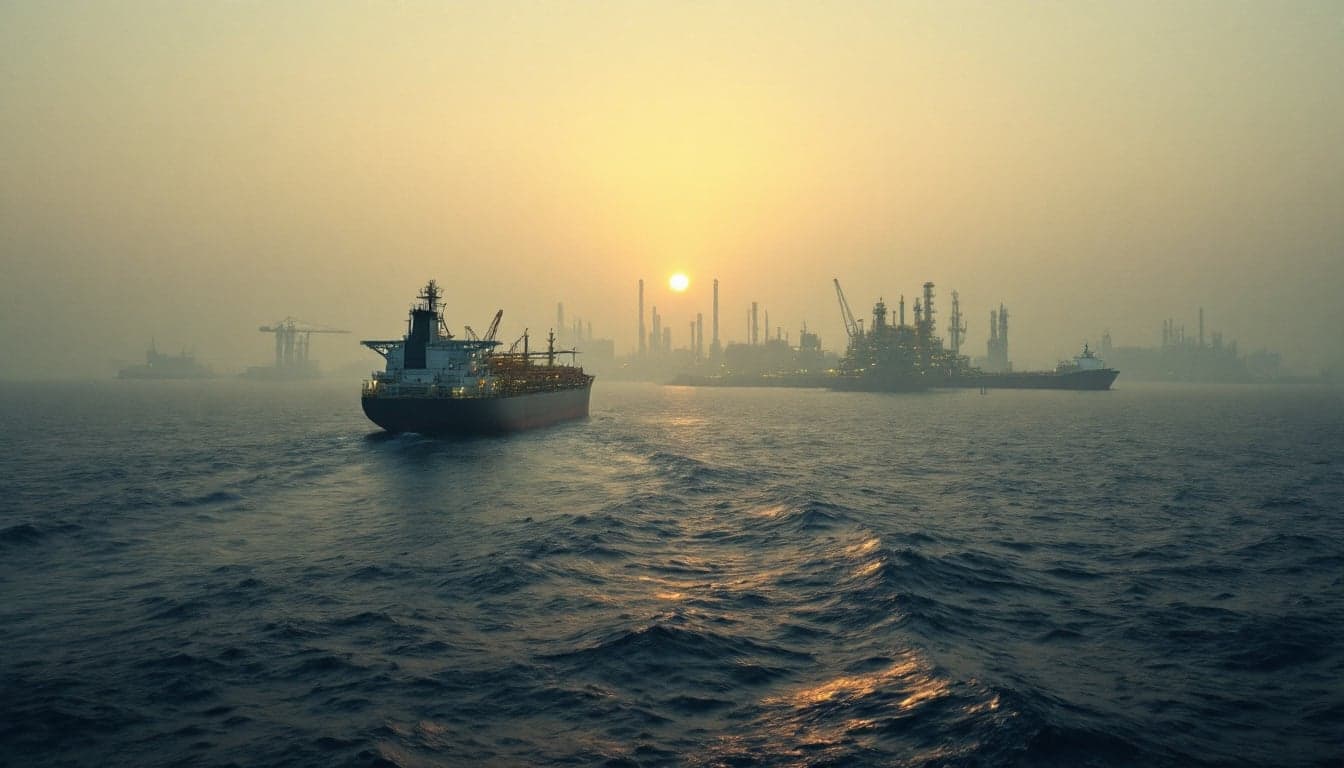
THE NEWS
According to gCaptain, US forces have redirected 100 commercial vessels as part of a six-week blockade of Iran's ports, citing figures released by Central Command. The operation is described as being supported by more than 200 assets, signaling a substantial and sustained military commitment to the interdiction effort.
The report, published May 23, 2026 and drawing on Bloomberg coverage, does not detail the flag states or cargo types of the redirected vessels, nor does it specify the geographic perimeter of the interdiction zone. What is clear is that the campaign has been active long enough — six weeks — to generate measurable disruption to commercial maritime traffic in the region.
Central Command's decision to publicly release the vessel count suggests the operation is being framed, at least in part, as a demonstration of enforcement capacity rather than a purely tactical measure.
WHY IT MATTERS
For Brazilian offshore professionals, a prolonged disruption to shipping lanes in the Persian Gulf region is not an abstraction. Brazil exports crude — primarily pre-sal grades — to Asian buyers, and those buyers also source from the Middle East. When Middle Eastern supply chains are interrupted, even partially, the ripple effects touch freight rates, cargo routing decisions, and ultimately the relative attractiveness of Atlantic Basin crudes.
The structural read here is one of supply rerouting rather than supply destruction. Iran's crude does not simply disappear from global markets when interdiction campaigns intensify; it tends to find alternative channels, often at a discount, through intermediary traders and flag-of-convenience arrangements. The 100-vessel figure reflects redirected commercial shipping broadly — not necessarily tankers carrying Iranian crude exclusively — which means the disruption is touching a wider slice of regional maritime commerce than a purely oil-focused lens would suggest.
For Petrobras and other Brazilian operators managing export logistics, the more immediate concern is freight market behavior. Sustained uncertainty in a high-traffic maritime corridor tends to push up insurance premiums and, depending on duration, Very Large Crude Carrier (VLCC) day rates on routes that compete with or complement Atlantic Basin liftings. Brazilian crude already competes on price and quality against Middle Eastern grades in Asian markets; a prolonged disruption to the latter's supply reliability could modestly improve the commercial position of Brazilian cargoes — though that effect is difficult to isolate and should not be overstated.
There is also a tanker fleet dimension worth tracking. If a meaningful share of the redirected vessels are tankers that would otherwise be moving crude out of the Gulf, the effective tightening of available tonnage on certain routes could affect charter markets globally. Brazilian offshore operators and their shipping counterparts monitor these dynamics closely when planning lifting schedules and logistics windows for deepwater production.
From a regulatory and geopolitical risk standpoint, the Brazilian offshore sector operates in a relatively insulated environment — the Santos and Campos basins are far removed from the interdiction zone, and Brazil maintains a foreign policy posture that keeps it outside the direct line of any escalation. The ANP and Brazilian operators are unlikely to face direct operational constraints from this campaign. The exposure is indirect: through energy price signals, freight market tightening, and the behavior of Asian buyers who are simultaneously managing supply uncertainty from the Gulf and demand for Atlantic Basin alternatives.
The six-week duration is notable. Short-duration interdiction events tend to generate price volatility without structural market shifts. A campaign that extends further — into months rather than weeks — begins to alter procurement behavior among refiners, potentially locking in longer-term supply agreements with non-Gulf producers. Brazil, as a growing deepwater producer with spare export capacity on the horizon, sits in a position to benefit from that kind of structural reorientation, though the timeline and magnitude remain speculative at this stage.
CONTEXT
This is not the first time Persian Gulf tensions have prompted shipping disruptions with downstream effects on Atlantic Basin crude pricing. Historical episodes — including tanker incidents in the Strait of Hormuz and periods of heightened US-Iran friction — have periodically redirected buyer attention toward West African and South American grades. Each episode has had a different duration and intensity, and market responses have varied accordingly.
What distinguishes the current situation is the explicit, institutionalized nature of the interdiction — a named blockade with publicly reported metrics — rather than a more diffuse pattern of risk. That formalization tends to accelerate buyer hedging behavior more quickly than ambient uncertainty does, which may compress the timeline over which any market repositioning becomes visible.