U.S. sanctions on Turkish bank signal tighter pressure on Iranian oil flows
Washington's designation of a Istanbul-based investment bank raises the compliance bar for any institution handling Iranian crude revenues — with indirect implications for Brazil's trading environment.
THE NEWS
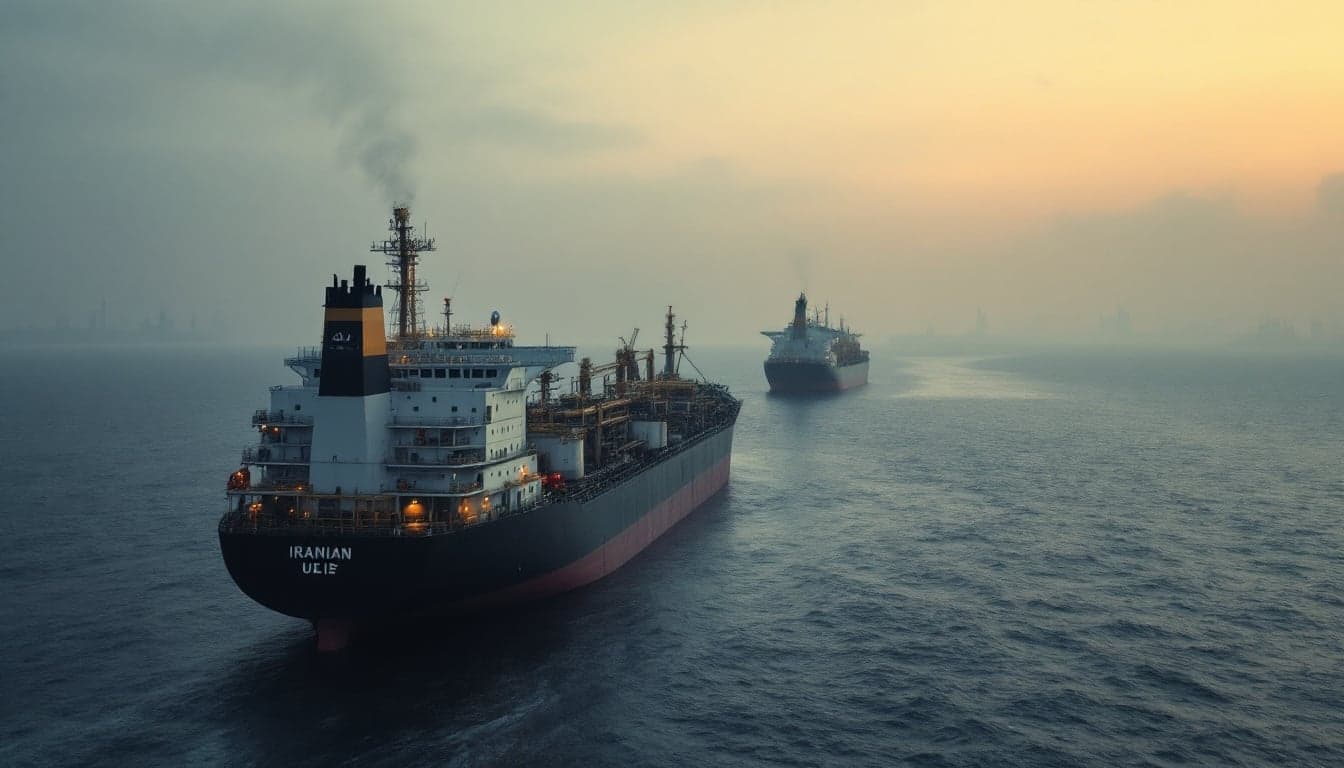
According to OilPrice.com, the U.S. Treasury Department designated Istanbul-based Golden Global Yatirim Bankasi Anonim Sirketi and two of its subsidiaries — Golden Global Portfoy Yonetimi and Golden Global Varlik Kiralama — under U.S. Iran sanctions authorities. The three entities were added to the Treasury's Specially Designated Nationals list, with Washington accusing them of facilitating the movement of Iranian oil revenue and providing Tehran with access to the international financial system.
The action is framed as part of a broader U.S. campaign to constrain Iran's ability to monetize its hydrocarbon exports. The Treasury's designation targets the Istanbul-based bank specifically for its alleged role as a conduit between Iranian oil proceeds and the global financial infrastructure.
No details on transaction volumes, specific financial instruments, or counterparties beyond the three named entities were included in the available source material.
WHY IT MATTERS
For senior professionals in the Brazilian offshore sector, a U.S. sanctions action against a Turkish bank may appear several degrees removed from day-to-day operations. The structural read, however, is more proximate than it seems.
Brazil is an active participant in global crude markets — both as a significant producer and as a refiner that monitors international pricing dynamics closely. Iranian crude, when it moves at discounted prices through non-sanctioned channels, exerts downward pressure on benchmark grades that compete with Brazilian pre-sal output in Asian markets, particularly in China and India. When U.S. enforcement actions succeed in narrowing those channels, the effective discount available to buyers of sanctioned crude tends to compress, which modestly improves the relative positioning of compliant barrels — including Brazilian grades — in price-sensitive markets.
This is not a direct commercial windfall, and framing it as such would overstate the effect. But it is a relevant market signal. Brazilian operators and trading desks that track crude differentials in Asia will be monitoring whether this enforcement action, combined with any broader intensification of U.S. pressure on Iran, translates into a measurable tightening of Iranian crude availability to major Asian refiners.
The compliance dimension is equally relevant. Brazilian financial institutions and commodity trading firms that operate internationally are subject to U.S. secondary sanctions risk if they maintain correspondent relationships with designated entities. The designation of a Turkish investment bank — a jurisdiction that has historically maintained commercial ties with Iran — serves as a reminder that secondary sanctions exposure is not confined to obvious geographies. Brazilian banks with international operations, and trading companies that use correspondent banking networks, will be reviewing their exposure as a matter of standard compliance practice.
For Petrobras specifically, the company's international trading arm operates across multiple jurisdictions and maintains relationships with a broad range of financial counterparties. While there is no suggestion of any direct connection to the designated entities, the broader pattern of U.S. enforcement — targeting financial intermediaries rather than just end-buyers of Iranian crude — reinforces the compliance architecture that governs how large NOCs and their trading subsidiaries structure their banking relationships. Petrobras, like its peers among major national oil companies, maintains robust sanctions compliance programs precisely because the secondary sanctions perimeter is enforced through financial system access, not just at the point of cargo delivery.
The Turkish angle carries a specific resonance. Turkey has navigated a complex position in global energy markets, maintaining energy trade relationships with multiple sanctioned or partially sanctioned producers while also remaining integrated into Western financial infrastructure. The Treasury's action against a Turkish institution signals that Washington is prepared to apply its Iran sanctions framework to entities in NATO-adjacent jurisdictions when it determines that financial facilitation is occurring. For Brazilian compliance officers, this is a useful data point: the geographic origin of a correspondent or counterparty does not, by itself, define the sanctions risk profile.
From a market structure perspective, the sustained U.S. pressure on Iranian oil revenue flows is one of several variables shaping global crude supply expectations. If enforcement actions accumulate to the point where Iranian export volumes face renewed constraints, the supply-side effect would be felt in the same Asian markets where Brazilian pre-sal competes. ANP and the planning teams at Brazilian operators will be tracking this as part of their medium-term market assessments, even if the direct operational impact remains limited for now.
CONTEXT
U.S. sanctions on Iranian oil have been a recurring feature of the global energy landscape for over a decade, with enforcement intensity varying across administrations. The use of financial system designations — targeting banks and intermediaries rather than shipping companies or end-buyers alone — reflects an evolved enforcement methodology that seeks to raise the cost of participation across the entire transaction chain.
For Brazil, which has consistently maintained a posture of non-alignment on sanctions regimes that lack UN Security Council backing, the practical reality is that U.S. dollar clearing and correspondent banking dependencies create an indirect compliance obligation regardless of formal policy position. That structural tension is not new, but actions like this one periodically bring it back into focus for legal and compliance teams across the Brazilian energy and financial sectors.
Source: OILPRICE.COM