Var Energi's Gjoa FID signals continued appetite for subsea tiebacks in mature basins
A final investment decision on Norway's Gjoa field offers a reference point for how the industry is approaching subsea tieback economics in established basins.
THE NEWS
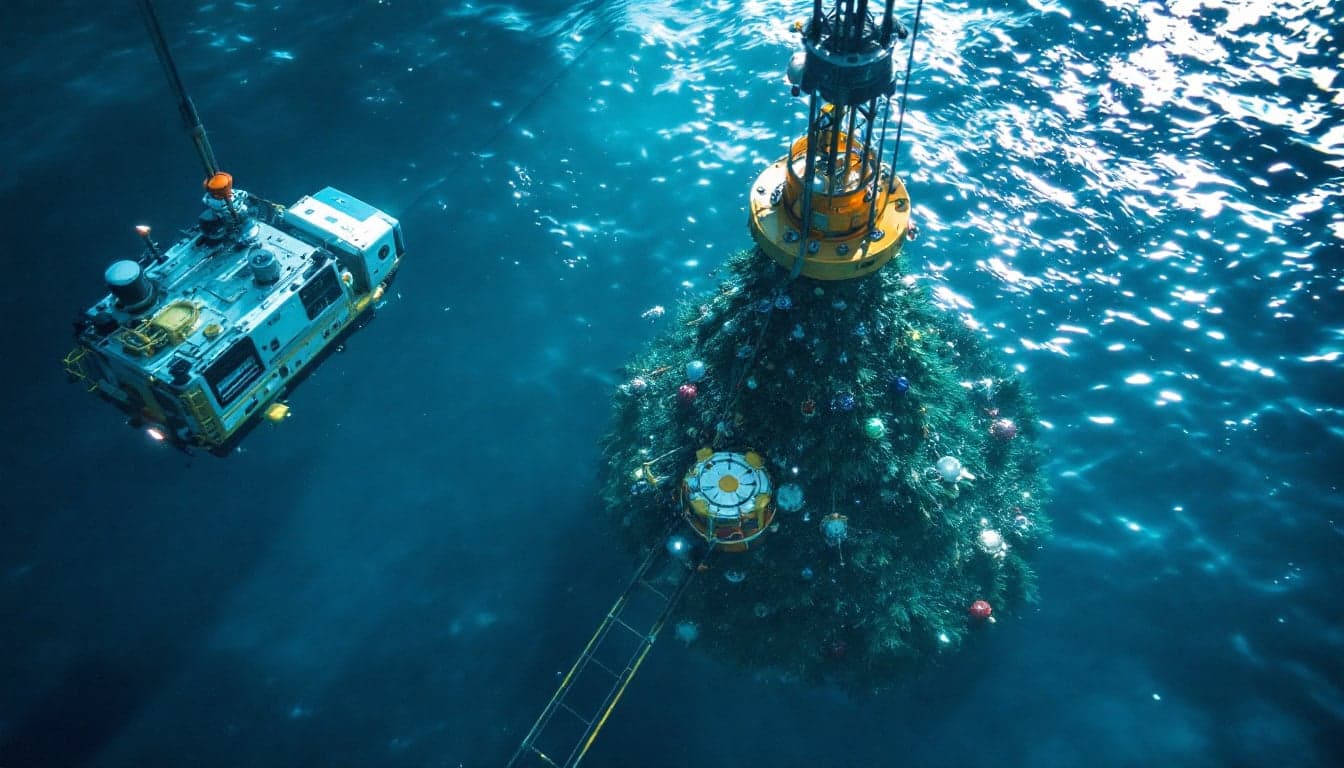
According to Rigzone, Var Energi and its consortium partners have reached a final investment decision to proceed with the Gjoa Subsea Projects, located on Norway's side of the North Sea. The projects target approximately 76 million barrels of oil equivalent in gross proven and probable reserves.
The FID advances a subsea development that leverages existing infrastructure in a well-established producing basin. No timeline for first production was specified in the source material, nor were individual partner identities or equity stakes disclosed.
WHY IT MATTERS
For readers operating primarily in the Brazilian context, the direct operational impact of this decision is limited. Gjoa is a Norwegian asset, and the FID does not involve Brazilian operators, Brazilian-flagged vessels, or Brazilian supply chain participants in any capacity disclosed by the source. That said, the decision carries analytical value that extends beyond Norway's continental shelf.
The most relevant signal here is the continued commercial viability of subsea tieback strategies in mature basins. The Gjoa Subsea Projects appear to follow a development model in which new subsea infrastructure connects additional reserves to existing processing facilities, reducing the capital intensity that would otherwise be required for a standalone development. This model is not unique to Norway — it is central to how Petrobras and its consortium partners are approaching incremental reserve development in the Santos and Campos basins, where existing FPSOs and subsea infrastructure represent sunk capital that can absorb additional tiebacks at comparatively lower marginal cost.
The 76 million BOE target is a meaningful volume in the context of tieback economics. Projects of this scale typically need to demonstrate a sufficiently short payback horizon to clear FID thresholds, particularly in an environment where operators are managing capital allocation across competing priorities. The fact that Var Energi and its partners cleared that threshold in the current cost and price environment is a data point — not a forecast — that subsea tieback projects at this reserve scale remain financeable under current market conditions.
For Brazilian subsea equipment and services suppliers, the broader relevance lies in the technology and contracting patterns that tend to travel across basins. Flexible flowlines, subsea trees, umbilicals, and control systems developed or qualified for North Sea tieback projects frequently find application in pre-salt developments, either directly or through adaptation. Norwegian operators and engineering contractors have long maintained a presence in Brazil's supply chain, and technical decisions made in Gjoa-type projects can influence equipment specifications and vendor qualification standards that eventually reach Brazilian waters.
Brazilian regulators at the ANP may also find comparative value in monitoring how Norway's Petroleum Directorate structures the regulatory approvals and reserve classification frameworks that enable projects like Gjoa to reach FID. The 2P reserve designation — proven and probable — used in the Rigzone description aligns with SPE-PRMS standards, and the pace at which Norwegian regulators process development plan approvals for subsea tiebacks is occasionally referenced in Brazilian industry discussions about approval cycle times.
Finally, for Brazilian professionals tracking the global subsea services market, FIDs of this type contribute to the order backlog of subsea contractors and equipment manufacturers whose capacity and pricing also affect Brazilian project economics. When the global tieback project pipeline is active, lead times for subsea trees, manifolds, and installation vessels tend to extend, which has downstream implications for project scheduling in the Santos Basin. Conversely, a well-supplied global subsea market moderates equipment costs across all geographies.
CONTEXT
The Gjoa field has been producing on the Norwegian Continental Shelf for over a decade, making it a representative case of late-life field extension through subsea investment rather than greenfield development. This pattern — extending the productive life of established assets through targeted subsea capital — is consistent with a broader industry trend toward capital efficiency over volume growth, visible across the North Sea, Gulf of Mexico, and, increasingly, in Brazil's mature Campos Basin fields.
The timing of this FID, in the context of ongoing discussions about energy transition timelines and upstream capital discipline, is also worth noting analytically. Operators reaching FID on projects with multi-year development horizons are implicitly signaling a view about the demand environment over that horizon. That signal, while not specific to Brazil, informs the same planning assumptions that Brazilian operators and their financiers are working with.
Source: RIGZONE