WASSP atualiza software BlueBeam para sistemas multifeixe
A versão 2 traz melhorias em mapeamento e visualização de coluna d'água — capacidades com aplicação direta em operações de inspeção e levantamento offshore.
THE NEWS
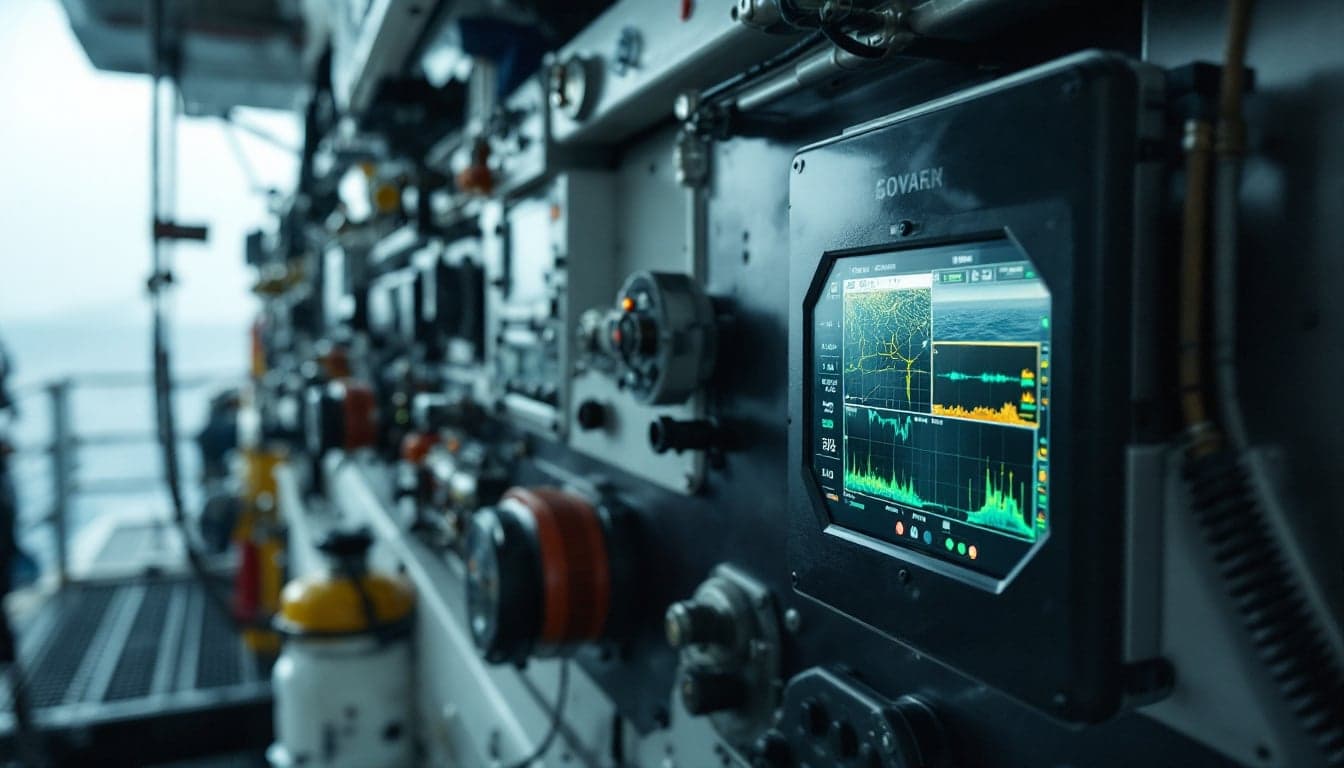
According to Marine Technology News, WASSP — part of the ENL Group and a supplier of multibeam sonar systems — announced the global release of BlueBeam v2, a software upgrade for its existing WASSP hardware platforms. The update delivers advances in mapping quality, user control, and water-column visualization.
The announcement positions BlueBeam v2 as a meaningful step forward in how operators interact with and interpret multibeam sonar data. Water-column visualization, in particular, is a capability with direct relevance to subsea survey, habitat mapping, and anomaly detection workflows.
No pricing details, deployment timelines, or specific customer references were disclosed in the announcement.
WHY IT MATTERS
Multibeam sonar software upgrades rarely generate headlines, but they carry operational weight that is easy to underestimate. In the Brazilian offshore context, multibeam systems are embedded across a wide range of activities: pre-lay surveys for umbilicals and flowlines, ROV-mounted inspection passes on subsea infrastructure, bathymetric mapping for anchor pattern planning, and environmental baseline studies required by IBAMA and ANP licensing processes.
The improvement in water-column visualization is the element most likely to draw attention from Brazilian survey and inspection teams. Water-column data — which captures acoustic returns from the full depth profile, not just the seabed — enables operators to detect gas seeps, identify suspended sediment plumes, and locate mid-water biological aggregations. In the pre-sal context, where natural seepage monitoring is part of the environmental compliance picture, sharper water-column imaging tools have practical regulatory value.
User control enhancements are a subtler but equally consequential development. Multibeam systems on survey vessels and work-class ROVs are often operated by technicians working under time pressure in dynamic sea conditions. Software that reduces the cognitive load of data acquisition — cleaner interfaces, more intuitive parameter adjustment, better real-time feedback — translates directly into fewer acquisition errors and higher-quality deliverables. For Brazilian survey contractors operating under tight mobilization windows, that efficiency gain is commercially meaningful.
The broader mapping quality improvements speak to a persistent challenge in deepwater and ultra-deepwater environments: acoustic degradation at depth. Brazil's pre-sal fields sit beneath water columns exceeding 2,000 metres in many areas, and the signal-to-noise characteristics at those depths place real demands on both hardware and processing software. Incremental improvements in how raw multibeam returns are processed and rendered can meaningfully affect the usability of bathymetric datasets — particularly for detailed seabed feature analysis ahead of infrastructure installation.
For Brazilian operators and their survey subcontractors, the practical question is whether BlueBeam v2 is a firmware-style patch or a substantive capability expansion. The announcement describes it as an upgrade for existing WASSP systems, which suggests existing hardware fleets can be brought to the new standard without capital expenditure on new transducers or processing units. If that is the case, the barrier to adoption is low — and the incentive to update is correspondingly straightforward for any operator already running WASSP-equipped vessels.
WASSP's positioning within the ENL Group also warrants a brief note. ENL operates across multiple marine technology segments, and WASSP's multibeam portfolio sits alongside other sensor and navigation products. For Brazilian buyers evaluating sonar suppliers, understanding the group structure matters when assessing long-term software support commitments — a consideration that becomes more pointed as offshore assets extend their operational lives and require sustained software compatibility.
CONTEXT
The multibeam sonar market has seen steady software-driven evolution over the past decade, with processing capability increasingly differentiating suppliers whose hardware specifications have converged. The shift toward cloud-compatible data pipelines and real-time visualization has accelerated since the mid-2010s, driven partly by the growing volume of data generated by AUV and ROV-mounted systems on long-duration deepwater campaigns.
In Brazil, the ANP's requirements for detailed seabed characterization ahead of block development, combined with Petrobras's own internal survey standards for pre-salt infrastructure, have kept demand for high-resolution multibeam capability consistently elevated. Software updates that improve the quality and interpretability of that data feed directly into a workflow that sits at the front end of every major offshore project cycle.
Source: MARINE TECHNOLOGY NEWS