ABS reforça suporte digital e remoto para energia offshore
A IA acelera a digitalização nas operações offshore, mas cada avanço tecnológico carrega consigo um vetor de risco cibernético que a indústria ainda está aprendendo a calibrar.
THE NEWS
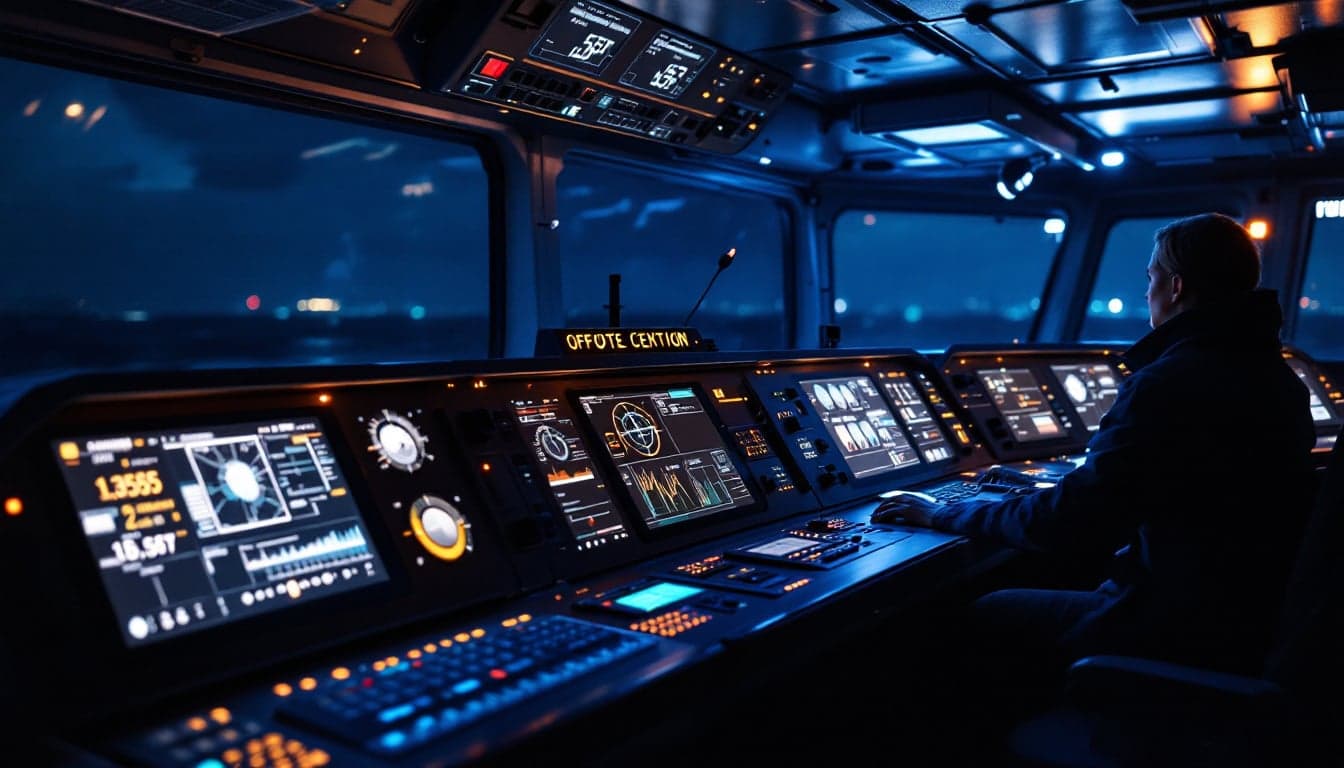
According to Marine Technology News, the American Bureau of Shipping (ABS) is reinforcing its digital and remote support capabilities for offshore energy operations. The publication frames the development within a broader industry context: digitalization in offshore energy is not a new phenomenon, but the pace of technological evolution — driven by artificial intelligence — is intensifying both the opportunities and the questions that operators must now navigate. The same AI-enabled tools that promise efficiency gains bring with them an expanded attack surface for cyber threats.
The article does not characterize ABS's initiative as a single product launch but rather as a strategic reinforcement of its support infrastructure for an industry that is moving faster than many of its governance frameworks. The tension the publication identifies is precise: for every answer that emerging technology offers, a new set of challenges appears alongside it.
ABS, as a classification society, sits at a structural intersection between technical standards, regulatory compliance, and operational assurance — a position that makes its moves in the digital space relevant beyond its own commercial interests.
WHY IT MATTERS
For Brazilian offshore professionals, the ABS initiative is worth tracking even if its direct Brazilian footprint is not detailed in the source. Classification societies are not peripheral actors in the Brazilian offshore ecosystem — they underpin the certification frameworks that govern FPSOs, MODUs, subsea systems, and the supply vessels that service deepwater pre-sal operations. When a major class society repositions its digital support model, the downstream effect eventually reaches every operator working under its class notation, including those in the Santos and Campos basins.
The AI dimension deserves particular attention. In deepwater operations, AI is increasingly being applied to predictive maintenance, anomaly detection in subsea equipment, and remote monitoring of DP systems on FPSOs. These are not speculative use cases — they are live deployments at various stages of maturity across the global fleet. The efficiency argument for AI in these contexts is straightforward: reduced intervention cycles, earlier fault detection, and the ability to extend the operational envelope of remote assets. But the cybersecurity corollary is less frequently discussed with the same rigor.
Offshore installations present a cybersecurity profile that differs materially from onshore industrial environments. The convergence of operational technology (OT) and information technology (IT) on modern FPSOs and drilling units creates pathways between systems that were historically air-gapped. A DP system connected to a remote monitoring platform is more observable — and potentially more reachable — than one that operates in isolation. This is not a reason to avoid connectivity, but it is a reason to treat cyber risk as an engineering discipline rather than an IT department concern. The Brazilian regulatory environment, through ANP and the broader framework that IBAMA and the Navy apply to offshore installations, has been progressively incorporating cybersecurity considerations, but the pace of regulatory adaptation rarely matches the pace of technology deployment.
For Petrobras, which operates one of the largest deepwater FPSO fleets in the world, the calculus is particularly consequential. The company's remote operations centers and its ongoing digitalization programs place it at the leading edge of AI adoption among national oil companies in the region. That positioning brings efficiency dividends, but it also means that the cyber threat surface is larger and more complex than for operators running smaller, less connected fleets. Petrobras's own technical teams and its classification society relationships are central to managing that exposure.
For Brazilian EPC contractors, equipment suppliers, and system integrators working in the offshore segment, the ABS initiative signals something worth internalizing: classification societies are increasingly active in the digital assurance space, not just in the structural and mechanical domains where their authority is historically established. This means that digital systems — software, connectivity architecture, AI inference engines embedded in monitoring tools — may increasingly be subject to class-adjacent scrutiny. Suppliers who have not yet mapped their products against emerging class society digital frameworks may find themselves in a reactive posture as those frameworks mature.
The workforce dimension is also non-trivial. Remote support capabilities, by definition, alter the distribution of expertise between offshore installations and onshore centers. For Brazilian maritime labor, which operates under a regulatory and union framework that is attentive to the conditions and composition of offshore crews, any structural shift in how technical support is delivered — whether it reduces the need for certain specialist roles offshore or creates new onshore positions — is a development that SINDIPETRO and related bodies will monitor closely. The article does not characterize ABS's initiative in workforce terms, but the structural logic of remote support expansion points in that direction over time.
CONTEXT
The broader digitalization trajectory in offshore energy has been building for over a decade, but the integration of AI as an active layer — rather than a passive data aggregation tool — represents a qualitative shift in what remote support can mean in practice. Classification societies have been adapting their survey and inspection methodologies accordingly, with remote and condition-based survey programs becoming more common across the major class societies operating in Brazil.
The cybersecurity dimension is not unique to offshore energy, but the consequences of a successful intrusion in a deepwater production environment are severe enough — production interruption, safety system compromise, environmental exposure — that the risk calculus differs from most industrial sectors. How class societies, regulators, and operators collectively build the governance architecture around AI-enabled offshore operations is one of the defining technical-regulatory questions of the current decade.