USV completes five-day multi-domain offshore demonstration
ACUA Ocean's uncrewed surface vessel logged 100 hours of continuous data collection — a milestone that signals where persistent maritime surveillance is heading.
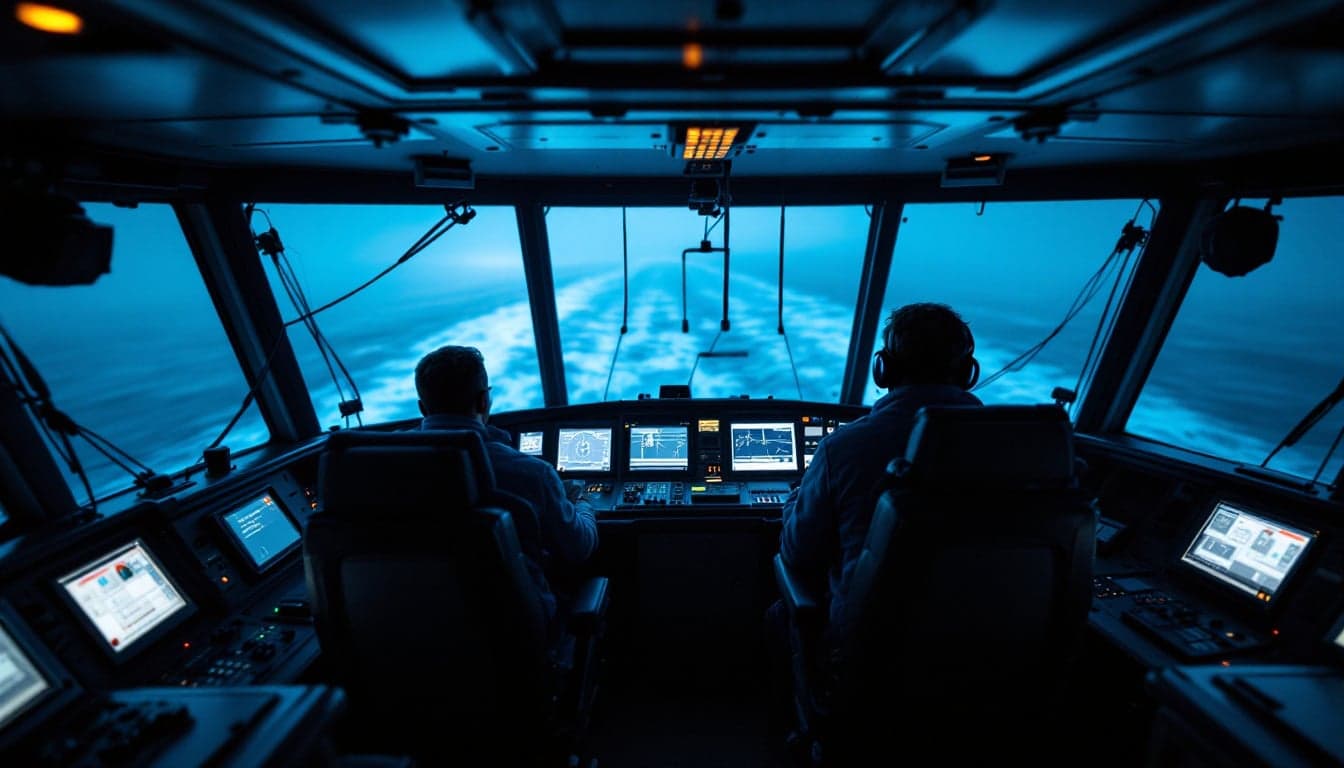
THE NEWS
According to Marine Technology News, ACUA Ocean's Mk1 uncrewed surface vessel (USV) PIONEER has completed a five-day remotely operated offshore demonstration, accumulating 100 hours of continuous multi-domain data collection. The operation was described as a validation of persistent maritime operations using an uncrewed platform. PIONEER departed Turnchapel Wharf on 22 June 2026 to begin the exercise.
The demonstration was conducted remotely, with the vessel operating offshore without crew aboard for the full duration. The term "multi-domain" in ACUA Ocean's framing refers to the simultaneous collection of data across more than one environmental or sensing domain during a single continuous deployment — the specifics of which sensor payloads were active were not detailed in the available source material.
The exercise positions PIONEER as a proof-of-concept for extended autonomous or remotely operated maritime missions, with ACUA Ocean characterizing the outcome as a validation of the platform's endurance and operational persistence.
WHY IT MATTERS
For the Brazilian offshore sector, this demonstration carries a low immediate operational impact — the platform is UK-based, the trial was conducted in UK waters, and no Brazilian operator or regulator is named in the source. That said, the underlying capability being validated is directly relevant to trends that are beginning to surface in Brazil's offshore regulatory and operational landscape.
The core value proposition of a USV completing 100 continuous hours of multi-domain data collection is endurance without crew cost or safety exposure. In the Brazilian context, this maps onto a set of persistent challenges: the high cost of crewed support vessels operating in the Santos and Campos basins, the logistical complexity of maintaining survey and inspection schedules across deep and ultra-deep water blocks, and the growing pressure on operators to reduce the human footprint on routine offshore tasks. A platform that can remain offshore for five days collecting data — without crew rotation, helicopter transfers, or standby vessel support — represents a structurally different cost model for those functions.
The multi-domain data angle is also worth examining carefully. Offshore survey and inspection work in Brazil increasingly demands simultaneous acquisition across acoustic, environmental, and geophysical domains. Traditionally, this has required either multiple specialized vessels or sequential campaigns. A single persistent USV capable of integrating multiple sensor payloads in one deployment could compress both the timeline and the vessel-day count for certain categories of pre-drill survey, pipeline inspection, or environmental baseline work. Whether PIONEER's payload architecture is mature enough to compete with established survey vessel configurations is not established by this demonstration alone, but the directional signal is clear.
From a regulatory perspective, Brazil's ANP and the broader NORMAM framework administered by the Brazilian Navy have not yet developed a consolidated regulatory pathway for extended autonomous or remotely operated surface vessel operations in Brazilian waters. This is not unusual — most major maritime jurisdictions are still working through the same question. But it does mean that even if a platform like PIONEER were commercially ready for Brazilian deployment tomorrow, the regulatory groundwork would need to precede it. Brazilian operators and their legal teams would be well served by monitoring how the UK Maritime and Coastguard Agency and IMO's Maritime Autonomous Surface Ships (MASS) framework develop, since Brazil's eventual regulatory approach is likely to reference international precedent.
For the Brazilian supply chain — particularly companies active in offshore survey, ROV support, and environmental monitoring — the medium-term implication deserves attention. USV platforms capable of persistent multi-domain data collection do not eliminate the need for specialized offshore expertise; they redistribute it. The human skill set migrates from vessel crew to remote operations centers, data processing pipelines, and payload integration engineering. Brazilian companies already active in subsea data services and offshore survey have an opportunity to position themselves in that value chain ahead of the technology's wider adoption, rather than adapting to it after the fact.
It is also worth noting that the 100-hour threshold, while meaningful as a demonstration milestone, is a starting point rather than an endpoint for what persistent offshore USV operations would require at commercial scale. Extended campaigns in the Santos Basin, for instance, involve environmental conditions — swell height, current regimes, vessel traffic density — that differ materially from UK coastal waters. Operational validation in Brazilian conditions would be a separate and necessary step before any operator could rely on this class of platform for mission-critical data acquisition.
CONTEXT
ACUA Ocean's demonstration fits within a broader pattern of USV technology developers using extended endurance trials to build the operational record that insurers, operators, and regulators require before commercial deployment. Similar milestones have been pursued by other USV developers in the North Sea and Gulf of Mexico corridors over the past several years. The common thread is that the technology development cycle for autonomous surface vessels is running ahead of the regulatory and commercial adoption cycle — a gap that tends to close gradually as the operational record accumulates.
For Brazil specifically, the more immediate reference point may be the growing use of autonomous underwater vehicles (AUVs) by Petrobras and its consortium partners for pre-salt inspection and survey work — a domain where Brazil has already begun to build internal capability and regulatory familiarity. USV technology, operating at the surface layer, presents a complementary rather than competing set of use cases, and the maturation of one domain tends to accelerate acceptance of the other.
Source: MARINE TECHNOLOGY NEWS