Autonomous ship operations in conflict zones: a question the industry can no longer defer
Thousands of seafarers stranded in the Strait of Hormuz have reopened a debate about whether existing vessels could operate without crew in high-risk zones.
THE NEWS
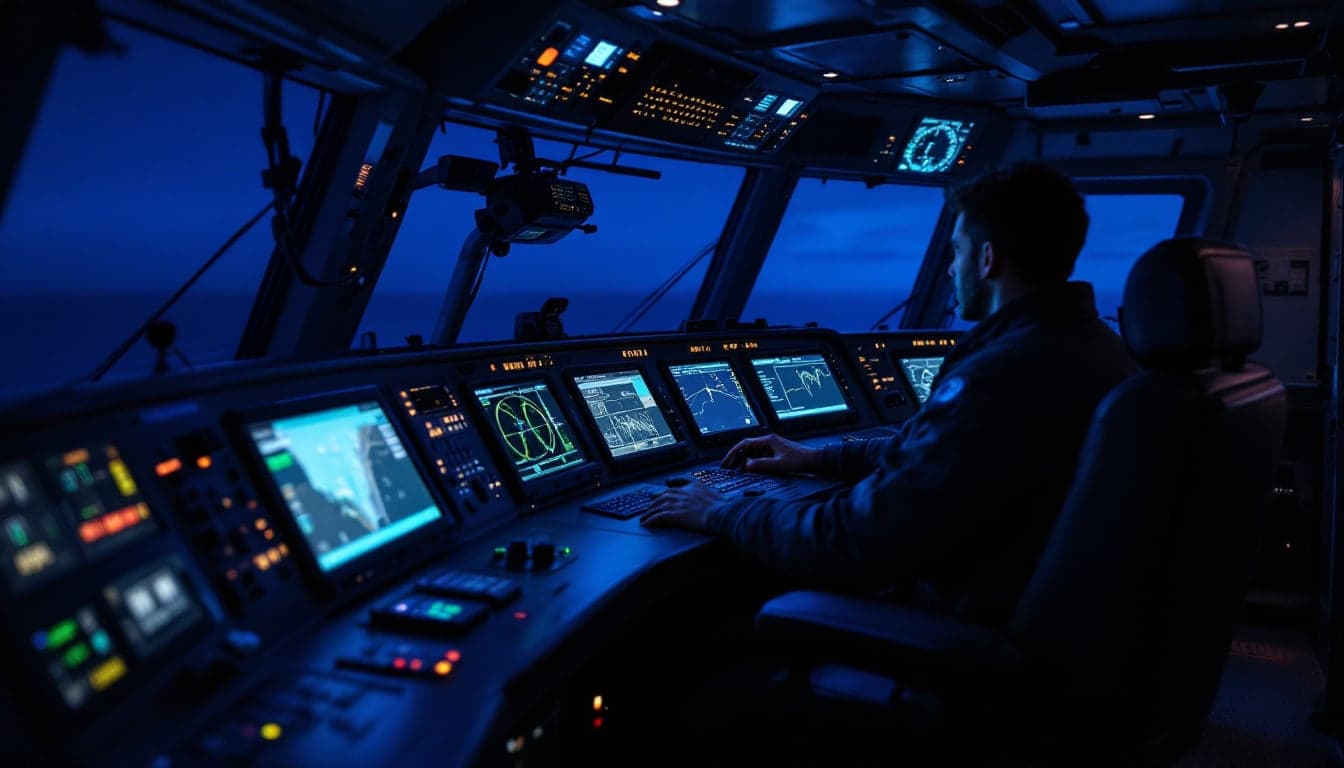
According to The Maritime Executive, approximately 20,000 seafarers aboard some 2,000 vessels — including tankers, bulk carriers, cargo ships, and cruise ships — were stranded in the Strait of Hormuz amid escalating regional tensions. The incident has prompted renewed discussion within the maritime industry about whether existing commercial ships could, in principle, be operated remotely or autonomously in zones deemed too dangerous for crew presence.
The question is not purely hypothetical. The scale of the disruption — thousands of mariners held in place by geopolitical circumstances beyond any operator's control — has pushed maritime technology and regulatory communities to revisit the practical and legal boundaries of remote vessel operation. The conversation centers not on purpose-built autonomous vessels, but on retrofitting or remotely operating ships already in service.
The Maritime Executive reports that the scenario has surfaced serious questions about the readiness of current regulatory frameworks, vessel communication infrastructure, and liability structures to accommodate crewless or reduced-crew operations, even on a contingency basis.
WHY IT MATTERS
For Brazilian offshore professionals, the Hormuz episode may feel geographically distant, but its structural implications are not. Brazil's offshore logistics chain depends on a continuous flow of platform supply vessels, shuttle tankers, and crew transfer vessels operating in the Campos and Santos basins. Any global shift in how the maritime industry thinks about crewed versus remotely operated commercial vessels will eventually reach Brazilian waters — and the regulatory and labor frameworks that govern them.
The first-order question is technical feasibility. Modern commercial vessels carry an array of sensors, navigation systems, and satellite communication links that, in theory, could support remote monitoring and limited remote intervention. However, the gap between remote monitoring and full remote operation is substantial. Engine room casualty response, mooring operations, cargo handling, and emergency firefighting all require physical human presence under current SOLAS and STCW conventions. Retrofitting a 2,000-vessel fleet for genuine remote operability is not a near-term proposition — and the Hormuz scenario did not change that engineering reality overnight.
The more immediate implication is regulatory. The International Maritime Organization has been developing a framework for Maritime Autonomous Surface Ships (MASS) for several years, with a regulatory scoping exercise already completed and a goal-based instrument under discussion. The Hormuz stranding adds a new dimension to that process: the argument for autonomous or remote capability is no longer framed solely around efficiency or cost, but around crew safety and supply chain resilience in conflict zones. That framing carries more political weight at IMO than a purely commercial case, and Brazilian delegations at IMO — which have historically been attentive to labor protection — will need to engage with this shift in argumentation.
For Petrobras and other Brazilian operators, the labor dimension is particularly salient. Brazil has a well-organized offshore workforce, and the seafarer stranding scenario resonates with longstanding union concerns about the conditions under which mariners operate in high-risk environments. Any regulatory pathway toward reduced-crew or remote-operated vessels in international waters will inevitably generate domestic debate about whether similar logic could be applied to Brazilian-flagged vessels or to vessels operating in Brazilian jurisdictional waters. ANTAQ and ANP would both have a role in that conversation, and neither has signaled a position on autonomous maritime operations as it applies to the offshore supply chain.
There is also a supply chain resilience angle specific to Brazil's pre-salt operations. The Santos Basin's deepwater fields depend on a reliable shuttle tanker network to move crude from FPSOs to export terminals. Those shuttle tankers operate on long-term contracts with established crewing arrangements. A global conversation about remote or autonomous operation in conflict zones does not immediately affect those contracts — but it does introduce a medium-term question about how operators and vessel owners will think about crewing risk in their next contracting cycle, particularly as geopolitical volatility in key maritime chokepoints appears to be a durable feature of the operating environment rather than a temporary disruption.
Finally, there is an investment signal worth noting. The Hormuz episode is likely to accelerate interest in remote vessel monitoring centers, redundant satellite communication systems, and the kind of shore-based operational support infrastructure that would be a prerequisite for any future remote operation capability. Brazilian maritime technology suppliers and port operators who are tracking the MASS regulatory process at IMO now have an additional data point suggesting that the commercial case for that infrastructure is strengthening — not because autonomous ships are imminent, but because the industry's risk calculus around crew exposure in conflict zones is visibly shifting.
CONTEXT
The Strait of Hormuz has long been identified as the world's most critical maritime chokepoint for energy flows, and disruptions there tend to accelerate conversations that were already underway in the industry. The MASS regulatory process at IMO predates this incident, but the scale of the stranding — the specific number of seafarers and vessels reported — gives concrete human dimension to what has largely been an abstract technology and regulatory debate.
It is worth noting that the question of operating existing ships without crew is distinct from the question of building purpose-designed autonomous vessels. The former faces a much steeper retrofit challenge and a more immediate liability problem. The latter is a longer-horizon project with a cleaner regulatory pathway. The Hormuz scenario conflates the two in public discourse, but Brazilian operators and their legal and technical teams will benefit from keeping that distinction clear as the debate develops.