DFO expands SOV fleet with new Vard order, signaling sustained demand for offshore service vessels
A Taiwanese operator's decision to commit up to $86 million to a new service operations vessel reflects broader confidence in the international offshore energy services market.
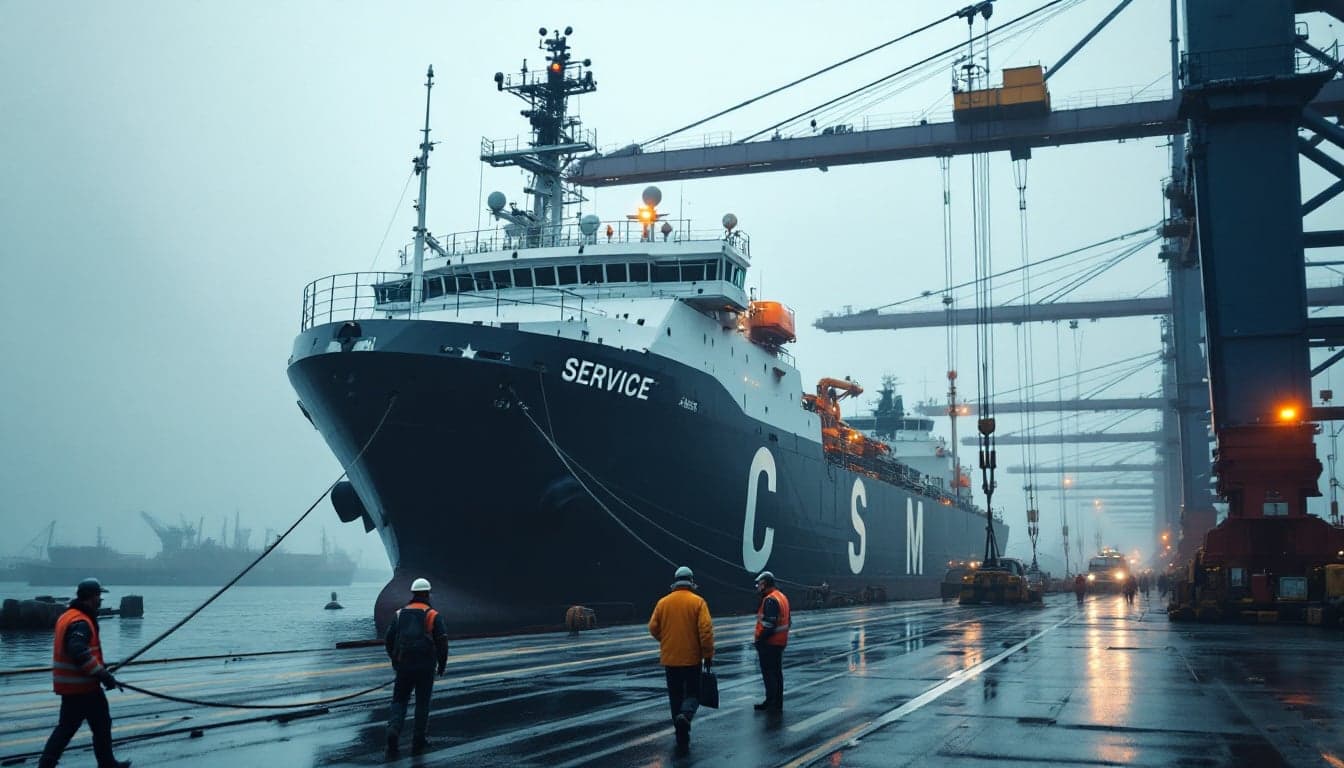
THE NEWS
According to Splash247, Dong Fang Offshore (DFO), a Taiwanese offshore vessel owner, has approved the construction of a new service operations vessel (SOV) with Norway's Vard Group, allocating up to $86 million for the project. The approval was disclosed through a stock exchange filing, confirming the DFO board's decision to commission one operations and maintenance support vessel with Vard Group or one of its associated yards. The vessel is intended for the international offshore energy market.
The order represents another newbuild placement by DFO at Vard, suggesting an ongoing commercial relationship between the two companies. No delivery timeline, specific yard location, or vessel technical specifications were disclosed in the available source material.
WHY IT MATTERS
At first read, a Taiwanese operator ordering a vessel from a Norwegian yard may appear tangential to Brazilian offshore professionals. The Brazilian relevance is assessed as low — and that assessment is accurate in the near term. However, the transaction carries analytical signals worth tracking for those monitoring the global supply of offshore support vessels and the competitive dynamics that shape day-rates and vessel availability in markets like Brazil.
The SOV segment — service operations vessels designed to support inspection, maintenance, and repair (IMR) activities, particularly on offshore wind and oil and gas infrastructure — has been tightening globally. When operators of DFO's profile commit capital at this scale, it reflects forward-looking demand expectations. An $86 million budget for a single vessel is a material commitment, and the fact that it clears a board-level approval and a stock exchange disclosure underscores that this is a considered strategic investment, not an opportunistic order.
For Brazil, the relevant structural question is whether the global SOV orderbook — of which this vessel is one unit — will remain concentrated in the European offshore wind corridor or gradually migrate toward other geographies. Brazil's pre-salt fields require sustained subsea intervention and IMR activity. Petrobras and its consortium partners rely on a range of support vessel classes for this work. While dedicated SOVs in the European wind-support configuration are not a direct analog to Brazil's current vessel mix, the broader category of operations and maintenance support vessels is directly relevant to deepwater field life-extension strategies.
Vard, as a shipbuilder, is not an unfamiliar name in the Brazilian context. The group has historical ties to Brazilian shipbuilding through its industrial footprint, and its designs and vessel classes circulate in the same market intelligence that Brazilian operators and vessel managers track. A sustained order flow from Vard — regardless of the end operator — keeps the yard's production capacity and design pipeline active, which has indirect implications for vessel availability and pricing globally.
From a ship financing perspective, the structure of the DFO commitment — approved up to a ceiling of $86 million, directed at Vard Group or one of its yards — reflects a degree of flexibility that is common in newbuild contracting when yard allocation across a group's facilities remains subject to optimization. This is a standard commercial arrangement, but it is worth noting for Brazilian operators and financiers who track how vessel procurement is structured in comparable transactions. The use of stock exchange disclosure as the communication vehicle also points to DFO's listed status and the governance obligations that come with it, a contrast with the more opaque procurement processes that characterize some other vessel owners active in the region.
The broader takeaway for Brazilian offshore professionals is one of market temperature rather than direct operational impact. When vessel owners in Asia commit to newbuilds at European yards at this price point, it is a data point — one among several — suggesting that the offshore vessel services market continues to attract capital. That capital formation, aggregated across multiple operators and segments, shapes the supply-demand balance that ultimately influences what Brazilian operators pay for vessel services and what Brazilian-flagged or Brazil-active vessel owners can charge.
CONTEXT
Vard has maintained a consistent presence in the offshore support vessel newbuild market, with orders spanning various vessel classes and end markets. DFO's repeat engagement with the yard — this being described as another newbuild in an ongoing relationship — is consistent with a pattern where vessel owners develop preferred yard relationships for design continuity, crew familiarity, and commercial terms.
The SOV market more broadly has been shaped by the acceleration of offshore wind development in Europe and, increasingly, in Asia-Pacific. While Brazil's offshore wind pipeline remains at an earlier stage of development relative to its oil and gas sector, the vessel classes being built today will be operating assets for fifteen or more years — a horizon that overlaps with Brazil's own offshore energy transition discussions.
Source: SPLASH247