Germany's BSH tenders geophysical survey for offshore wind: what the model signals
As European regulators accelerate offshore wind site characterization, the procurement approach offers a reference point for Brazil's own nascent offshore wind licensing framework.
THE NEWS
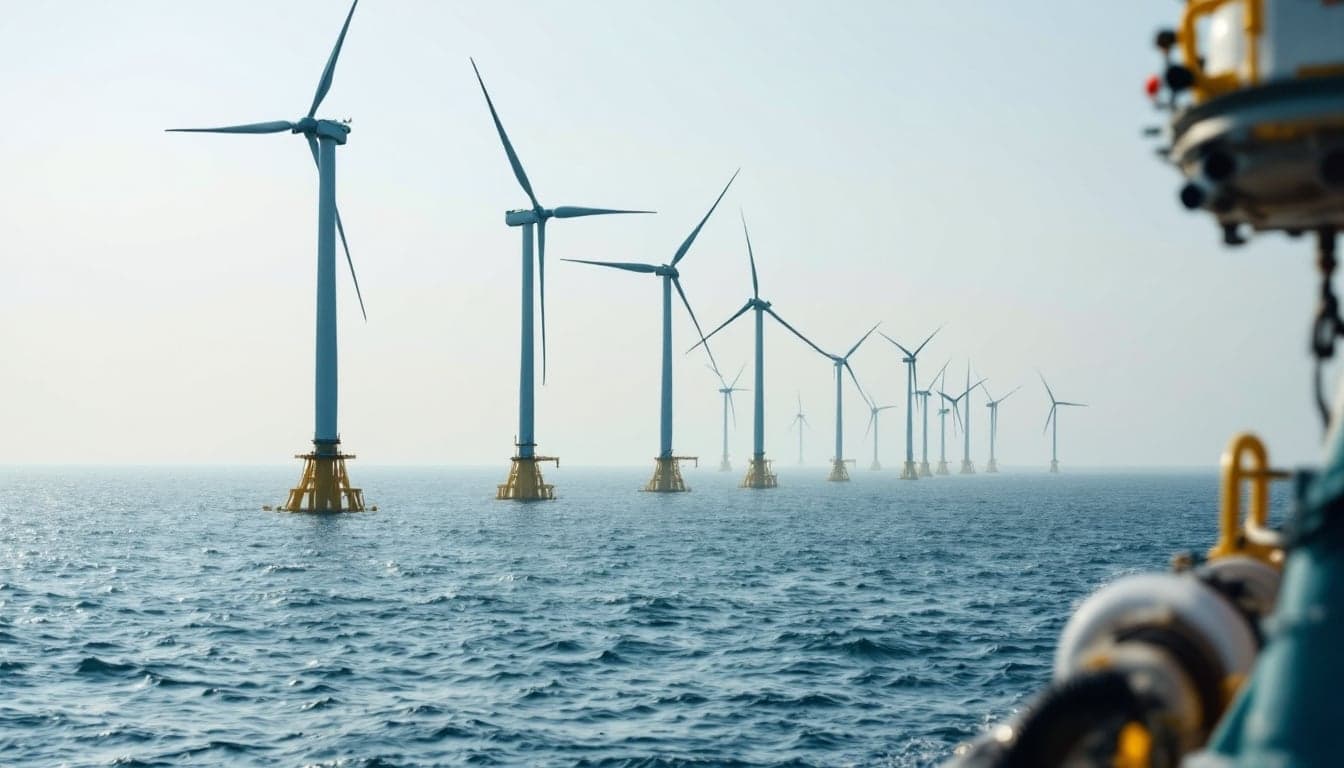
According to Offshore Energy, Germany's Federal Maritime and Hydrographic Agency (BSH) has launched a tender for preliminary geophysical survey work associated with offshore wind development. The BSH, which functions as Germany's central authority for maritime spatial planning and offshore licensing, is procuring the survey services through a formal competitive process. The scope covers geophysical investigation — the type of subsurface and seabed characterization work that precedes any structural or foundation engineering for offshore wind installations.
The tender represents a step in Germany's structured approach to site preparation, where the regulatory body itself commissions foundational data before individual wind developers take on specific blocks. This model — in which the state agency aggregates and funds early-stage survey work — is distinct from frameworks where developers bear the full cost and risk of pre-licensing investigation.
No financial value, timeline, or contractor shortlist was disclosed in the available reporting.
WHY IT MATTERS
For readers focused on Brazilian offshore oil and gas, a German wind survey tender may appear peripheral. The Brazilian relevance, assessed as low, is real — but it operates at the level of regulatory design rather than immediate commercial opportunity.
Brazil is in the early stages of constructing a legal and regulatory framework for offshore wind. The federal government and IBAMA have been working through environmental licensing pathways, and the question of who funds and commissions pre-competitive data — the state, the developer, or some hybrid — remains genuinely open. The BSH model, where a federal maritime agency takes on the geophysical survey function, is one answer to that question. It is not the only answer, but it is a well-documented one from a jurisdiction with dense offshore experience.
The practical implication for Brazilian regulators and developers is about risk allocation at the earliest project phase. When a state agency commissions geophysical surveys centrally, it standardizes the data environment, reduces duplication, and lowers the barrier for smaller or newer entrants who might not have the capital to fund pre-licensing investigation independently. The tradeoff is that the public sector absorbs that cost and the associated procurement complexity. Brazil's ANP and the Ministry of Mines and Energy will eventually need to define where that line sits for offshore wind, just as they have for oil and gas exploration rounds.
For Brazilian offshore service companies — particularly those with geophysical survey, ROV, or geotechnical vessel capacity — the German tender is a reminder that offshore wind site characterization is a distinct and growing service line. The equipment and methodologies overlap substantially with those used in oil and gas pre-drilling surveys: multibeam bathymetry, sub-bottom profiling, geotechnical sampling. Companies that have built those capabilities for pre-sal and other deepwater oil and gas work are, in principle, positioned to serve offshore wind clients as Brazil's market develops. The question is whether they are actively tracking that demand and adapting commercial structures accordingly.
There is also a workforce and certification dimension. Survey campaigns for offshore wind in European waters have generated significant demand for marine survey professionals, geophysicists, and data processing specialists. As Brazil's offshore wind pipeline matures — and several projects in the Northeast and South regions have reached early development stages — domestic capacity in these disciplines will become a relevant constraint or an opportunity, depending on how the industry prepares.
Finally, the BSH tender is a data point in a broader pattern: European maritime agencies are moving from policy statements to procurement actions on offshore wind. That pace of execution, and the institutional capacity it reflects, is a useful benchmark for Brazil as it builds its own offshore wind governance architecture. The comparison is not about ranking systems but about understanding what a mature regulatory workflow looks like in practice.
CONTEXT
Germany has been one of the more active offshore wind markets in Europe, with the BSH playing a central coordinating role in spatial planning and licensing. The agency's decision to tender geophysical surveys directly — rather than leaving that function entirely to project developers — reflects a model that several Northern European jurisdictions have adopted in some form. Denmark, for instance, has historically conducted state-led site investigations before tendering wind areas to developers.
Brazil's offshore wind sector is at a structurally earlier stage, with regulatory frameworks still being assembled and the first commercial-scale projects not yet at final investment decision. The gap between where Brazil is and where Germany is today is measured in institutional years, not just calendar years — but the trajectory is established, and the design choices being made now will shape how efficiently that gap closes.
Source: OFFSHORE ENERGY