Omega Subsea anchors long-term presence in Western Norway
A subsea services and ROV provider secures a permanent base at a naval supply park — a signal of how niche operators are structuring for sustained regional demand.
THE NEWS
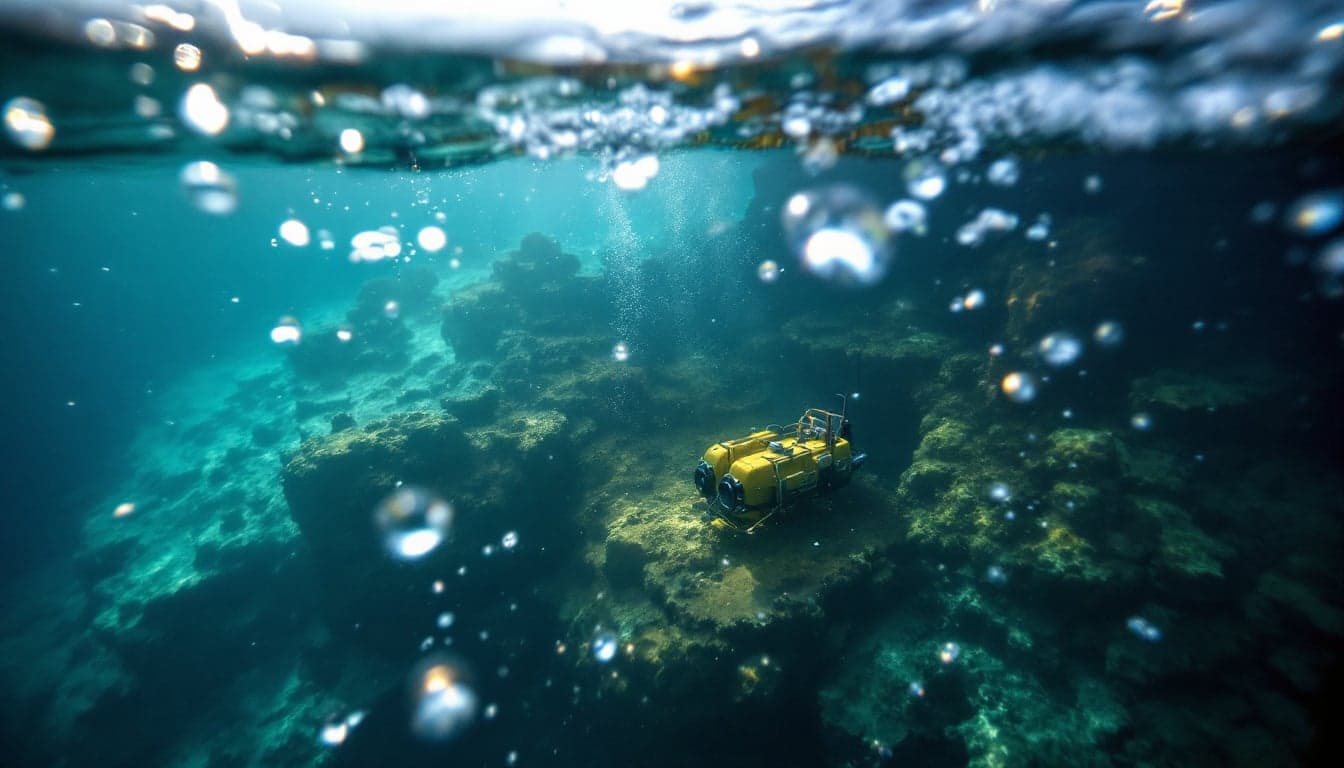
According to Marine Technology News, Omega Subsea — a provider of subsea services and ROV technology — has entered into a long-term agreement to establish operations at Hilleren Navy Supply Park in Mathopen, located adjacent to Haakonsvern in Western Norway. The company will take on the role of strategic subsea partner and key tenant at the site.
The arrangement represents a deliberate infrastructure commitment by Omega Subsea, moving beyond project-by-project mobilization toward a fixed operational footprint in one of Norway's established maritime corridors. Details on the scope of services to be delivered from the base, or the duration of the agreement, were not disclosed in the available reporting.
WHY IT MATTERS
For readers whose primary frame of reference is Brazil's offshore basin, the direct operational relevance of this move is limited. Omega Subsea is not a named participant in any active Brazilian block or contract, and the Hilleren facility is firmly oriented toward the Norwegian Continental Shelf. That said, the structural logic behind the decision carries analytical value that travels across geographies.
The choice to anchor operations inside a naval supply park is worth examining. Facilities of this type — purpose-built for maritime logistics, with deep-water quayside access, security infrastructure, and proximity to vessel traffic lanes — offer subsea contractors something that commercial industrial parks often cannot: operational density. When ROV systems, intervention tooling, and trained personnel are co-located with vessel support infrastructure, mobilization cycles compress. For a niche operator competing against larger integrated service companies, that efficiency margin can be meaningful.
The long-term lease structure also signals a particular kind of strategic confidence. Short-cycle subsea work can be serviced from temporary or shared facilities; committing to a permanent base implies an expectation of sustained regional contract flow. In the Norwegian context, that expectation is grounded in the continued development and life-extension activity on the NCS, where subsea intervention demand remains structurally supported by an aging installed base and ongoing infill drilling programs.
For Brazilian subsea service providers and their procurement counterparts at operators active in the pre-sal, the parallel question is one of base infrastructure maturity. Brazil's subsea services ecosystem is concentrated around established hubs — principally Macaé and, increasingly, the port complexes of Rio de Janeiro state — but the logic of dedicated, long-term subsea operational bases has not been uniformly adopted by smaller or mid-tier contractors. As the pre-sal matures and intervention activity grows relative to new drilling, the case for fixed, purpose-built subsea bases in Brazil strengthens. Omega Subsea's model in Norway is one reference point among several.
There is also a workforce dimension. Long-term facility agreements create conditions for stable crew rotations, local training pipelines, and the retention of specialized ROV technicians — a category of worker that is genuinely scarce across most offshore markets, including Brazil. The Brazilian regulatory environment, through ANP oversight and Petrobras's local content frameworks, has consistently emphasized the development of domestic technical capacity in subsea operations. Operators and contractors reviewing their own base strategies may find the fixed-facility model relevant to that objective.
Finally, the naval supply park setting is an interesting detail. Co-location with defense-adjacent infrastructure is not unique to Norway — several Brazilian naval facilities have historically intersected with commercial offshore logistics — but it does raise questions about dual-use infrastructure planning that Brazilian port authorities and offshore regulators have not yet addressed in a systematic way. Whether that intersection creates operational advantages or introduces procedural complexity depends heavily on the specific regulatory regime governing each site.
CONTEXT
Omega Subsea's move fits a broader pattern visible among specialized subsea contractors over the past several years: the consolidation of operational capacity into fewer, better-equipped bases rather than the maintenance of a distributed network of lighter facilities. Larger integrated service companies have pursued similar rationalization, though typically at greater scale and with different capital structures driving the decision.
For the Brazilian market, the more immediately relevant comparable is the ongoing discussion around subsea logistics infrastructure in the Santos Basin corridor, where the concentration of pre-sal activity has steadily increased demand for intervention vessels, ROV support, and associated shore-based services. How that infrastructure evolves — and which operators and contractors position themselves within it — will be a defining question for the sector over the next operational cycle.