Strait of Hormuz disruption tests Brazil's oil export resilience
U.S. military operations have reduced Iran's mine threat, but the strait remains under pressure — and Brazil's crude trade routes are not insulated from the fallout.
The news
According to Marine Insight, the United States has reported destroying more than 90% of Iran's stockpile of approximately 8,000 sea mines during military operations in the Gulf region, carried out under what U.S. Central Command designated Operation Epic Fury. Admiral Brad Cooper, testifying before the U.S. Senate Armed Services Committee, stated that more than 700 airstrikes targeted Iran's naval mine infrastructure over 38 days of combat operations. He noted, however, that the breakdown between mines destroyed in storage, aboard vessels, or after deployment was not disclosed.
Cooper also reported that U.S. forces neutralized 161 Iranian naval vessels during the campaign, and that fast-boat activity in the strait had fallen sharply — from an observed 20–40 vessels per transit to roughly two or three in recent passages. Iran retains limited residual capabilities, including low-level drone activity and proxy support, but U.S. officials assessed that its capacity to restrict commercial shipping at scale has been substantially reduced.
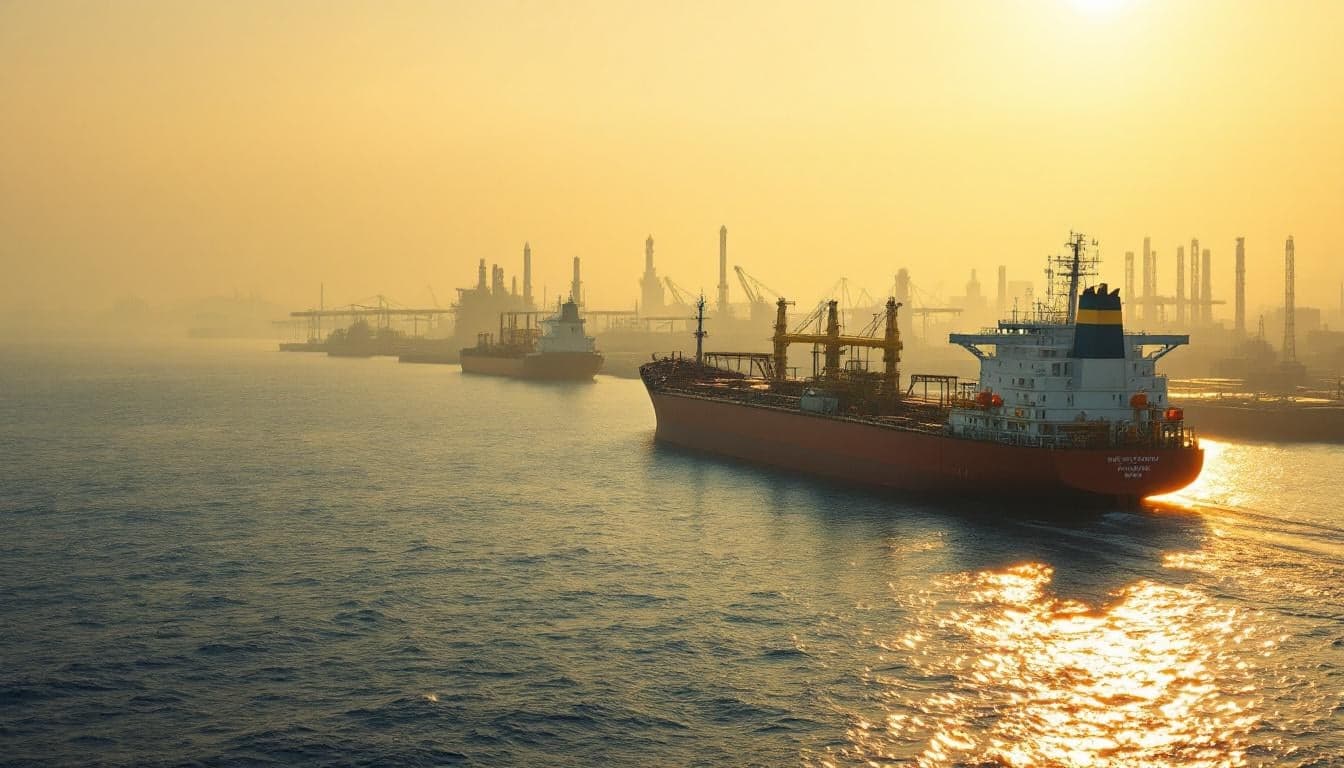
Despite a ceasefire between the U.S. and Iran, the Strait of Hormuz remains under operational pressure. Senator Jack Reed noted during the same hearing that the strait was still effectively closed to normal commercial traffic, that Iran's government remained in place, and that portions of its missile and launcher inventory had reportedly been recovered. The Pentagon has since requested an additional $28.8 billion for munitions replenishment, with some stockpile rebuilding timelines estimated at three to five years.
Why it matters
The Strait of Hormuz is the single most consequential maritime chokepoint for global oil and LNG flows. Roughly 20% of the world's petroleum liquids and a significant share of LNG exports — particularly from Qatar — transit the strait. Any sustained disruption to that corridor has direct consequences for global crude benchmarks, tanker routing, and insurance costs, all of which feed into the economics of Brazilian offshore production.
Brazil is not a direct participant in Hormuz-dependent trade in the traditional sense: it exports crude primarily to China, Europe, and the United States, and its pre-salt volumes are priced against Brent. But the connection is more indirect and, for that reason, sometimes underestimated by operators focused on domestic logistics. When Hormuz-linked supply uncertainty rises, Brent tends to firm. When it resolves or partially resolves, the same benchmark adjusts. The past two months of disruption have already introduced a layer of volatility into forward curve pricing that affects hedging decisions for Petrobras, PRIO, Enauta, and any operator with production-linked revenue streams.
For Petrobras specifically, the fiscal planning implications are non-trivial. The company's five-year strategic plan is calibrated against Brent price assumptions. Sustained above-plan prices improve cash generation and dividend capacity; a sharp correction in the event of full Hormuz normalization could compress those margins. The uncertainty itself — rather than any single price level — is the more operationally disruptive variable, as it complicates the timing of investment decisions and the pricing of long-term offtake agreements.
On the tanker side, Brazilian operators and their logistics partners have been watching freight rate dynamics carefully. VLCC rates on the Brazil-to-China route, already a function of global tonnage availability, are sensitive to fleet redeployment triggered by Hormuz avoidance routing. When tankers reroute around the Cape of Good Hope to avoid the Gulf, global tonne-mile demand increases and available tonnage on Atlantic routes tightens. This has the secondary effect of pushing up freight costs for Brazilian crude exports, which are predominantly seaborne and long-haul.
The LNG dimension is also relevant for Brazil's domestic energy matrix. Brazil imports LNG on a spot and short-term basis to supplement hydropower during dry-season deficits. Qatari LNG — a significant share of global spot supply — transits Hormuz. Prolonged disruption to that supply corridor can tighten global LNG spot markets and raise regasification terminal costs for Petrobras's gas distribution operations and for independent importers. The partial normalization suggested by the U.S. military's assessment is a constructive signal, but Senator Reed's observation that the strait remains effectively closed to normal commercial traffic indicates that the situation has not fully stabilized.
Context
The Hormuz corridor has been a recurring source of supply-side risk for global energy markets over several decades, with notable disruption episodes in the 1980s Tanker War, the 2019 tanker attacks, and the more recent Houthi campaign in the Red Sea. Each episode has reinforced the structural argument for Atlantic Basin supply diversification — an argument that has, over time, supported the commercial case for Brazilian pre-salt development as a geopolitically lower-risk source of crude.
The current episode differs in scale from recent precedents. The reported destruction of 85% of Iran's ballistic missile and drone industrial base, if accurate, represents a more significant shift in regional naval balance than previous incidents. Whether that shift proves durable will depend on factors — including Iran's reconstitution capacity and the political trajectory of the ceasefire — that remain outside the scope of public information at this stage. What is assessable now is that the risk premium embedded in energy markets over the past two months has not yet fully unwound, and Brazilian operators with exposure to Brent-linked revenues are navigating that uncertainty in real time.