Temporary power logistics in offshore wind: a supply chain signal worth watching
OEG's contract for Hornsea 3 illustrates how construction-phase power management is becoming a distinct service category in large-scale offshore wind.
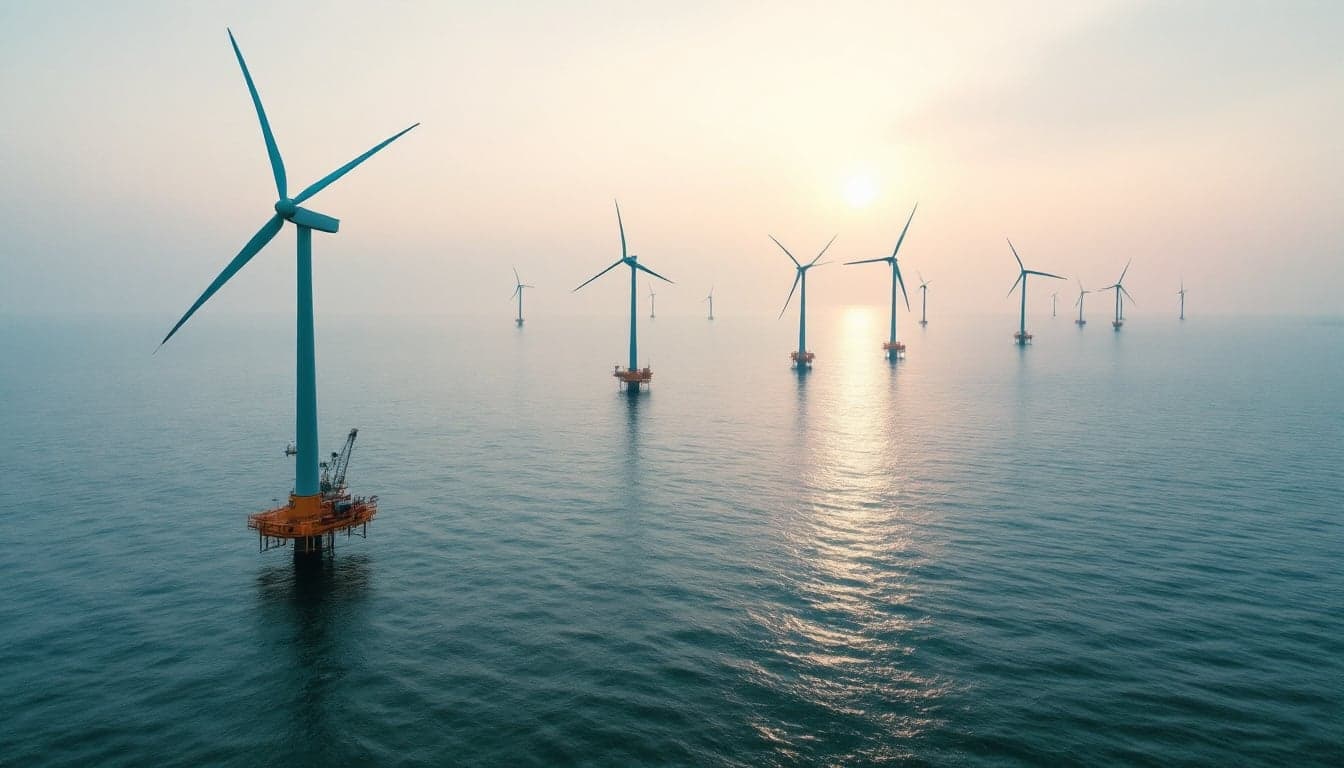
THE NEWS
According to Offshore Engineer, OEG has been awarded a contract by Ørsted to supply temporary power for the construction of the Hornsea 3 offshore wind farm. The scope covers the offshore converter station phase of the buildout. The source description does not detail contract value, duration, or the specific equipment configuration involved.
The award positions OEG as a construction-support services provider within one of the larger offshore wind projects currently under development. Hornsea 3 is an Ørsted-led project; beyond that, the source does not specify consortium partners or additional contractors involved in the broader construction program.
The information available is limited to the contract award itself and its general scope. Further operational and commercial details have not been disclosed in the published reporting.
WHY IT MATTERS
At first reading, a temporary power contract for a North Sea wind farm may seem distant from the concerns of Brazilian offshore professionals. The Brazilian relevance rating attached to this story is, by the editorial team's own assessment, low. That said, the story carries a structural signal that practitioners in Brazil's expanding offshore energy sector would do well to register.
The emergence of temporary power supply as a named, contracted service category — distinct from the main EPC or installation contracts — reflects a maturation in how large offshore energy projects are being decomposed and managed. In conventional oil and gas construction, temporary power for offshore structures has historically been bundled into broader construction contracts or handled by the main contractor's own resources. The fact that Ørsted has chosen to award this scope to a specialist provider suggests that project owners in the offshore wind sector are increasingly disaggregating their supply chains, creating discrete scopes for services that might previously have been absorbed into larger packages.
This disaggregation logic is not unique to wind. As Brazil's offshore energy ambitions expand — both in pre-sal oil and gas and in the nascent offshore wind sector, where the regulatory framework is still being assembled — the question of how to structure construction-phase services contracts will become increasingly relevant for operators, EPCs, and specialist service companies alike. The Brazilian offshore wind pipeline, while still in early-stage licensing and environmental review for most projects, will eventually face the same construction-phase logistics challenges that Hornsea 3 is navigating now. Temporary power for converter stations, substations, and installation vessels is not a trivial operational requirement; it is a project-critical dependency.
For Brazilian service companies with experience in temporary power, generator sets, and electrical distribution for offshore environments — a capability that exists in the Brazilian market primarily through oil and gas project experience — the Hornsea 3 contract structure offers a reference point. It demonstrates that international project owners are willing to contract this scope separately, which implies a potential market entry point for companies that can demonstrate offshore-rated capability and project logistics experience.
For Petrobras and any future Brazilian offshore wind operators, the supply chain architecture being tested in projects like Hornsea 3 will inform procurement strategies. Brazil's offshore wind regulatory environment is still being defined, with ANP and ANEEL jurisdictions overlapping in ways that are not yet fully resolved. When that framework stabilizes and construction-phase activity begins in earnest, the lessons from North Sea project execution — including how temporary power is contracted and managed — will carry practical value.
It is also worth noting the role of the offshore converter station specifically. In large-scale offshore wind arrays, the converter station is the electrical hub that aggregates output from individual turbines and steps it up for export to shore via high-voltage direct current cables. Construction and commissioning of this infrastructure is among the most technically complex phases of an offshore wind project. Ensuring reliable temporary power during this phase is not a peripheral concern; it directly affects the commissioning schedule and, ultimately, the project's first-power date.
CONTEXT
OEG operates as a specialist in offshore energy services, with a portfolio that spans equipment rental, logistics, and project support across both oil and gas and renewable energy sectors. The company's positioning across both energy streams reflects a broader industry pattern in which service providers with offshore operational competence are redeploying that expertise into wind construction support roles.
Hornsea 3, as an Ørsted project, sits within one of the more active offshore wind development programs in the North Sea. The construction phase represents a period of intensive logistics coordination, and the contracting decisions made at this scale tend to influence procurement norms across the industry — including, with a lag, in markets like Brazil that are earlier in their offshore wind development cycle.