U.S. strikes on Iran raise freight and crude routing questions for Brazilian operators
A second day of U.S. military action against Iranian coastal and naval infrastructure puts Strait of Hormuz transit under renewed pressure — with downstream effects for Brazil's crude trade.
THE NEWS
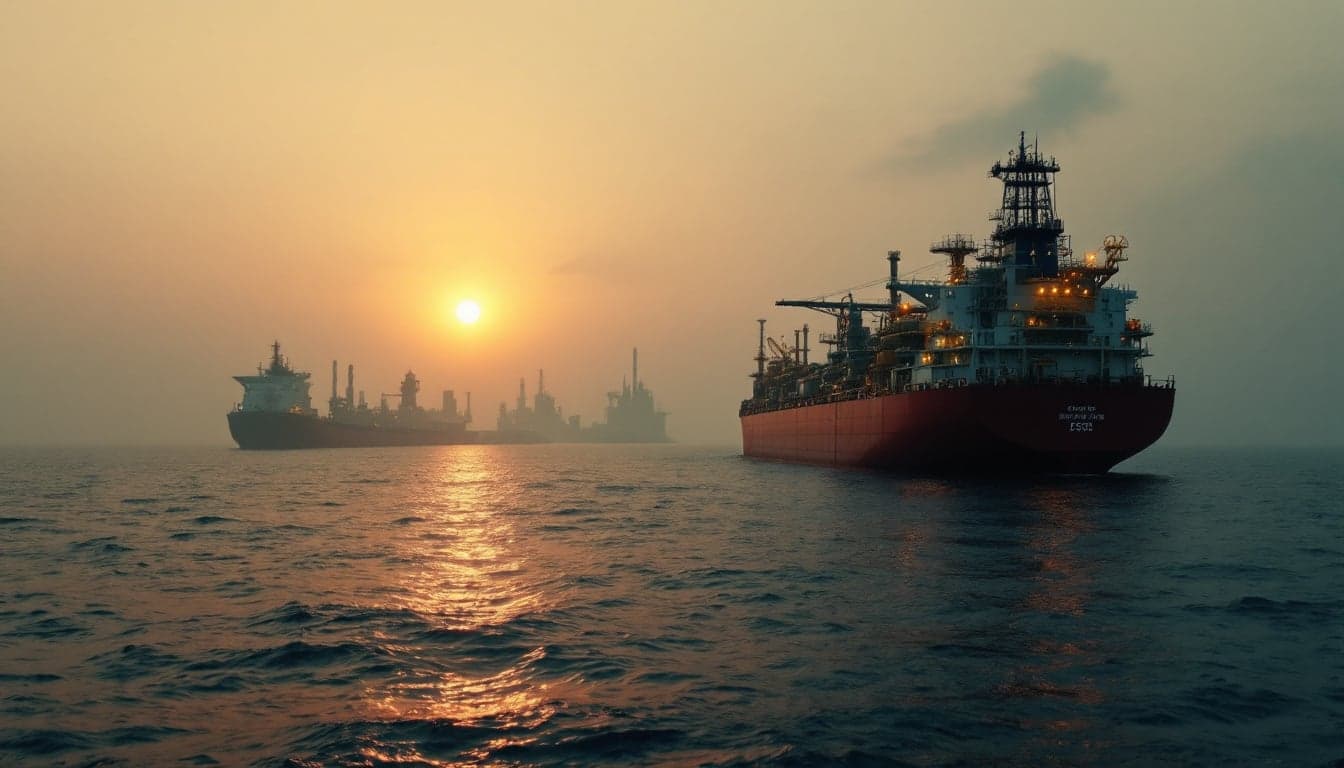
According to gCaptain, the United States launched a second consecutive day of military strikes against Iran, targeting coastal defense installations, missile sites, and naval infrastructure. The action follows attacks on commercial shipping, and Tehran has signaled that maritime traffic will only resume under what it described as "Iranian arrangements" — a formulation that introduces direct uncertainty over the terms of passage through the Strait of Hormuz.
The strikes represent an escalation in the military dimension of a conflict that had previously centered on proxy engagements and episodic maritime incidents. By targeting coastal and naval assets specifically, the operation engages infrastructure directly relevant to the control of one of the world's most consequential maritime chokepoints.
No resolution timeline has been indicated by either side, and the situation remains fluid as of the publication date.
WHY IT MATTERS
For Brazilian offshore professionals, the Strait of Hormuz is not an abstraction. A meaningful share of the crude that flows through it feeds refineries and trading desks that intersect with Atlantic Basin markets — including the markets into which Brazil sells pre-sal output and from which Brazilian refineries source supplementary grades. Any sustained disruption to Hormuz transit alters the relative value of Atlantic Basin crude, the routing logic of LNG cargoes, and the risk calculus that tanker operators apply when pricing freight.
The immediate commercial question is freight. When Hormuz transit becomes operationally uncertain — whether through active interdiction, insurance surcharges, or flag-state advisories — VLCC and Suezmax operators adjust routing and pricing accordingly. Brazilian export cargoes, which move primarily on Atlantic routes and do not transit Hormuz, are structurally insulated from direct routing risk. However, the tanker market is global: vessels repositioned away from the Gulf tighten availability elsewhere, and Brazilian operators and traders who charter tonnage on the spot market will feel that tightening in their freight costs.
The crude price channel is more significant. Brazil's pre-sal output is priced against Brent-linked benchmarks. A sustained supply disruption from the Gulf — or even a credible threat of one — tends to support Brent, which would nominally benefit Brazilian producers on a per-barrel basis. Petrobras and the independent operators active in the Santos and Campos basins would, in that scenario, see improved realization on export cargoes. The offsetting pressure is on the import side: Petrobras's refining system still relies on supplementary crude imports, and a Brent spike raises the cost of those purchases.
For Petrobras specifically, the geopolitical context adds a layer of complexity to its ongoing cargo optimization and trading operations. The company manages a large and sophisticated portfolio of crude sales and purchases; a volatile Hormuz situation requires active hedging and routing decisions that its trading desk is equipped to handle, but that nonetheless consume management attention and introduce P&L variability. The same applies, at smaller scale, to PRIO, Enauta, and other independents with export exposure.
The LNG dimension is worth noting separately. Brazil imports LNG to supplement gas supply, particularly during periods of lower hydroelectric reservoir levels. A portion of that LNG supply originates in or transits through regions affected by Gulf instability. Prolonged disruption could tighten Atlantic LNG availability and push up regasification terminal costs — a consideration for operators and industrial consumers who depend on gas-fired power or process heat.
From a regulatory and strategic planning perspective, the episode reinforces the case that Brazilian energy security benefits from the country's structural position as a net crude exporter with deepwater production that is geographically remote from Middle Eastern supply chains. ANP and the Ministry of Mines and Energy have, in various planning documents, pointed to this insularity as a long-term asset. Events like the current escalation make that argument more concrete.
The risk that Brazilian professionals should monitor most carefully is not direct — it is second-order. If the conflict persists and freight markets tighten materially, the cost of mobilizing rigs, supply vessels, and specialized equipment that moves on international shipping routes could increase. OSV operators and drilling contractors pricing Brazilian contracts in the coming months will be working against a backdrop of elevated maritime risk premiums, even if those premiums are not directly attributable to routes that touch Brazil.
CONTEXT
This is not the first time Hormuz tensions have reshaped Atlantic Basin freight and crude dynamics. The 2019 tanker incidents in the Gulf of Oman produced a measurable, if temporary, spike in VLCC rates and a repricing of war-risk insurance across the region. The current escalation differs in that it involves direct state-on-state military action rather than ambiguous maritime incidents — a distinction that tends to produce more durable market responses.
Brazil's offshore sector has navigated previous Gulf disruptions without structural damage to its operations, largely because its production, export routes, and primary markets are Atlantic-facing. That structural advantage holds here. The variable is duration: a short, contained escalation is absorbed by markets with limited lasting effect; a prolonged or widening conflict introduces the kind of sustained freight and energy price volatility that eventually works its way into every corner of the global offshore cost structure.