Strikes on Chabahar put Hormuz transit risk back on the table
U.S. military action at Iran's southeastern port signals the ceasefire framework has broken down — with direct consequences for tanker routing and Brazilian crude flows.
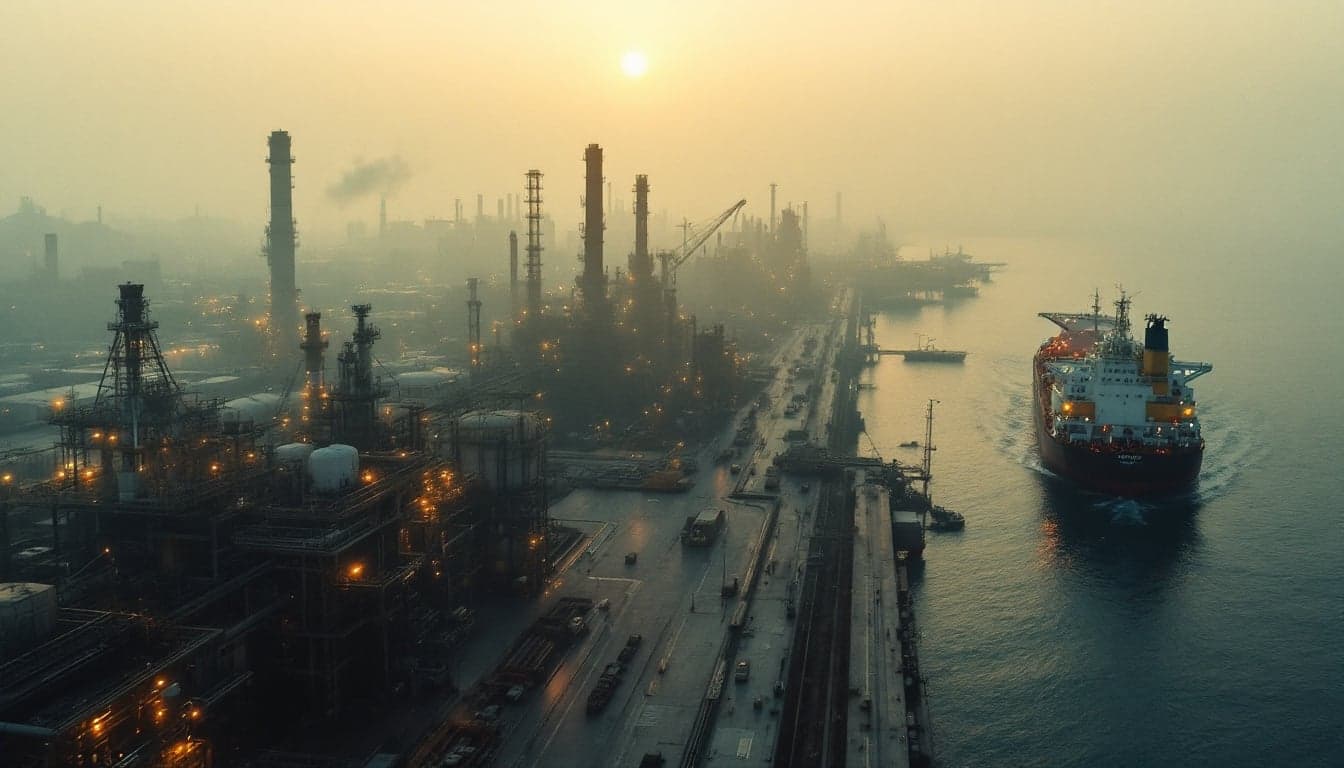
The News
According to Marine Insight, U.S. forces carried out strikes on Thursday against the Iranian port city of Chabahar, targeting piers, a maritime traffic control tower, and military assets. Civilian port facilities and energy infrastructure were reportedly not struck. Fires broke out in parts of the port and explosions were heard across the city, with local media reporting power outages and civilian evacuations.
U.S. Central Command (CENTCOM) stated that approximately 90 Iranian targets were struck in the operation, which it described as focused on military facilities that Washington alleged were being used to threaten commercial shipping in the Strait of Hormuz. CENTCOM said the strikes were intended "to further degrade their ability to threaten freedom of navigation in the Strait of Hormuz."
The action follows a prior ceasefire arrangement that, according to the source, is no longer operative. Trump publicly declared the deal with Iran "over" and indicated that further strikes should be expected. This is reported as the first attack on Chabahar since that ceasefire came into effect.
Why It Matters
For Brazilian offshore professionals, the Strait of Hormuz is not an abstraction. A substantial share of global crude transits the strait, and any sustained disruption to that corridor ripples through tanker availability, freight rates, and benchmark spreads — all of which feed directly into the economics of Brazilian export liftings and import substitution calculations.
Brazil is a net crude exporter, but the country's refining system still depends on imports of specific grades to complement domestic production. More critically, Petrobras and independent operators price their export cargoes against Brent and other international benchmarks. When geopolitical risk elevates those benchmarks, Brazilian producers benefit on paper — but the same risk environment compresses the appetite of Asian and European buyers to commit to long-term offtake structures, preferring spot flexibility instead. That dynamic is already observable in the post-2022 energy market, and a renewed Hormuz tension cycle would reinforce it.
The targeting of maritime infrastructure — specifically piers and a traffic control tower — rather than energy assets is a meaningful distinction. It suggests the operation was calibrated to degrade military logistics without triggering an immediate oil supply shock. That calibration, if it holds, limits the near-term upward pressure on Brent. However, the declared intent to conduct further strikes introduces a forward uncertainty that markets will price in regardless of what actually happens next. Uncertainty itself has a freight rate.
Tanker operators with vessels trading in the Persian Gulf and Gulf of Oman will be reassessing war-risk insurance premiums and routing options. Some may redirect toward longer Cape of Good Hope routings to avoid the strait entirely, which tightens global tanker supply and increases day rates across all segments — including the Suezmax and VLCC classes that move pre-sal crude from Santos Basin loading points to Asian destinations. Brazilian operators should monitor whether this translates into a structural shift in available tonnage or remains a temporary spike.
For the Brazilian offshore supply chain, there is a secondary effect worth tracking: any escalation that affects Iranian crude production or export capacity adjusts the relative positioning of Atlantic Basin producers. Brazil's pre-sal output, with its consistent well productivity and established offtake relationships, becomes comparatively more attractive to buyers seeking supply chain diversification away from the Persian Gulf corridor. This is not a new dynamic — it has been part of the commercial rationale for Asian NOC interest in Brazilian deepwater blocks — but a renewed Hormuz risk cycle gives it renewed operational relevance.
The regulatory dimension is also present. The Brazilian Navy and the Agência Nacional do Petróleo, Gás Natural e Biocombustíveis (ANP) do not operate in the Hormuz corridor, but Brazil's participation in international maritime governance forums means that any IMO-level response to freedom-of-navigation incidents will eventually require a Brazilian position. Brazilian-flagged vessels and Brazilian-owned tonnage operating in the region face the same elevated risk environment as any other flag state.
Context
This is not the first time Hormuz has functioned as a pressure point in U.S.-Iran relations, and the offshore industry has developed institutional memory around the associated risk patterns: tanker insurance surcharges, voluntary routing changes, and short-term crude price volatility that normalizes within weeks if no supply is physically disrupted. The question this cycle raises is whether the declared intention to continue strikes represents a more sustained operational posture than previous episodes, or whether it is a negotiating signal. The answer to that question will determine whether the current risk environment is a spike or a structural repricing.
Brazilian operators planning cargo schedules, hedge books, and vessel nominations for the coming quarter would be well served by maintaining close monitoring of CENTCOM statements and IMO circulars as this situation develops.
Source: MARINE INSIGHT